


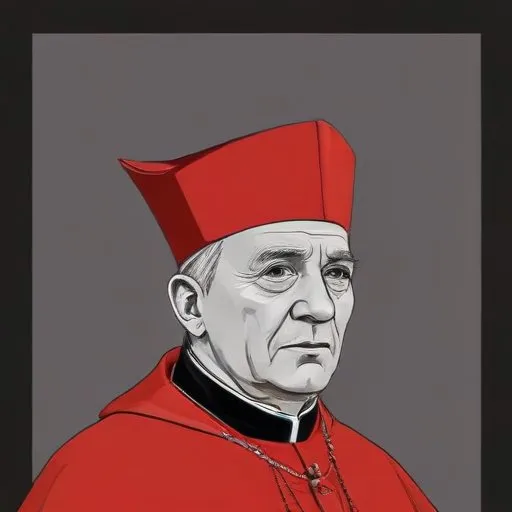
A powerful Catholic Cardinal who rose to become Pope Julius II, known for his military campaigns and patronage of famous artists like Michelangelo and Raphael. He played a significant role in shaping the Renaissance and the Catholic Church.
Giulio della Rovere, a prominent figure in the 16th century, is renowned for being a cardinal of the Catholic Church and a member of the esteemed della Rovere family. Elevated to the position of cardinal at the tender age of 13, della Rovere's life was marked by his significant contributions to the Church and his influential role in the della Rovere family.
Born on April 5, 1533, Giulio della Rovere was the second son of Francesco Maria I della Rovere and Eleonora Gonzaga. His older brother, Guidobaldo II della Rovere, would later become the Duke of Urbino. Della Rovere's family played a significant role in shaping his future, with his father being a powerful figure in the region of Urbino.
In 1548, at the age of 13, della Rovere was elevated to the position of cardinal by Pope Paul III, marking the beginning of his illustrious career in the Catholic Church. This early recognition was a testament to his family's influence and his own potential. Over the years, della Rovere would hold various positions within the Church, including bishop and archbishop, further solidifying his reputation.
Della Rovere's personal life was not without controversy. He had two illegitimate sons, Ippolito and Giuliano, whom he later legitimized with the help of Pope Pius V in 1572. Ippolito was granted the title of Marchese di San Lorenzo, ensuring a secure future for his family. Despite these personal setbacks, della Rovere's legacy as a respected figure in the Catholic Church endured.
As bishop, della Rovere played a crucial role in the consecration of several prominent figures, including Giovanni Oliva, Archbishop of Chieti, and Alessandro Mazza, Bishop of Fossombrone. These actions demonstrated his commitment to the Church and his dedication to fostering growth within its ranks.
Giulio della Rovere's influence extended beyond the walls of the Church. As a member of the della Rovere family, he played a significant role in shaping the course of local politics and society. His family's legacy continued to impact the region of Urbino for generations to come.
In conclusion, Giulio della Rovere's life was marked by his remarkable rise to prominence, his commitment to the Catholic Church, and his enduring legacy. Despite personal controversies, della Rovere's contributions to the Church and his family cemented his place in history as a respected and influential figure of the 16th century.
Born in 1487
A 16th-century Pope who commissioned Michelangelo to paint the Sistine Chapel's frescoes and was a patron of the arts, leaving a lasting impact on Renaissance art and architecture.
Born in 1535
The second shortest-reigning pope in history, serving for just 27 days in 1605, he is most known for his brief but tumultuous papacy marked by power struggles and controversy.
Born in 1536
Led the Catholic Church during a tumultuous period, issuing papal bulls and playing a key role in the Counter-Reformation. He's also famous for his coffee habit, being the first Pope to try and approve of it.
Born in 1417
A 15th-century pope who played a significant role in the fall of the Western Schism, ending the division in the Catholic Church. He's also known for his lavish spending and nepotism.
Born in 1504
Leader of the Catholic Church during the Counter-Reformation, he excommunicated Queen Elizabeth I and played a key role in the Council of Trent.
Born in 1504
Leader of the Catholic Church during the Counter-Reformation, he excommunicated Queen Elizabeth I and played a key role in the Council of Trent.
Born in 1520
A powerful and influential figure in the Catholic Church, he played a crucial role in shaping the Church's policies and was a skilled diplomat, known for his clever negotiations and strategic alliances.
