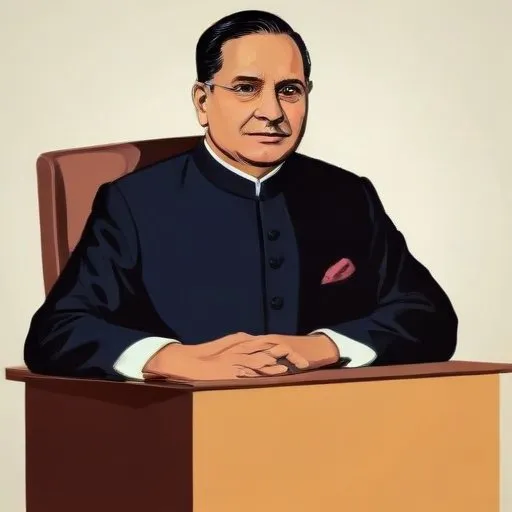
Govind Ballabh Pant: The Architect of India's Independence and Nation-Building
A Freedom Fighter and State-Building Icon
Govind Ballabh Pant is revered as one of the most influential figures in India's struggle for independence and nation-building. As the first Chief Minister of Uttar Pradesh, he played a pivotal role in shaping the country's political landscape, linguistic identity, and social fabric.
Early Life and Formative Years
Born on September 10, 1887, in Khoont village, near Almora, Uttarakhand, Govind Ballabh Pant was raised by his maternal grandfather, Badri Dutt Joshi, a prominent local government official. This early influence instilled in him a strong sense of patriotism and social responsibility. Pant studied at Allahabad University and later worked as a lawyer in Kashipur, where he began his activism against the British Raj.
The Freedom Struggle and Political Awakening
In 1914, Pant participated in a successful challenge to the British colonial rule's "coolie begar" system, which required locals to provide free transportation of British officials' luggage. This defiance sparked a chain reaction of protests and rebellion, paving the way for his entry into politics in 1921. As a member of the Legislative Assembly of the United Provinces of Agra and Oudh, he fearlessly voiced the concerns of the masses and advocated for their rights.
Champion of Hindi and Linguistic Identity
Pant was a staunch proponent of Hindi as the official language of the Indian Union. His tireless efforts led to the adoption of Hindi as the official language in 1949, fostering a sense of national unity and identity.
A Leader in the Kakori Case and Beyond
As a skilled lawyer, Pant was appointed by the Congress party to represent revolutionaries like Ramprasad Bismill,
Ashfaqulla Khan, and others involved in the Kakori case in the 1920s. This experience further solidified his commitment to the freedom struggle, and he went on to participate in protests against the Simon Commission in 1928.
Awards and Honors
In recognition of his selfless contributions to the nation, Pant was awarded the Bharat Ratna, India's highest civilian honor, in 1957.
Legacy and Lasting Impact
Today, several Indian hospitals, educational institutions, and foundations bear Govind Ballabh Pant's name, a testament to his enduring legacy. His commitment to social justice, linguistic unity, and nation-building continues to inspire generations of Indians.
Trivia and Interesting Facts
- Pant's maternal grandfather, Badri Dutt Joshi, played a significant role in shaping his personality and political views.
- He was born in a Marathi Karhade Brahmin family that had migrated from northern Karnataka to the Kumaon region.
- Pant's mother's name was Govindi Bai.
Conclusion
Govind Ballabh Pant's life was a testament to his unwavering dedication to India's freedom struggle and nation-building. As a freedom fighter, politician, and champion of social justice, he left an indelible mark on India's history. His legacy continues to inspire and motivate Indians to strive for a better future.
FAQ
What was Govind Ballabh Pants role in Indian politics?
Govind Ballabh Pant was a prominent Indian politician who played a key role in the countrys struggle for independence and its post-independence development. He served as the 1st Chief Minister of Uttar Pradesh from 1950 to 1954.
What were Govind Ballabh Pants views on Indian independence?
Govind Ballabh Pant was a strong advocate for Indian independence and was actively involved in the Indian independence movement. He believed in the principles of non-violent resistance and was inspired by the teachings of Mahatma Gandhi.
What were some notable achievements of Govind Ballabh Pants tenure as Chief Minister?
Some notable achievements of Govind Ballabh Pants tenure as Chief Minister include his efforts to promote rural development, his support for education and healthcare, and his role in shaping the states economic development.
How did Govind Ballabh Pants leadership impact Uttar Pradesh?
Govind Ballabh Pants leadership had a significant impact on Uttar Pradesh, helping to establish the state as a major player in Indian politics and economics. His tenure marked a period of stability and growth in the states post-independence development.
What is Govind Ballabh Pants legacy in Indian history?
Govind Ballabh Pants legacy in Indian history is that of a pioneering politician who played a key role in the countrys struggle for independence and its post-independence development. His contributions to Indian politics continue to be celebrated and studied today.