


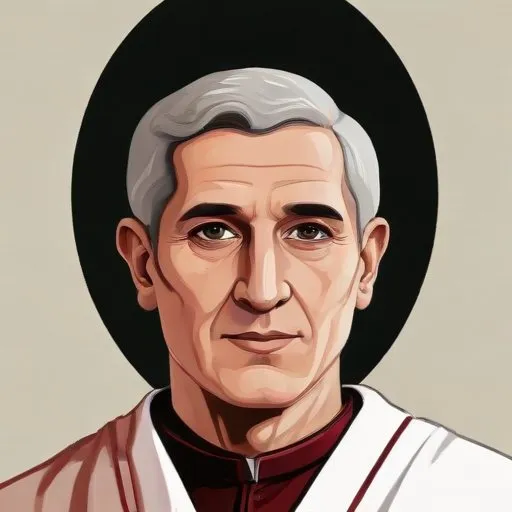
A 17th-century Italian bishop and cardinal who reformed the Catholic Church's education system and promoted ecumenism, known for his tireless efforts to unite Christians.
Under the guidance of his father and preceptors, Gregorio was introduced to philosophical studies, mathematics, Latin, Greek, and music. This well-rounded education laid the foundation for his future success as a scholar and diplomat.
Gregorio's diplomatic prowess and scholarly reputation made him a strong contender in both the 1689 and 1691 papal conclaves. Although he was not elected Pope, his distinction earned him the respect and admiration of his peers.
In 1761, Pope Clement XIII beatified Gregorio Barbarigo, recognizing his extraordinary virtues and contributions to the Church. Almost two centuries later, in 1960, Pope John XXIII canonized him, solidifying his status as a saint. Today, Gregorio's feast day is celebrated on June 17 (or June 18 in the General Roman Calendar of 1969).
As a scholar, Gregorio recognized the significance of learning and its potential to enrich human life. His own pursuit of knowledge and his support for education underscored the value of intellectual curiosity and the pursuit of wisdom.
As a champion of Catholic education, Gregorio paved the way for future generations of scholars, educators, and leaders. His commitment to promoting knowledge, understanding, and cooperation has left a lasting impact on the world.
In the words of Pope John XXIII, who canonized Gregorio Barbarigo, "He was a great bishop, a holy man, and a shining example of the virtues that make a true pastor."
Born in 1554
Established the Congregation for the Propagation of the Faith, a missionary organization that aimed to spread Catholicism globally, and standardized the papal conclave process.
Born in 1568
The 17th-century Catholic leader who reigned for 21 years, known for his strong stance against Galileo Galilei and his scientific discoveries, as well as his extensive patronage of the arts.
Born in 1611
Led the Catholic Church during a tumultuous period, reforming the Church's finances and combating corruption, while also opposing the French monarch's attempts to exert control over the Church.
Born in 1431
Ruthless and cunning, this Pope was infamous for his corrupt and immoral ways, using his power to further his family's interests.
Born in 1590
The 254th Pope, a strong advocate for the Catholic Church's authority, known for his papal bull condemning the doctrine of probabilism.
Born in 1590
The 254th Pope, a strong advocate for the Catholic Church's authority, known for his papal bull condemning the doctrine of probabilism.
Born in 1611
Led the Catholic Church during a tumultuous period, reforming the Church's finances and combating corruption, while also opposing the French monarch's attempts to exert control over the Church.
Born in 1599
A 17th-century pope who commissioned grand architectural projects, including the colonnade of St. Peter's Square, and was a patron of the arts.
