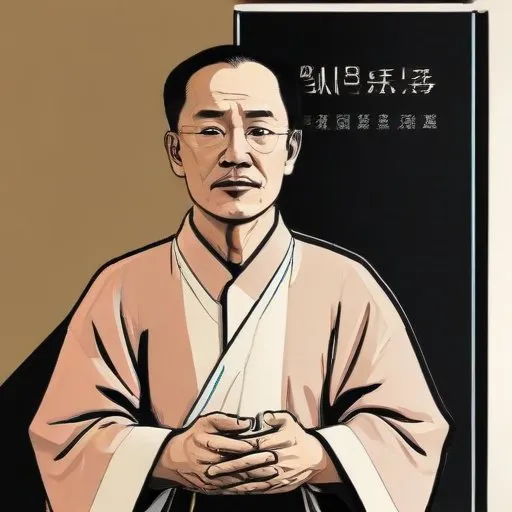
Gu Yanwu: A Pioneering Philologist, Geographer, and Scholar-Official of the Qing Dynasty
Philosophical Contributions and Legacy
Gu Yanwu, also known as Gu Tinglin, is renowned for his groundbreaking contributions to the fields of philology, geography, and Confucian scholarship during the Qing dynasty. As a pioneering scholar-official, he never served the Qing dynasty, instead dedicating his life to traveling, studying, and criticizing the Neo-Confucianism that dominated the royal courts.
Early Life and Education
Born on July 15, 1613, in Jiangsu, China, Gu Yanwu began his schooling at the tender age of 14. In the spring of 1645, he was recommended for the position of Bingbu Siwu in the royal court at Nanjing, where he proposed numerous innovative ideas. However, dissatisfied with the royal court's organization, Gu resigned and returned to his hometown.
Career Highlights and Major Works
Gu Yanwu's positivist approach to various disciplines and his criticism of Neo-Confucianism had a profound impact on later scholars. His notable works include
Yinxue Wushu,
Ri Zhi Lu, and
Zhao Yu Zhi. Alongside Wang Fuzhi and Huang Zongxi, Gu was recognized as one of the most outstanding Confucian scholars of the late Ming and early Qing Dynasty.
Philological Contributions
Inspired by Chen Di's work, Gu Yanwu divided the words of Old Chinese into 10 rhyme groups, a pioneering achievement that showcased his exceptional philological skills. This contribution not only advanced the understanding of Old Chinese but also laid the foundation for future scholars to build upon.
Personal Milestones and Key Life Events
In 1655, local officials accused Gu of a crime, and he was imprisoned. However, with the help of a friend, he was released from prison and continued to pursue his scholarly endeavors. In 1682, while returning from a friend's home to Huaying, Gu fell from horseback and tragically died the next day.
Aphorism and Quotations
One of Gu Yanwu's most celebrated aphorisms is "Everybody is responsible for the fate of the world" (
tīan xiàng wǒng, pǔ rén yǔ fù), which translates to "The rise and fall of the nation concerns everyone" or "Everyone bears responsibility for the prosperity of society." This quote reflects his deep understanding of the interconnectedness of individual and collective responsibilities.
Historical Context and Legacy
Gu Yanwu's contributions to the fields of philology, geography, and Confucian scholarship have had a lasting impact on Chinese intellectual history. His criticisms of Neo-Confucianism and his positivist approach to knowledge inspired future generations of scholars. Today, Gu is commemorated by Tinglin Park and the Gu Yanwu Museum in his hometown, a testament to his enduring legacy.
Influence on Modern Society
Gu Yanwu's scholarly works and philosophical ideas have continued to influence Chinese thought and culture, shaping the country's intellectual landscape for centuries. His emphasis on individual responsibility and the importance of collective prosperity remains relevant in modern Chinese society.
Comparative Analysis with Contemporaries
Gu Yanwu's intellectual contributions can be compared to those of his contemporaries, Wang Fuzhi and Huang Zongxi, who also critiqued Neo-Confucianism and advanced Confucian scholarship. Together, these scholars formed a triumvirate of intellectual giants, shaping the course of Chinese intellectual history during the late Ming and early Qing dynasties.
FAQ
What was Gu Yanwus contribution to Chinese philology?
Gu Yanwu was a Chinese philologist who made significant contributions to the field of classical Chinese scholarship. He was known for his meticulous research and his innovative approach to textual analysis.
What were Gu Yanwus most famous works?
Gu Yanwus most famous works include his commentaries on the Confucian classics, as well as his historical and geographical texts. His works are characterized by their erudition and their attention to detail.
What was Gu Yanwus relationship with the Qing dynasty?
Gu Yanwu was a fierce critic of the Qing dynasty, which he saw as a foreign occupation of China. He was known for his patriotism and his advocacy for a more decentralized and democratic form of government.
How did Gu Yanwus ideas influence Chinese thought?
Gu Yanwus ideas had a significant impact on Chinese thought, influencing the development of Confucianism and the rise of nationalist sentiment in China. He is remembered as one of the most important thinkers in Chinese intellectual history.
What is Gu Yanwus legacy in Chinese history?
Gu Yanwu is remembered as one of the most important scholars in Chinese history, known for his pioneering work in philology and his advocacy for a more democratic and decentralized form of government. His ideas continue to influence Chinese thought to this day.