


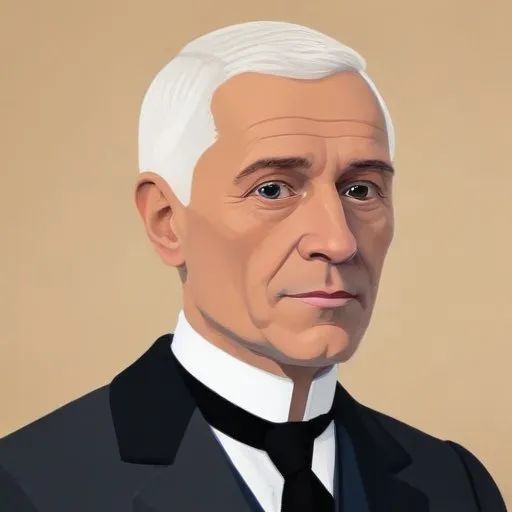
Estonian-Swedish poet and politician who played a key role in Estonia's struggle for independence and was a prominent figure in the country's cultural and literary scene. He's also known for his poetry, which often explored themes of love, nature, and the human condition.
Gustav Suits, a luminary of Estonian literature, is celebrated as one of the greatest poets of his time. Born on November 30, 1883, in Võnnu, Tartu County, Livonia, Suits' remarkable life was a testament to his unyielding passion for literature and his remarkable contributions to the world of poetry.
Suits' fascination with literature began at an early age. By the time he was 16, his first critical essay was published in the newspaper Uus Aeg (New Time). This was followed by his first poem, Vesiroosid (Water Lilies), which was published in the same newspaper in 1899. His early success was a harbinger of the literary genius that was to come.
In 1905, Suits co-founded the literary movement group Noor-Eesti (Young Estonia), which sought to revolutionize Estonian literature by infusing it with European influences. This movement not only revitalized Estonian literature but also introduced European readers to the rich cultural heritage of Estonia.
Suits' unwavering dedication to literature led him to become the first person to teach literature in Estonian at a postsecondary school level in 1921. He continued to inspire and educate generations of writers and scholars until he left the post in 1944. During this period, he published numerous research essays on Estonian literature, solidifying his position as a leading authority in the field.
Suits' outstanding contributions to literature were recognized with several accolades, including the prestigious Estonian State Literature Prize in 1936. His remarkable life and work were further honored with the establishment of the Gustav Suits Memorial Museum in his hometown of Võnnu.
Suits' work had a profound impact on Estonian literature, igniting a passion for poetry and prose that continues to inspire generations of writers and readers alike. His contributions to the development of Estonian literature have been instrumental in shaping the country's cultural identity.
As a testament to his enduring legacy, Suits' works remain a vital part of Estonia's literary heritage, continuing to captivate readers with their beauty, depth, and emotional resonance. His remarkable life and achievements serve as an inspiration to writers and scholars around the world.
Born in 1920
Esteemed Estonian literary figure, celebrated for his novels and poetry that explored the country's complex history and cultural identity. His works often blended historical fiction with philosophical introspection.
90 Years Old
A minimalist composer renowned for his sacred, hauntingly beautiful music that often features slow, contemplative harmonies and sparse textures, evoking a sense of spirituality and calm.
72 Years Old
A Swedish-Estonian journalist and politician who served as the 4th President of Estonia, known for his efforts to promote e-government and digitalization in the country. He's a strong advocate for a free and open internet.
97 Years Old
Estonian filmmaker and statesman who served as the country's president from 1992 to 2001, known for his efforts to integrate Estonia into the European Union and NATO. He was also a prolific writer and director, producing several documentaries and feature films.
Born in 1874
Estonia's first president, a key figure in the country's struggle for independence from Russia, served as a unifying force during tumultuous times. He's remembered for his role in shaping Estonia's early years and its path to sovereignty.
54 Years Old
Co-developer of Skype, a revolutionary video conferencing platform that transformed global communication .
