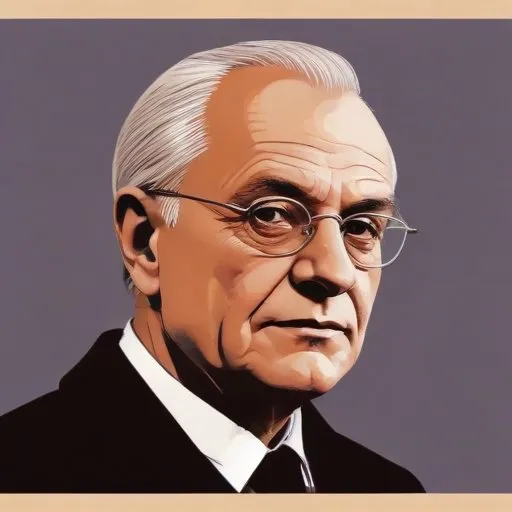
Hans F. K. Günther: The Controversial Racial Theorist
A Champion of Scientific Racism and Eugenics
Hans Friedrich Karl Günther, notoriously known as "Rassengünther" or "Rassenpapst" (Race Günther or Race Pope), was a German writer and advocate of scientific racism and eugenics in the Weimar Republic and the Third Reich. His work had a profound impact on Nazi racialist thought, making him a central figure in the infamous regime.
Early Life and Education
Born on February 16, 1891, Günther was the son of a musician. He pursued comparative linguistics at Albert Ludwigs University in Freiburg, where he also attended lectures on zoology and geography. In 1911, he spent a semester at the Sorbonne in Paris. Günther earned his doctorate in 1914, and later served with the Red Cross during World War I after being declared unfit for combat.
Rise to Prominence
Günther's writing career began in 1919, with the publication of "Ritter, Tod und Teufel" (The Knight, Death and the Devil), a polemical work that impressed
Heinrich Himmler. This marked the beginning of his association with the Nazi Party, which he officially joined in 1932. Günther's work resonated with the party's ideology, leading to his appointment as a professor of racial theory at the University of Jena in 1930.
Major Works and Career Highlights
Günther's most influential work, "Kleine Rassenkunde des deutschen Volkes" (Short Ethnology of the German People), was published in 1929. This popular exposition of Nordicism solidified his reputation as a leading racial theorist. He later taught at the universities of Berlin and Freiburg, producing numerous books and essays on racial theory.
Philosophical Contributions and Beliefs
Günther's work was rooted in biological nationalism, which emphasized the importance of racial purity and superiority. He believed in the concept of "Nordic race" and advocated for eugenics as a means to preserve and promote the "Aryan" race. Günther's theories were grounded in pseudoscience, but they had a profound impact on Nazi ideology and policy.
Influence on Modern Society
Günther's work contributed significantly to the development of Nazi racial policies, including the Nuremberg Laws and the eventual implementation of the "Final Solution." His theories also influenced other racist and fascist movements around the world.
Controversies and Public Perception
Günther's association with the Nazi Party and his advocacy of scientific racism have made him a highly controversial figure. His work has been widely criticized as pseudoscientific and morally reprehensible.
Legacy and Comparative Analysis
Günther's legacy is marked by his role in perpetuating harmful and discriminatory ideologies. His work serves as a cautionary tale about the dangers of pseudoscience and the importance of critically evaluating theories and their real-world implications.
Personal Life and Milestones
Günther married twice, first to a German woman and then to a Norwegian woman. He received scientific awards from the University of Uppsala and the Swedish Institute for Race Biology.
Inspirational Stories and Motivations
Despite his controversial legacy, Günther's story serves as a reminder of the importance of critically evaluating information and avoiding the perpetuation of harmful ideologies. His work highlights the dangers of unchecked nationalism and the importance of promoting inclusivity and diversity.
Trivia and Fun Facts
- Günther was often referred to as the "Race Pope" due to his influential role in shaping Nazi racial policies.
- His work was widely read and respected in Germany during the 1920s and 1930s.
- Günther's theories were used to justify the persecution of Jews, Romani people, homosexuals, and other minority groups during the Holocaust.
Awards and Honors
Günther received awards from the University of Uppsala and the Swedish Institute for Race Biology for his work on racial theory.
FAQ
What were Hans F. K. Günthers contributions to the field of eugenics?
Hans F. K. Günther was a German eugenicist and academic who made significant contributions to the field of eugenics. He was a prominent advocate for racial hygiene and wrote extensively on the topic of human heredity and racial purity.
What was Hans F. K. Günthers role in the Nazi party?
Hans F. K. Günther was a member of the Nazi party and served as a professor of racial hygiene at the University of Jena. He was a strong supporter of Nazi ideology and used his academic credentials to promote racist and anti-Semitic policies.
How did Hans F. K. Günthers work influence Nazi policies?
Hans F. K. Günthers work had a significant impact on Nazi policies, particularly with regard to racial hygiene and eugenics. His ideas about racial purity and human heredity were used to justify the Nazi regimes brutal treatment of Jews, homosexuals, and people with disabilities.
What was the impact of Hans F. K. Günthers eugenics theories?
The impact of Hans F. K. Günthers eugenics theories was devastating, as they were used to justify forced sterilization, euthanasia, and other brutal practices. His work contributed to the dehumanization and persecution of minority groups during the Nazi era.
How was Hans F. K. Günthers work received after World War II?
After World War II, Hans F. K. Günthers work was widely condemned as pseudoscientific and morally reprehensible. He was denounced as a key figure in the development of Nazi racial policies and his ideas were discredited as harmful and dangerous.