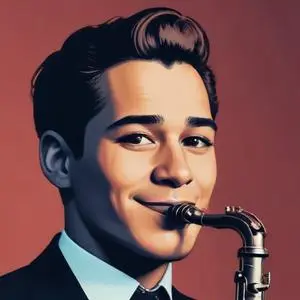
Harry Carney: The Baritone Saxophone Maestro of the Duke Ellington Orchestra
A Legendary Career Spanning Four Decades
Harry Carney, born on April 1, 1910, in Boston, Massachusetts, is renowned for his remarkable contribution to the world of jazz as a saxophonist and clarinettist. He spent an astonishing 47 years as a member of the esteemed
Duke Ellington Orchestra, leaving an indelible mark on the genre.
An Early Start and Inspirations
Carney's musical journey began at the tender age of seven, when he started playing the piano. He later transitioned to the clarinet at 14 and the alto saxophone a year later. Growing up in Boston, he was fortunate to have had the opportunity to rub shoulders with future bandmate
Johnny Hodges. Early influences on his playing style included Buster Bailey,
Sidney Bechet, and
Don Murray.
Rise to Prominence with the Duke Ellington Orchestra
In 1927, at the age of 17, Carney began performing in New York City clubs, eventually catching the attention of Duke Ellington. He was invited to join the orchestra for their performances in Boston, and soon found himself recording with Ellington in October that year. This marked the beginning of a lifelong association with the orchestra, which would become an integral part of his identity as a musician.
The Baritone Saxophone Virtuoso
Carney's mastery of the baritone saxophone elevated him to a position of prominence within the orchestra. He sought to create a unique sound, inspired by
Coleman Hawkins' upper register and Adrian Rollini's lower register. This distinctive approach earned him a reputation as a dominant figure on the instrument, unrivaled until the emergence of bebop in the 1940s.
Landmark Performances and Collaborations
In January 1938, Carney was invited to perform with
Benny Goodman's band at the iconic Carnegie Hall. This historic concert, later released as "The Famous 1938 Carnegie Hall Jazz Concert," showcased Carney's exceptional talent to a wider audience. Throughout his career, he continued to collaborate with notable musicians, including Johnny Hodges, Otto Hardwick, and Cootie Williams.
A Lasting Legacy
Harry Carney's contributions to jazz are immeasurable. His innovative approach to the baritone saxophone expanded the instrument's possibilities, influencing generations of musicians to come. His dedication to the Duke Ellington Orchestra and his role in shaping the band's sound have cemented his position as a jazz legend.
Personal Milestones and Timeline
- April 1, 1910: Born in Boston, Massachusetts
- 1927: Joined the Duke Ellington Orchestra
- 1938: Performed with Benny Goodman's band at Carnegie Hall
- October 8, 1974: Passed away, leaving behind a rich legacy in jazz
Trivia and Fun Facts
- Carney began playing the bass clarinet in the late 1930s, further expanding his musical repertoire.
- He was known for his relaxed, easy-going nature, earning him the nickname "Harry the Hipster" among his peers.
- Carney's ability to adapt to different musical styles and genres made him an invaluable asset to the Duke Ellington Orchestra.
FAQ
What was Harry Carneys career with Duke Ellington?
Harry Carney was an American saxophonist and clarinet player who had a long and distinguished career with Duke Ellingtons Orchestra. He was a key member of the band, known for his virtuosic solos and rich, full-bodied tone.
What was Harry Carneys role in shaping the sound of Duke Ellingtons Orchestra?
Harry Carney played a crucial role in shaping the sound of Duke Ellingtons Orchestra. He was a master of the baritone saxophone, and his warm, rich tone helped to define the bands distinctive sound.
What were Harry Carneys contributions to jazz?
Harry Carney was a pioneering figure in jazz, known for his technical mastery and musical creativity. He was one of the first saxophonists to play with a rich, full-bodied tone, and his solos were characterized by elegance, wit, and sophistication.
What was Harry Carneys legacy in jazz?
Harry Carneys legacy in jazz is one of innovation, creativity, and artistry. He inspired countless saxophonists and jazz musicians, and left a lasting impact on the development of jazz and American music.
What was Harry Carneys relationship with Duke Ellington?
Harry Carney and Duke Ellington had a long and close relationship, both personally and professionally. Carney was a trusted member of Ellingtons Orchestra, and the two men shared a deep love and respect for jazz and American music.