


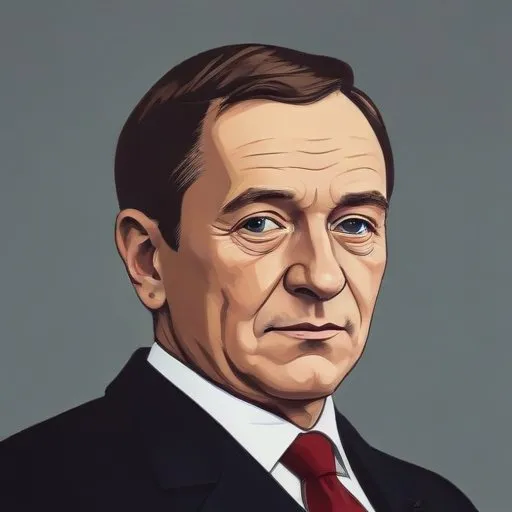
Estonian entrepreneur and politician who played a significant role in the country's economic development and independence movement. He's known for his contributions to Estonia's transition from Soviet rule to a free market economy.
Heinrich Gutkin, a prominent Estonian trader, politician, and community leader, is best known for being the first Jew to be appointed to the Upper Chamber of the National Parliament in Estonia in 1937. During his lifetime, Gutkin held various esteemed positions, including chairman of the Jewish Union Bank in Tallinn, chairman of the Jewish Cultural Self-Administration Office, and a founding member of the Estonian Chamber of Commerce and Industry.
Born on June 13, 1879, in Tallinn, Estonia, Gutkin began his career as a trader and entrepreneur, eventually becoming a successful clothing store owner. His business acumen and leadership skills led him to take on various roles in the Estonian Chamber of Commerce and Industry, where he served from 1925 to 1937.
Gutkin's political career took a significant turn when he was appointed to the Upper Chamber of the National Parliament on February 3, 1937. This marked a historic milestone, as he became the first Jew to hold this position. As a representative of the Upper Chamber, Gutkin worked tirelessly to promote the interests of the Estonian people and the Jewish community.
As chairman of the Jewish Union Bank in Tallinn, Gutkin played a crucial role in promoting economic growth and development in Estonia. Additionally, his leadership of the Jewish Cultural Self-Administration Office demonstrated his commitment to preserving and promoting Jewish culture and heritage in Estonia.
Tragically, Gutkin's life took a drastic turn when he was arrested by Soviet security services on June 14, 1941. His property was confiscated, and he was deported to a prison camp in the Soviet Union, where he ultimately died on October 11, 1941, in Sverdlovsk Oblast.
Heinrich Gutkin's remarkable life and achievements serve as an inspiration to generations to come. His trailblazing work in Estonian politics and finance, coupled with his dedication to the Jewish community, have left an indelible mark on Estonian history.
Gutkin's legacy continues to inspire individuals to strive for excellence, fight for their communities, and push boundaries in the pursuit of progress and equality.
Born in 1874
Estonia's first president, a key figure in the country's struggle for independence from Russia, served as a unifying force during tumultuous times. He's remembered for his role in shaping Estonia's early years and its path to sovereignty.
Born in 1868
Estonia's 2nd Prime Minister, a pioneering journalist, lawyer, and politician who played a crucial role in the country's struggle for independence and development. He's most known for his efforts to establish a democratic government and promote national unity.
Born in 1884
Estonia's 7th Prime Minister, a lawyer and politician who played a crucial role in shaping the country's early years of independence, known for his diplomatic efforts and national unification.
Born in 1888
Estonian journalist and politician who served as the 6th Prime Minister of Estonia, known for his leadership during the country's interwar period and his role in shaping the nation's early years of independence.
Born in 1885
Head of State of Estonia during the country's struggle for independence, known for leading the Estonian Provisional Government in 1918-1919.
Born in 1871
Estonian physician and politician who served as the Head of State of Estonia, playing a crucial role in the country's struggle for independence. He is remembered for his efforts to establish a sovereign Estonian state.
Born in 1886
Estonia's Head of State during World War II, leading the country's government-in-exile and advocating for independence from Soviet occupation. He played a crucial role in preserving Estonia's sovereignty and identity.
Born in 1890
A prominent Estonian leader who served as the country's Prime Minister during a tumultuous period, guiding Estonia through World War II and the Soviet occupation. He's revered for his bravery and statesmanship during Estonia's struggle for independence.
