


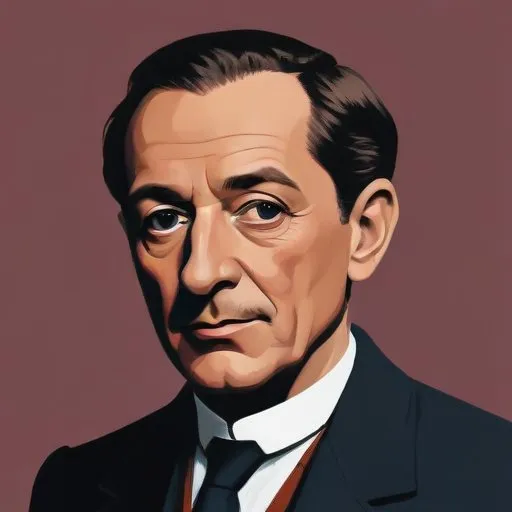
A French author and journalist who wrote influential anti-war novels, most notably "Under Fire", which exposed the harsh realities of World War I.
Henri Barbusse was a French novelist, poet, and journalist who rose to fame with his novel Under Fire, a semi-autobiographical account of his experiences during World War I. This groundbreaking work is often credited as one of the earliest examples of the Lost Generation movement, influencing notable writers such as Ernest Hemingway and Erich Maria Remarque.
Born on May 17, 1873, in Asnières-sur-Seine, France, Barbusse was the son of a French father and an English mother. He left his small town for Paris at the age of 16 and began his literary career in the 1890s as a Symbolist poet. His early work was marked by a sense of pacifism, reflecting his strong opposition to war and militarism.
In 1914, despite his pacifist leanings, Barbusse volunteered for wartime service, an experience that would profoundly impact his writing and worldview. He was awarded the Croix de guerre for his service, but the war also led him to question the nature of imperialism and the role of governments in perpetuating conflict. This shift in perspective would shape his later work, as he became increasingly drawn to communism and the ideals of revolution.
In the 1920s, Barbusse became a member of the French Communist Party and an ardent anti-fascist activist. He supported the Stalinist regime, even writing a biography of Joseph Stalin that became a canonical text for French Stalinists. Despite his close friendship with Leon Trotsky, Barbusse's views on Stalin's regime would later be criticized for their uncritical admiration.
Henri Barbusse's life and work continue to inspire writers, activists, and thinkers around the world. Through his writing, he challenged the status quo and pushed for radical change, leaving behind a legacy that remains as relevant today as it was during his lifetime.
As a writer, activist, and revolutionary, Barbusse's contributions to modern literature and political thought are immeasurable. His life serves as a testament to the power of the human spirit to shape the world and challenge the forces of oppression.
Born in 1866
A French historian, author, and playwright who won the Nobel Prize in Literature in 1915 for his contributions to the ideal of international brotherhood and peace. He's best known for his novel "Jean-Christophe", a 10-volume epic that explores the life of a fictional German musician.
Born in 1872
A French lawyer and politician who served as Prime Minister of France, known for his leadership during the Popular Front government and his role in shaping the country's social and economic policies.
Born in 1840
A pioneering figure in naturalist literature, known for his influential novels that exposed social ills and championed reform, such as "Germinal" and "Nana".
Born in 1844
A French writer and poet who won the Nobel Prize in Literature in 1921, known for his witty and satirical novels that critiqued French society.
Born in 1869
A French literary giant, renowned for his novels and essays that explored the human condition, morality, and the search for authenticity. His works often blurred the lines between fiction and autobiography.
Born in 1884
A French author and critic, known for his novels and essays that explored the human condition, morality, and the role of the intellectual in society.
Born in 1873
A French poet and journalist who wrote about social justice and nationalism, influencing the development of Christian socialism and modern French literature.
