


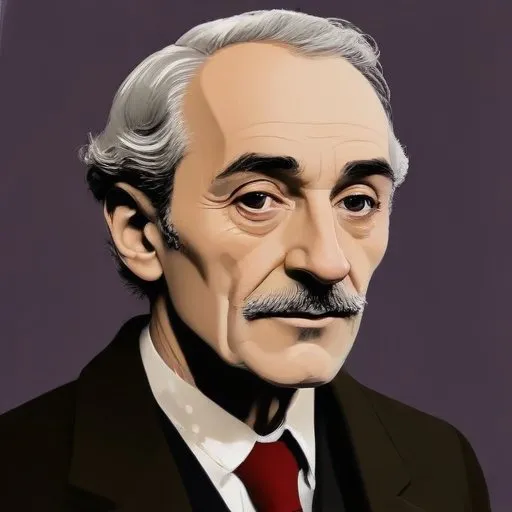
Henri Murger, the French novelist and poet, is best known for his seminal work, Scenes de la vie de bohème (Scenes of Bohemian Life), a semi-autobiographical novel that has inspired numerous adaptations, including Puccini's iconic opera La Bohème.
Born on March 27, 1822, in Paris, Murger's early life was marked by poverty and struggle. His father, a Savoyard immigrant, worked as a tailor and janitor, and the family lived in a humble apartment building. Murger's education was fragmented, and he was forced to drop out of school at 15 to take on menial jobs.
However, Murger's love for literature and poetry persevered, and he began writing in his spare time. His early work caught the attention of French writer Étienne de Jouy, who helped him secure a position as secretary to Count Tolstoi, a Russian nobleman living in Paris.
Murger's literary career began around 1841, and he initially focused on literary and poetic essays. However, to make ends meet, he wrote whatever he could find a market for, churning out prose at an impressive rate.
He edited fashion and trade papers, including Le Moniteur de la Mode and Le Castor, before eventually publishing his masterpiece, Scenes de la vie de bohème, in 1847-1849. This novel, based on his own experiences as a struggling writer living in a Parisian garret, combined instinct, pathos, humor, and sadness, captivating readers and inspiring future adaptations.
Murger's work has left an indelible mark on literature and music. La Bohème, Puccini's opera, is one of the most beloved and enduring adaptations of Murger's novel. Additionally, his work has inspired other notable adaptations, including Leoncavallo's opera, Amadeu Vives' zarzuela Bohemios, and Jonathan Larson's Broadway musical Rent.
Murger's writing also showcases his poetic talent, particularly in his famous lyric, La Chanson de Musette, which has been hailed as a "pearl of poetry" by Théophile Gautier.
Murger's life was marked by struggles and setbacks, including poverty, illness, and personal losses. Despite these challenges, he continued to write until his untimely death on January 28, 1861, at the age of 38.
Through his work, Murger has left behind a testament to the bohemian spirit, capturing the essence of a bygone era and inspiring generations of artists, writers, and musicians.
Henri Murger's legacy continues to inspire and captivate audiences, ensuring that his bohemian spirit will endure for generations to come.
Born in 1821
A pioneering realist novelist who crafted meticulous, psychologically nuanced portrayals of 19th-century French life, particularly in his iconic novel "Madame Bovary".
Born in 1821
A 19th-century literary mastermind who crafted exquisite poetry and art criticism, exploring the beauty and darkness of human experience.
Born in 1823
A 19th-century French poet and critic, known for his lyrical and expressive poetry, as well as his influential literary criticism that shaped the French Symbolist movement.
Born in 1808
A French Romantic poet and translator, known for his vivid and dreamlike writings that explored the realms of fantasy and the human psyche. His works often blurred the lines between reality and imagination.
Born in 1810
French Romantic writer who penned passionate and introspective works, including plays, poems, and novels that explored the human experience.
Born in 1799
A prolific writer who created a vast array of characters and stories that explored the human condition, particularly in the context of post-Napoleonic France. His works are considered a cornerstone of French literature.
Born in 1828
A visionary writer who pioneered the science fiction genre, crafting timeless tales of adventure and exploration that continue to inspire generations.
