


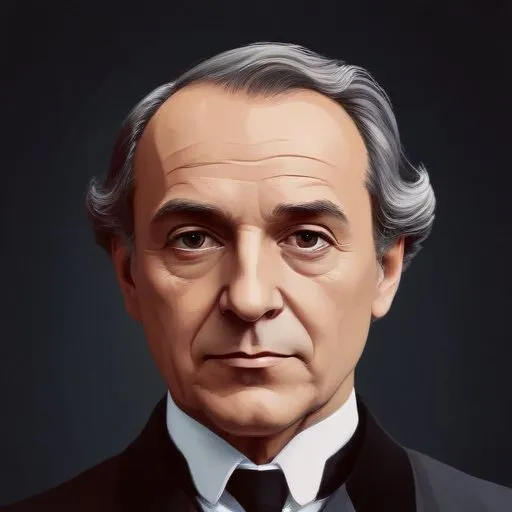
A renowned French conductor and composer, known for his operas and symphonic works, particularly his opera "Marouf, Savetier du Caire".
Henri Rabaud was a renowned French conductor, composer, and pedagogue who left an indelible mark on the world of classical music. With a career spanning over four decades, he held important posts in the French musical establishment, upholding conservative trends in French music during the first half of the 20th century.
Born on November 10, 1873, Rabaud came from a musical family. His father, Hippolyte Rabaud, was a cellist and professor at the Paris Conservatoire, while his mother was a singer who almost created the role of Marguerite in Charles Gounod's opera. Rabaud's maternal grandfather was a well-known flautist, and his great aunt was Julie Dorus-Gras, a celebrated singer.
Rabaud studied at the Conservatoire with André Gedalge and Jules Massenet, two of the most prominent composers of the time. In 1908, he became a conductor at the Paris Opéra-Comique, where he later conducted the 100th performance of his opera Mrouf, savetier du Caire.
From 1914 to 1918, Rabaud directed the Paris Opéra, solidifying his position as a leading figure in French music. In 1918, he became the musical director of the Boston Symphony Orchestra, where he spent one season before returning to Paris.
Following the resignation of Gabriel Fauré in 1922, Rabaud succeeded him as director of the Conservatoire, a position he held until his retirement in 1941. During his tenure, he taught some of the most prominent composers of the time, including Olivier Messiaen, Jean Langlais, and Jehan Alain.
Rabaud's cantata Daphné won the Premier Grand Prix de Rome in 1894, establishing him as a rising star in the world of classical music. His opera Mrouf, savetier du Caire combines the Wagnerian and the exotic, showcasing his unique compositional style.
Rabaud wrote several other operas, including L'appel de la mer, based on J.M. Synge's Riders to the Sea. His compositions are a testament to his dedication to preserving French musical traditions while exploring new and innovative ideas.
Rabaud's influence on modern society extends beyond his compositions and conducting career. He played a significant role in shaping the musical landscape of France during the tumultuous early 20th century, upholding traditional values while encouraging innovation and creativity.
Through his teaching and mentorship, Rabaud inspired a new generation of musicians and composers, leaving a lasting legacy in the world of classical music.
"Music is the harmony of the universe, and we are but mere instruments, attempting to recreate it."
Rabaud's words reflect his deep passion for music and his commitment to preserving and promoting French musical traditions.
Henri Rabaud's life and career span a tumultuous period in French history, from the Belle Époque to the aftermath of World War II. Despite the challenges he faced, Rabaud remained dedicated to his craft, leaving behind a rich legacy of compositions, teachings, and mentorship.
Today, Rabaud is remembered as a maestro of French music, a champion of traditional values, and an inspiration to future generations of musicians and composers.
Born in 1875
A renowned viola player and conductor, he was a leading figure in the development of modern orchestral performance, particularly in the interpretation of French and Russian music.
Born in 1924
A renowned French conductor, known for his interpretations of classical music, particularly French repertoire, and his work with prominent orchestras.
Born in 1925
A renowned French musician who revolutionized classical music with his avant-garde compositions and innovative conducting style, pushing boundaries and redefining the genre.
Born in 1899
A French composer who wrote music for films, ballets, and orchestras, creating iconic scores for movies like "Roman Holiday" and "The Lavender Hill Mob".
Born in 1892
A French composer and educator who blended jazz and classical music to create a unique sound, and is best known for his ballet scores and chamber music compositions.
Born in 1892
A French composer and educator, he blended classical and modern styles, creating iconic works like "Pacific 231" that evoke powerful images and emotions.
Born in 1899
A renowned French pianist and composer, celebrated for his eclectic and innovative works that blend jazz, classical, and sacred music, leaving a lasting impact on modern classical music.
65 Years Old
Renowned for his lyrical and nuanced performances, this pianist is celebrated for his interpretations of the Romantic repertoire, particularly the works of Liszt and Ravel.
