


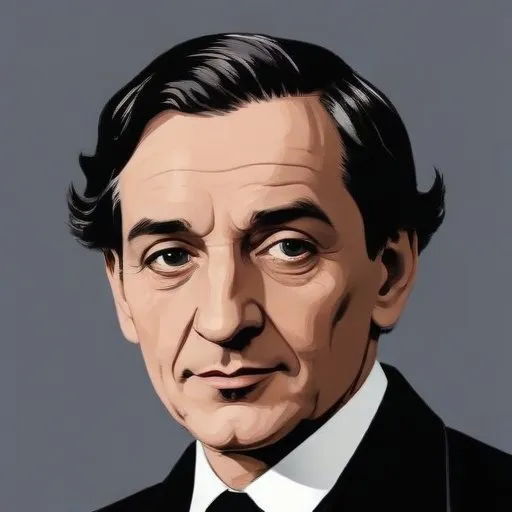
A celebrated poet and author of the late 19th and early 20th centuries, known for his witty and insightful verse, often focusing on everyday life and people.
Renowned for his captivating poetry and insightful essays, Henry Austin Dobson was a prolific English writer who left an indelible mark on literature. His works, characterized by maturity and wisdom, have been cherished by readers for generations, offering a glimpse into the human experience and the world around us.
Born on January 18, 1840, in Plymouth, England, Dobson was the eldest son of George Clarisse Dobson, a civil engineer of French descent. His family's move to Holyhead when he was eight sparked a sense of curiosity and adventure that would shape his writing style. Educated at Coventry and the Gymnase in Strasbourg, Dobson's early life was marked by a thirst for knowledge and exploration.
In 1856, Dobson began his career at the Board of Trade, where he would eventually rise to the rank of principal in the harbour department. However, it was during his spare time that his true passion flourished – writing. Dobson's poetry and essays, penned during the late 19th century, offered a unique perspective on life, love, and the human condition.
Dobson's literary career took off in 1868 with the publication of his poem "Tu Quoque," which appeared in St Paul's, a magazine edited by Anthony Trollope. This marked the beginning of a fruitful collaboration, with Dobson contributing numerous poems, including "A Gentleman of the Old School," "A Dialogue from Plato," and "Une Marquise." Many of these poems were originally illustrated, with the writer often crafting his words to complement the artwork.
Dobson's poetry and essays have had a profound impact on literature, inspiring generations of writers and thinkers. His works continue to be studied and admired for their timeless wisdom and insight into the human experience. As a testament to his enduring legacy, Dobson's poetry has been set to music by composers such as Mary Augusta Wakefield.
In 1868, Dobson married Frances Mary, daughter of the distinguished civil engineer Nathaniel Beardmore. The couple settled in Ealing, where they raised a family and Dobson continued to write in his spare time. He retired from the Board of Trade in 1901 and passed away on September 2, 1921, leaving behind a body of work that would be cherished for centuries to come.
Dobson's funeral was held at St Peter's Church, Ealing, and he was laid to rest in the Westminster Cemetery, Uxbridge Road, Hanwell, Middlesex. Today, his poetry and essays remain a testament to his boundless creativity and insight, inviting readers to explore the world through his words.
Born in 1812
A Victorian-era literary giant, renowned for crafting intricate, psychologically nuanced poetry and plays that probed the human condition, often exploring themes of love, death, and the nature of existence.
Born in 1806
A renowned poet and translator of the Victorian era, celebrated for her romantic and socially conscious works, particularly the iconic love poems "Sonnets from the Portuguese".
Born in 1830
A renowned Victorian-era poet and author, celebrated for her lyrical and symbolic poetry, particularly "The Goblin Market and Other Poems" and "The Prince's Progress".
Born in 1828
A Victorian-era poet and painter who founded the Pre-Raphaelite Brotherhood, creating dreamlike, sensual works that explored themes of love, beauty, and mortality.
Born in 1837
A prominent Victorian-era writer, known for his poetic works that explored themes of beauty, death, and the human condition, with a distinctive style that blended sensuality and symbolism.
Born in 1834
A renowned artist and writer who revolutionized the Arts and Crafts movement with his stunning textiles, poetry, and novels, leaving a lasting impact on Victorian-era aesthetics.
Born in 1819
A prominent art critic and social reformer who championed the Pre-Raphaelite movement and advocated for social justice, leaving a lasting impact on art, architecture, and literature.
Born in 1833
A leading figure in the Pre-Raphaelite movement, creating dreamlike, romantic, and mythological paintings that captivated the Victorian era. His works continue to inspire artists, designers, and writers to this day.
