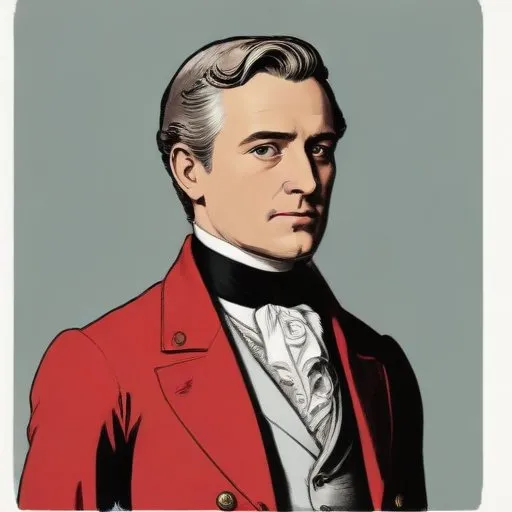
Henry Danvers, 1st Earl of Danby

Henry Danvers, 1st Earl of Danby

Henry Danvers, 1st Earl of Danby was born on June 28th, 1573

Full Name: Henry Danvers, 1st Earl of Danby
Nationality: English
Profession: Noble
Place of Birth: Not available
Title: Earl of Danby
Family: Danvers family
Marriage: Mary Sidney
Children: Three sons

A powerful politician who served as Chief Minister to King Charles II, known for his role in shaping English politics and foreign policy during the Restoration period.

Written by: Fatima Ahmed Fatima Ahmed

Henry Danvers, 1st Earl of Danby, is best known for his military prowess, particularly in the Low Countries, and his subsequent rise to prominence in the English aristocracy, despite a tumultuous past marked by exile and outlawry. Throughout his life, Danvers would navigate the treacherous waters of Elizabethan politics, earning the respect of his peers and the favor of royalty.

Born on June 28, 1573, at Dauntsey, Wiltshire, Henry Danvers was the second son of John Danvers and Elizabeth Nevill, the youngest daughter and coheiress of John Nevill, 4th Baron Latymer. From an early age, Danvers demonstrated a penchant for military life, serving as a page to the esteemed Sir Philip Sidney and accompanying him to the Low Countries. He later fought under the command of Maurice, Count of Nassau, and was appointed to lead a company of infantry at just 18 years old.

In 1594, Danvers' life took a dramatic turn when he killed Henry Long, the son of Robert Long, in a Corsham tavern. The exact circumstances of the event are disputed, with some accounts suggesting a premeditated attack, while others propose that Danvers acted in defense of his brother Charles. Regardless, the brothers fled to Whitley Lodge, the seat of Henry Wriothesley, 3rd Earl of Southampton, and eventually joined the French army after being outlawed.

In France, Danvers and his brother distinguished themselves through their bravery, earning the respect of Henry IV. Their exploits eventually caught the attention of Queen Elizabeth I, who pardoned them and allowed their return to England. Danvers would go on to serve under Charles Howard, 1st Earl of Nottingham, and participate in the siege of Rouen, where he was knighted for his services in the field by Robert Devereux, 2nd Earl of Essex.

  • 1573: Born on June 28 at Dauntsey, Wiltshire
  • 1586: Accompanies Sir Philip Sidney to the Low Countries
  • 1591: Participates in the siege of Rouen and is knighted by Robert Devereux, 2nd Earl of Essex
  • 1594: Kills Henry Long and is outlawed
  • 1597: Serves under Charles Howard, 1st Earl of Nottingham
  • 1603: Invested as a Knight of the Garter
  • 1643: Dies on January 20

Though little is recorded of Danvers' personal thoughts and quotes, his tumultuous life serves as a testament to his resilience and determination. As a soldier and aristocrat, he embodied the ideals of chivalry and honor, earning his place in the annals of English history.

Timeline
1573
Born in Dauntsey, England
Henry Danvers, 1st Earl of Danby was born in 1573 in Dauntsey, England. He would go on to become a prominent English noble.
1603
Created Baron Danvers
Danvers was created Baron Danvers by King James I, recognizing his service to the crown.
1604
Appointed Lord President of the North
Danvers was appointed Lord President of the North, a powerful position in the English government.
1626
Created Earl of Danby
Danvers was created Earl of Danby by King Charles I, further recognizing his service and loyalty.
1644
Died in London, England
Danvers passed away in 1644 in London, England, leaving behind a legacy as a prominent English noble and statesman.
Henry Danvers, 1st Earl of Danby

Henry Danvers, 1st Earl of Danby Quiz

What was Henry Danvers, 1st Earl of Danby's primary role in the Restoration period?

Score: 0/5
FAQ
What was Henry Danverss role in the English Civil War?
Henry Danvers, 1st Earl of Danby, was a British nobleman who played a significant role in the English Civil War, fighting on the side of the Parliamentarians. He was a skilled military commander and politician, serving as a member of Parliament and a governor of various regions.
How did Henry Danvers contribute to the Parliamentarian cause?
Henry Danvers contributed significantly to the Parliamentarian cause, serving as a military commander and governor of various regions. He played a key role in several important battles, including the Battle of Edgehill and the Battle of Newbury.
What was Henry Danverss relationship with Oliver Cromwell?
Henry Danvers had a complex relationship with Oliver Cromwell, initially supporting Cromwells military campaigns but later becoming disillusioned with his rule. Danvers eventually turned against Cromwell, playing a role in the Restoration of the monarchy in 1660.
How did Henry Danverss military career impact English history?
Henry Danverss military career had a significant impact on English history, as he played a key role in several important battles and helped to shape the course of the English Civil War. His experiences also influenced his later political career and his stance on various issues.
What is Henry Danverss legacy in English history?
Henry Danverss legacy in English history is complex and multifaceted, as he played a significant role in the English Civil War and later became disillusioned with the Cromwellian regime. His experiences and perspectives offer valuable insights into this tumultuous period in English history.

Related People:

Charles II of England

Born in 1630

The last monarch of the House of Stuart, restored to the throne after a republican Commonwealth, known for his lavish spending, mistresses, and the Great Fire of London. He ruled with a mix of absolutism and indulgence, shaping England's Restoration era.

Oliver Cromwell

Born in 1599

Leader of the Parliamentarian forces during the English Civil War, who later ruled England, Scotland, and Ireland as a republican dictator, known for his military victories and radical reforms.

Robert Reich

80 Years Old

The 22nd United States Secretary of Labor, a prominent economist and politician, is most known for championing workers' rights and advocating for economic policies that benefit the middle and working classes. They are a vocal critic of income inequality and a strong proponent of progressive economic reforms.