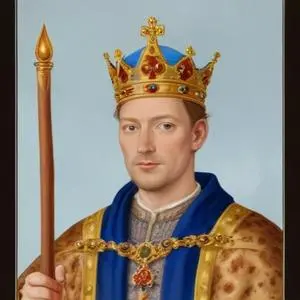
Henry III of England: The Pious King Who Shaped Medieval England
The King Who Reigned for Over 50 Years
Henry III, also known as Henry of Winchester, is renowned for being the King of England, Lord of Ireland, and Duke of Aquitaine from 1216 until his death in 1272. During his reign, he oversaw significant transformations in the English monarchy, law, and architecture, earning him a place in the annals of history as one of the most important kings of medieval England.
A Turbulent Childhood and Rise to Power
Born on October 1, 1207, Henry was the son of King John and Isabella of Angoulme. He assumed the throne at the tender age of nine, in the midst of the First Barons' War. This tumultuous period saw the young king face opposition from powerful nobles, who eventually recognized him as the rightful ruler. Cardinal Guala Bicchieri's declaration of the war against the rebel barons as a religious crusade helped Henry's forces, led by William Marshal, defeat the rebels at the battles of Lincoln and Sandwich in 1217.
A King Committed to the Great Charter
Henry III promised to abide by the Great Charter of 1225, a revised version of the 1215 Magna Carta. This significant document limited royal power and protected the rights of the major barons. This commitment to the charter demonstrated Henry's willingness to work with his nobles and establish a more balanced system of governance.
A Period of Personal Rule and Investment in Architecture
From 1234 onwards, Henry ruled England personally, rather than governing through senior ministers. During this period, he invested heavily in a handful of his favorite palaces and castles, showcasing his passion for architecture and art. The rebuilding of Westminster Abbey, which was consecrated in 1269, is a testament to his commitment to grand architectural projects.
Piety and Charitable Works
Henry III was known for his piety and devotion to the figure of Edward the Confessor, whom he adopted as his patron saint. He was a generous benefactor to charities and the Church, often holding lavish religious ceremonies. However, his treatment of the Jewish community was marked by controversy, with the introduction of the Statute of Jewry in 1253, which aimed to segregate the community.
Marriage and Family
In 1236, Henry married Eleanor of Provence, with whom he had five children. His family life was marked by a deep sense of devotion and piety, reflecting his strong religious convictions.
Military Campaigns and Diplomacy
Henry's military campaigns were marked by mixed success. His invasion of Poitou in 1242 ended in the disastrous Battle of Taillebourg. However, he later relied on diplomacy, cultivating an alliance with
Frederick II, Holy Roman Emperor.
Legacy and Historical Context
Henry III's reign was a transformative period in English history, marked by significant developments in law, architecture, and governance. His commitment to the Great Charter and his investment in grand architectural projects earned him a place in the hearts of his contemporaries. Today, he is remembered as a pious king who played a crucial role in shaping medieval England.
Timeline of Key Events
- 1207: Henry III was born on October 1
- 1216: Henry assumed the throne at the age of nine
- 1217: Henry's forces defeated the rebels at the battles of Lincoln and Sandwich
- 1225: Henry promised to abide by the Great Charter
- 1230: Henry attempted to reconquer the provinces of France that had once belonged to his father
- 1232: A revolt led by William Marshal's son Richard broke out
- 1234: Henry began to rule England personally
- 1242: Henry invaded Poitou, leading to the Battle of Taillebourg
- 1253: Henry introduced the Statute of Jewry
- 1269: The rebuilding of Westminster Abbey was consecrated
- 1272: Henry III died on November 16
Fun Facts and Trivia
- Henry III was the first English king to use an official seal
- The rebuilding of Westminster Abbey was so grand that it became known as the "Henry's Church"
- Henry III was a patron of the arts, commissioning works from famous artists and craftsmen
FAQ
What were Henry IIIs accomplishments as King of England?
Henry III accomplished several significant feats during his reign as King of England, including rebuilding Westminster Abbey, establishing the University of Cambridge, and strengthening the English monarchy.
What were Henry IIIs conflicts with the nobility?
Henry III faced several conflicts with the nobility during his reign, particularly with the powerful Earl of Simon de Montfort. These conflicts ultimately led to the Second Barons War and the establishment of the English parliament.
How did Henry III acquire the nickname The Son of Magna Carta?
Henry III acquired the nickname The Son of Magna Carta because of his commitment to upholding the principles of the Magna Carta, a document signed by his father, King John, which established the rights of the nobility and the common people.
What were Henry IIIs relationships like with his family?
Henry III had a close relationship with his family, particularly his wife, Queen Eleanor, and his son, Edward I. However, he also faced challenges from his nobles and barons, who often opposed his policies and decisions.
What legacy did Henry III leave behind?
Henry III left behind a lasting legacy in English history, including the rebuilding of Westminster Abbey, the establishment of the University of Cambridge, and the strengthening of the English monarchy. He is also remembered for his commitment to the principles of the Magna Carta.