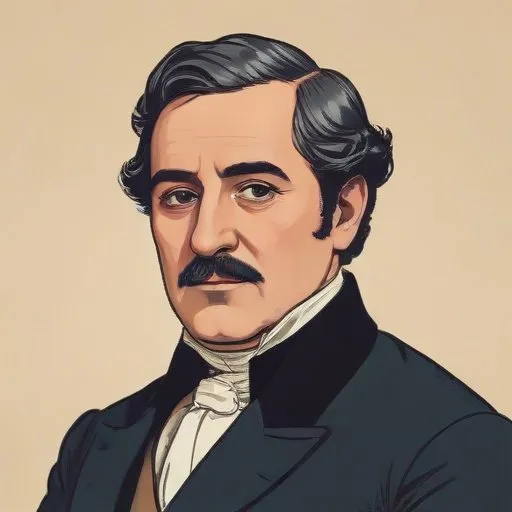
Henry PettyFitzmaurice, 5th Marquess of Lansdowne: A Life of Statecraft and Diplomacy
A Statesman of Note
Henry PettyFitzmaurice, 5th Marquess of Lansdowne, is perhaps best known for his remarkable career as a British statesman, having served as Governor General of Canada, Viceroy of India, Secretary of State for War, and Secretary of State for Foreign Affairs. His notable achievements earned him a distinct place in the annals of British history, as he navigated the complexities of government and international relations with aplomb.
Early Life and Inheritance
Born on January 14, 1845, at Lansdowne House in London, Henry PettyFitzmaurice was the eldest son of Henry PettyFitzmaurice, 4th Marquess of Lansdowne, and his wife, Emily, 8th Lady Nairne. His maternal grandfather, Count Charles de Flahaut, was a prominent French general and diplomat who fought alongside
Napoleon Bonaparte. Through his mother, Lansdowne was also a half-nephew of Emperor
Napoleon III and a great-grandson of Prince Talleyrand, Napoleon's foreign minister.
Early Political Career
Lansdowne's entry into politics came in 1868, when he was elected as a Member of Parliament (MP) for Calne. He held this position until 1874, during which time he developed a reputation as a skilled debater and politician. In 1883, he was appointed Under-Secretary of State for India, marking the beginning of his illustrious career in government.
Governor General of Canada and Viceroy of India
In 1883, Lansdowne was appointed Governor General of Canada, a position he held until 1888. During his tenure, he worked to strengthen ties between Canada and the British Crown, while also addressing the country's growing nationalist sentiments. Later, in 1888, he was appointed Viceroy of India, where he oversaw the country's transition to a more democratic system of government.
The Lansdowne Letter
One of Lansdowne's most notable diplomatic efforts came in 1917, during World War I, when he wrote the Lansdowne Letter. In this letter, he advocated for a compromise peace, urging the British government to negotiate a peaceful resolution to the conflict. Although his efforts were ultimately unsuccessful, the letter remains an important testament to his commitment to diplomacy and peace.
Personal Life and Legacy
Lansdowne was a man of considerable wealth, estimated to be the sixteenth richest peer in the United Kingdom. He was also a devoted husband and father, marrying Maud Hamilton in 1869 and having four children with her. Throughout his life, he was known for his courteous and affable nature, earning him the respect and admiration of his peers.
Awards and Honors
Throughout his illustrious career, Lansdowne received numerous awards and honors, including the Order of the Garter and the Order of the Star of India. He was also honored with a number of honorary degrees from universities across the United Kingdom and Canada.
Historical Context and Legacy
Lansdowne's life and career spanned a tumultuous period in world history, marked by wars, colonialism, and social change. His commitment to diplomacy, statecraft, and public service has left an indelible mark on British history, earning him a place among the most notable statesmen of his time. As a testament to his enduring legacy, his name continues to be revered in both the United Kingdom and Canada, where he played a significant role in shaping the course of their histories.
FAQ
What was Henry Petty-Fitzmaurices role in British politics?
Henry Petty-Fitzmaurice served as a British politician and held various positions, including Governor-General of India from 1888 to 1894. He played a key role in shaping British foreign policy, particularly in relation to India and the British Empire.
What were Henry Petty-Fitzmaurices accomplishments as Governor-General of India?
As Governor-General of India, Henry Petty-Fitzmaurice implemented several significant reforms, including the Indian Councils Act of 1892, which expanded the legislative powers of Indian councils. He also worked to improve the Indian rail network and promote economic development.
What was Henry Petty-Fitzmaurices relationship like with Queen Victoria?
Henry Petty-Fitzmaurice enjoyed a close relationship with Queen Victoria, serving as her Viceroy in India. He was a trusted advisor and confidant, often corresponding with the Queen on matters of state and imperial policy.
What were Henry Petty-Fitzmaurices views on Indian independence?
Henry Petty-Fitzmaurice was a strong supporter of British imperial rule and did not advocate for Indian independence. However, he did promote gradual reforms and concessions, acknowledging Indias growing desire for self-governance.
What is Henry Petty-Fitzmaurices legacy in modern Indian history?
Henry Petty-Fitzmaurices legacy in modern Indian history is complex, marked by both his contributions to Indian development and his role in maintaining British imperial control. His reforms laid the groundwork for Indias eventual independence, while his imperial legacy remains a subject of debate and critique.