


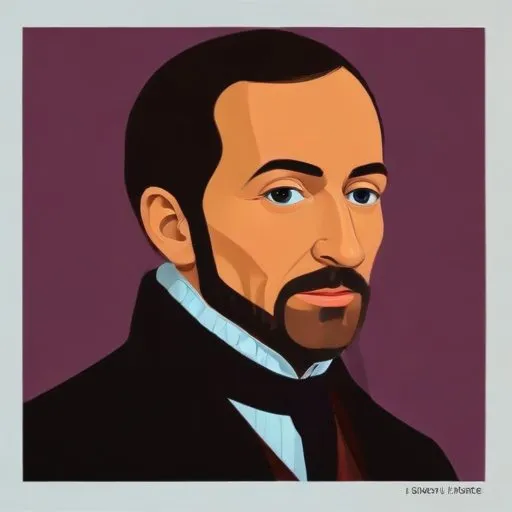
A French writer who explored themes of morality, individualism, and the human condition through his essays, novels, and plays, often with a touch of irony and wit.
Henry de Montherlant was a French literary giant, best known for his thought-provoking essays, novels, and plays that delved into the complexities of human nature and societal norms. Elected to the prestigious Académie française in 1960, Montherlant's works continue to captivate readers and inspire writers to this day.
Born on April 20, 1895, in Paris, Montherlant was a descendant of an aristocratic yet obscure Picard family. His father, a hardline reactionary, instilled in him a strong sense of tradition and discipline, while his mother, a formerly lively socialite, struggled with chronic illness and died at the young age of 43. These early experiences would later shape Montherlant's writing and worldview.
Montherlant's literary career spanned over five decades, during which he penned numerous essays, novels, and plays that explored various themes, including morality, identity, and the human condition. Some of his notable works include:
Montherlant's writing was deeply rooted in his philosophical beliefs, which were influenced by his fascination with ancient Rome and Latin. He was drawn to the ideals of Stoicism and the concept of "amor fati," or the love of one's fate. These principles are reflected in his works, which often challenged conventional morality and encouraged readers to question the status quo.
Montherlant's life was marked by several significant events that shaped his writing and worldview. In 1905, he discovered Henryk Sienkiewicz's Quo Vadis, which sparked his lifelong fascination with ancient Rome. In 1912, he was expelled from the Catholic Sainte-Croix de Neuilly school for founding a group called La Famille, a kind of order of chivalry that emphasized loyalty and mutual assistance.
Montherlant's works have had a profound impact on modern literature and society. His writing continues to inspire new generations of writers, and his philosophical ideas remain relevant in today's world. Despite his controversial views on certain topics, Montherlant's legacy as a literary giant and a thinker remains unchallenged.
Some of Montherlant's most memorable quotes include:
Henry de Montherlant's remarkable life and works continue to captivate readers and inspire writers. His thought-provoking essays, novels, and plays remain a testament to his intellectual curiosity and his ability to challenge societal norms. As a writer, philosopher, and thinker, Montherlant's legacy is a reminder that true wisdom lies in questioning the status quo and embracing the complexities of human nature.
Born in 1889
A renowned French creative force, celebrated for his innovative and surreal works that blurred the lines between literature, art, and cinema, leaving an indelible mark on 20th-century culture.
Born in 1869
A French literary giant, renowned for his novels and essays that explored the human condition, morality, and the search for authenticity. His works often blurred the lines between fiction and autobiography.
Born in 1905
Existentialist philosopher and playwright who argued that humans have complete freedom to choose their actions and create their own meaning in life, influencing modern thought on morality and individual responsibility.
Born in 1913
A French novelist, philosopher, and journalist who wrote influential works like "The Stranger" and "The Plague", exploring absurdism and the human condition.
Born in 1885
A French literary giant, celebrated for his novels and plays that probed the human condition, morality, and the complexities of faith. His works are known for their psychological depth and lyrical prose.
Born in 1894
A French physician and writer, known for his novels that explored the human condition, often with dark humor and satire, influencing 20th-century literature. His works are considered classics of modernist fiction.
Born in 1881
A French novelist and paleographer who won the Nobel Prize in Literature in 1937 for his novel "Les Thibault", a sprawling family saga that explores the decline of the French aristocracy. He's known for his meticulous historical research and detailed character portrayals.
