


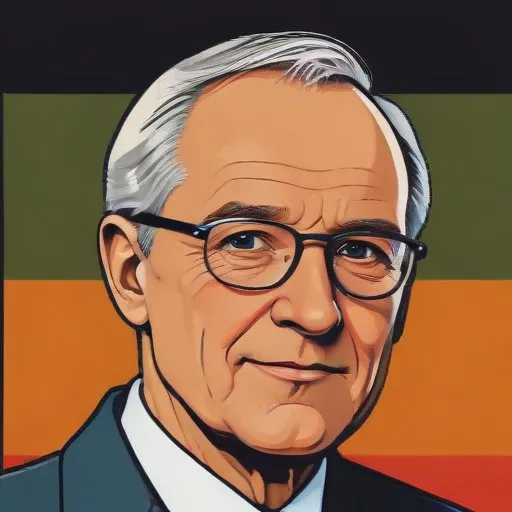
A German agronomist and politician who played a key role in developing and implementing Nazi Germany's agricultural and food policies, including the Hunger Plan that led to widespread famine and starvation in occupied territories.
Herbert Friedrich Wilhelm Backe, a German politician and SS Senior Group Leader, is infamously known for developing and implementing Operation Hunger, a diabolical plan that envisioned the death by starvation of millions of Slavic and Jewish civilians during World War II. As State Secretary and Minister in the Reich Ministry of Food and Agriculture, Backe played a pivotal role in the Nazi regime's genocidal policies.
Born on May 1, 1896, in Batumi, Georgia, to a retired Prussian lieutenant turned trader, Backe's early life was marked by turmoil. His mother, a Caucasus German, had emigrated from Württemberg to Russia in the early 19th century. After completing his studies at the Tbilisi gymnasium, Backe was interned as an enemy alien during World War I. This experience, combined with witnessing the Russian Revolution, forged his anti-communist ideology.
Backe moved to Germany during the Russian Civil War, where he worked as a laborer before enrolling to study Agronomy at the University of Göttingen in 1920. He later became an assistant lecturer on agricultural geography at Hanover Technical University. Backe's expertise in agriculture and geography eventually caught the attention of the Nazi regime, which saw an opportunity to harness his skills for their own sinister purposes.
Developed during the planning phase of Operation Barbarossa, Operation Hunger aimed to divert and redirect Ukrainian foodstuffs away from central and northern Russia, condemning millions to death by starvation.
The plan was designed to benefit the invading German army and the population in Germany, while deliberately starving local civilians in the occupied territories.
As a result of Operation Hunger, millions of innocent lives were lost, cementing Backe's reputation as one of the most notorious war criminals of the 20th century.
In 1945, as the Allied forces closed in on Germany, Backe was arrested and slated to be tried for war crimes at Nuremberg in the Ministries Trial. However, on April 6, 1947, he committed suicide in his prison cell, avoiding accountability for his heinous crimes.
Herbert Backe's contributions to the Nazi regime's genocidal policies have left an indelible mark on human history. His role in perpetuating one of the darkest chapters of World War II serves as a stark reminder of the devastating consequences of racism, xenophobia, and ideological extremism.
As we remember the victims of Operation Hunger, we must also acknowledge the lessons of history and strive to prevent such atrocities from recurring. Backe's legacy serves as a warning, urging us to remain vigilant in the face of hatred and intolerance, and to promote a culture of empathy, understanding, and humanity.
Born in 1889
The dictator of Nazi Germany, responsible for the genocide of six million Jews and millions of other people during World War II, and infamous for his extreme nationalist and anti-Semitic ideology.
Born in 1900
Leading the SS and Gestapo, he oversaw the Nazi regime's brutal security apparatus and implemented the "Final Solution," orchestrating the genocide of six million Jews during World War II.
Born in 1893
A high-ranking Nazi official, he was a decorated World War I fighter pilot and later became a prominent politician, serving as Minister President of Prussia. He's infamous for his role in the Nazi regime and war crimes trials.
Born in 1893
A German diplomat who served as the Nazi regime's Foreign Minister, orchestrating key alliances and treaties that led to World War II. He was a close associate of Adolf Hitler and played a crucial role in shaping Nazi foreign policy.
Born in 1897
A mastermind of Nazi propaganda, he crafted a persuasive narrative that fueled the Third Reich's rise to power, leaving a lasting impact on the world.
Born in 1876
A German naval leader who played a key role in the Kriegsmarine during World War II, overseeing the German U-boat fleet and naval operations. He was a close advisor to Adolf Hitler and implemented the German naval strategy during the war.
Born in 1891
A German naval commander who led the U-boat fleet during World War II and briefly served as President of Germany after Hitler's death, known for his role in the war and its aftermath.
Born in 1900
A powerful and secretive figure in the Nazi Party, known for controlling access to Hitler and overseeing the party's administrative and financial machinery. He vanished after Hitler's death, sparking decades of speculation about his fate.
