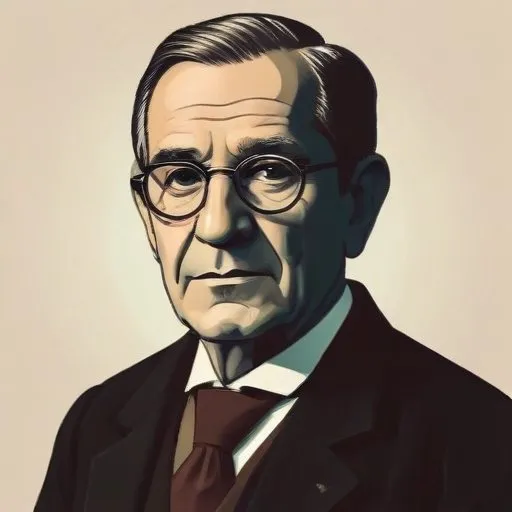
Herbert Feis: The Pioneering Economist and Historian Behind the Potsdam Conference
A Life of Distinction: Shaping the Course of Economic History
Herbert Feis, a renowned American historian, author, and economist, left an indelible mark on the world of international economic affairs. As the highest-ranking economic official in the US Department of State during the
Herbert Hoover and Franklin Roosevelt administrations, Feis played a pivotal role in shaping the course of economic history, particularly during the tumultuous World War II era.
Early Life and Education
Born on June 7, 1893, in New York City, Feis was the son of Jewish immigrants from Alsace, France. His family's fortunes improved over the years, allowing them to move from the Lower East Side to the Upper West Side of Manhattan. Feis completed his high school education at the prestigious
Townsend Harris Hall Prep School and went on to graduate from Harvard College. He later earned a Ph.D. in Economics from Harvard, laying the foundation for his illustrious career.
Academic and Professional Pursuits
Feis' academic journey took him to various institutions, including Harvard University, the University of Kansas, and the University of Cincinnati, where he taught economics and published numerous scholarly studies. His expertise in international economic affairs led to his appointment as an adviser to the International Labor Office of the League of Nations in Geneva, Switzerland, from 1922 to 1927. This experience would later inform his work in the State Department.
Advisor on International Economic Affairs
Feis' stint in the State Department began in 1931, where he served as the Advisor on International Economic Affairs, the highest-ranking economic official in the department. During this period, he played a crucial role in shaping the US government's economic policies, particularly in the post-World War I era. His work during this period laid the foundation for his subsequent career as a historian and author.
Historian and Author: Unraveling the Potsdam Conference
Feis' experience in the State Department inspired his next career move – as a historian and author. He went on to write 11 books on the U.S. diplomatic history of World War II, with his masterpiece,
Between War and Peace: The Potsdam Conference, published in 1960. This seminal work earned him the Pulitzer Prize for History in 1961, cementing his reputation as a leading scholar of international relations.
Personal Life and Legacy
Feis married Ruth Stanley-Brown, the granddaughter of US President James Garfield, and had a daughter. His personal life was marked by a strong sense of public service, reflected in his dedication to his work and his contributions to the field of international economic affairs.
Impact on Modern Society
Feis' work had a profound impact on modern society, shaping our understanding of international relations, economic policy, and diplomacy. His contributions to the field of economic history continue to influence scholars and policymakers alike, ensuring his legacy as a pioneering economist and historian.
Quotes and Memorable Sayings
- "The struggle for power is the struggle for peace." – Herbert Feis
Awards and Honors
- Pulitzer Prize for History (1961)
Historical Context and Legacy
Feis' life and work are a testament to his commitment to public service, academic rigor, and literary excellence. His contributions to the field of international economic affairs continue to inspire generations of scholars, policymakers, and historians, solidifying his place as one of the most influential economists and historians of the 20th century.
FAQ
What were Herbert Feis contributions to American history?
Feis was a renowned American historian and author, making significant contributions to the field of economic history. His works explored the intersection of politics, economics, and diplomacy during World War II.
What was Herbert Feis role in the US State Department?
Feis served as the US Department of States Economic Advisor from 1931 to 1943, playing a crucial role in shaping American foreign policy during the interwar period.
What are Herbert Feis most famous books?
Feis wrote several influential books, including The Road to Pearl Harbor and Churchill, Roosevelt, Stalin: The War They Waged and the Peace They Sought. His works are highly regarded for their meticulous research and incisive analysis.
What was Herbert Feis relationship with Franklin D. Roosevelt?
Feis enjoyed a close working relationship with President Roosevelt, serving as a trusted advisor on economic and foreign policy matters.
What is Herbert Feis legacy in American academia?
Feis legacy extends far beyond his own works, influencing generations of historians and scholars. His commitment to rigorous research and nuanced analysis continues to shape the field of American economic history.