


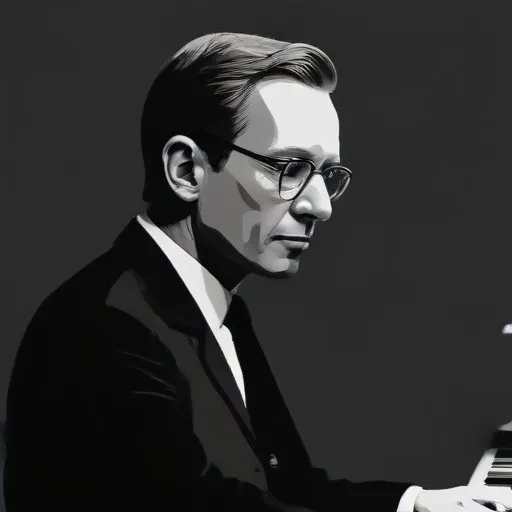
A Danish pianist and composer, known for his romantic and neoclassical works, as well as his performances of Mozart and Beethoven's music.
Herman David Koppel, born on October 1, 1908, in Copenhagen, Denmark, was a renowned composer and pianist of Jewish origin, hailed for his remarkable contributions to the world of classical music. With a career spanning over six decades, Koppel left an indelible mark on the music scene, leaving behind a legacy of symphonies, concertos, string quartets, and chamber music that continue to inspire and delight audiences worldwide.
Koppel was born to Isak Meyer Koppel and Maria Hendeles, Polish Jewish immigrants who had settled in Denmark. Alongside his younger brother, Julius, a violinist, Koppel began his musical journey at the age of 17, studying piano at the Royal Danish Conservatory under the tutelage of Rudolph Simonsen and Emilius Bangert. He further honed his skills through private lessons with Norwegian-Danish pianist Anders Rachlew and embarked on study trips to Germany, England, and France, broadening his musical horizons.
Koppel's pianistic prowess was evident from the outset, with his 1930 debut concert featuring Carl Nielsen's Opus 40, Theme with Variations, which garnered widespread acclaim. He went on to establish a lifelong commitment to Nielsen's music, performing his compositions with great fervor and dedication. Koppel's repertoire was vast, encompassing romantic masters like Mozart and Brahms, as well as modernist giants such as Bartok, Hans Werner Henze, and Darius Milhaud. He was also an accomplished chamber musician, forming the Koppel Quartet and collaborating with various singers.
Koppel's compositional output was staggering, comprising seven symphonies, numerous concertos, six string quartets, and an array of chamber music, piano works, operas, and film scores. His music is characterized by its lyricism, depth, and mastery of form, reflecting his deep understanding of the classical tradition and his innovative spirit.
Koppel's family played a significant role in his life, with his sons, Anders and Thomas, becoming accomplished composers in their own right, and his daughter, Lone, emerging as an opera singer. His brother, Julius, was a violinist and concertmaster, further solidifying the family's musical bond. Koppel's personal life was marked by hardship, as he fled Nazi-occupied Denmark with his family in 1943, seeking refuge in Sweden.
Herman David Koppel's impact on Danish and international musical life cannot be overstated. He was a devoted performer and promoter of Nielsen's music, helping to establish the composer's reputation as a national treasure. Through his compositions, performances, and educational endeavors, Koppel has inspired generations of musicians, leaving behind a rich cultural heritage that continues to enrich and inspire audiences today.
Born in 1865
A renowned Danish musician who excelled as a violinist, composer, and conductor, creating iconic works that blended Romantic and Modernist styles. His symphonies and concertos are still widely performed today.
98 Years Old
A right-arm medium-pace bowler and lower-order batsman who played 14 Tests for South Africa from 1955 to 1962, taking 58 wickets at an average of 25.75.
Born in 1786
A German-Danish pianist and composer who wrote over 200 works, including operas, symphonies, and chamber music, and is often referred to as the "Beethoven of the flute" due to his extensive flute compositions.
Born in 1714
A pioneering opera composer who revolutionized the art form with his innovative and expressive works, blending music and drama in a way that captivated audiences.
Born in 1732
A renowned composer and pianist of the Classical period, known for his symphonies, operas, and chamber music that showcased his innovative and expressive style. He played a significant role in shaping the Classical music era.
Born in 1756
A child prodigy and master of classical music, he composed over 600 works, including symphonies, operas, and chamber music, that continue to inspire and influence musicians today.
