


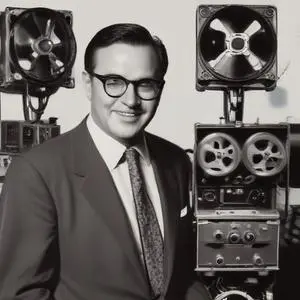
Academy Award-winning screenwriter behind iconic films like Citizen Kane, known for his witty dialogue and clever storytelling.
Herman J. Mankiewicz is best known for co-writing the screenplay for Orson Welles' 1941 film Citizen Kane, which earned him an Academy Award for Best Original Screenplay. However, his contributions to Hollywood extend far beyond this iconic film, with a career spanning over three decades and influencing the trajectory of American cinema.
Born on November 7, 1897, in New York City, Mankiewicz was the son of German-Jewish immigrants. His family later moved to Wilkes-Barre, Pennsylvania, where his father accepted a teaching position. Mankiewicz's early career in journalism took him to Berlin, where he worked as a correspondent for Women's Wear Daily, and later to New York, where he became the assistant theater editor at The New York Times and the first regular drama critic at The New Yorker.
Mankiewicz's writing style, characterized by its slick, satirical, and witty humor, became highly sought after in 1930s Hollywood. His ability to craft dialogue that carried films earned him a reputation as a "fixer" for other writers' screenplays, with much of his work remaining uncredited. Film critic Pauline Kael credited Mankiewicz with having written, alone or with others, about forty films she remembered best from the 1920s and 1930s.
In addition to Citizen Kane, Mankiewicz wrote or worked on films including The Wizard of Oz, Man of the World, Dinner at Eight, The Pride of the Yankees, and The Pride of St. Louis. His collaborations with Orson Welles, F. Scott Fitzgerald, and other notable writers and directors of the time cemented his status as a behind-the-scenes genius.
Mankiewicz's contributions to Hollywood have had a lasting impact on American cinema. His writing style, which prioritized dialogue and satire, paved the way for future generations of writers and filmmakers. Nearly seven decades after his death, Mankiewicz's legacy continues to inspire, with actor Gary Oldman portraying him in the 2020 Oscar-winning film Mank.
Mankiewicz's work continues to be celebrated and studied by cinephiles and writers alike. His legacy serves as a testament to the power of behind-the-scenes talent and the enduring impact of classic Hollywood films.
Born in 1915
A pioneering filmmaker and master of cinematic storytelling, known for his innovative narrative techniques and iconic films like "Citizen Kane" and "Touch of Evil".
Born in 1909
Academy Award-winning filmmaker behind iconic movies like "All About Eve" and "Cleopatra", known for witty dialogue and strong female characters.
Born in 1894
Academy Award-winning writer behind iconic films like "Notorious" and "Scarface", known for his witty dialogue and genre-defining storytelling.
Born in 1895
A pioneering playwright and screenwriter, known for his witty, sophisticated comedies that often explored the lives of journalists and show business personalities. His work continues to influence American theater and film.
Born in 1863
Founded a massive media conglomerate, revolutionizing the newspaper industry and shaping public opinion through sensationalized journalism. Known for his extravagant lifestyle and grandiose architecture .
Born in 1897
A silent film star and comedian, known for her charming on-screen presence and high-profile romance with newspaper magnate William Randolph Hearst.
Born in 1905
A legendary actress who captivated audiences with her iconic performances on the silver screen, earning her the title of Hollywood's first female superstar.
Born in 1904
Debonair leading man of Hollywood's Golden Age, starring in iconic romantic comedies and dramas, known for suave charm and witty banter.
