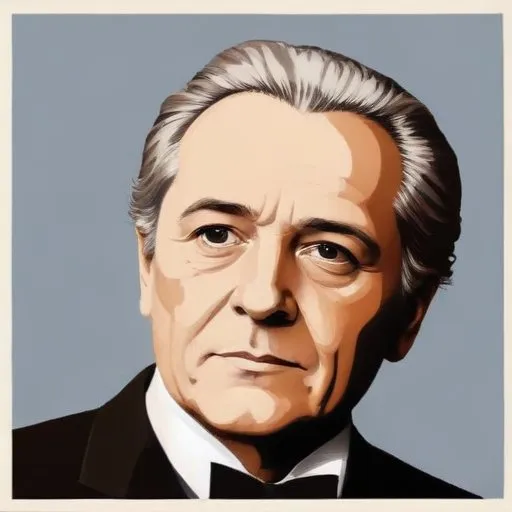
Hermann Abendroth: The Maestro of Classical Music
A Conductor of Unparalleled Proportions
Hermann Abendroth was a renowned German conductor, celebrated for his masterful interpretations of classical and romantic compositions. His impressive career spanned over three decades, during which he led some of the world's most prestigious orchestras, including the Grzenich Orchestra Cologne and the London Symphony Orchestra.
Early Life and Education
Born on January 19, 1883, in Frankfurt, Abendroth was the son of a bookseller. His family was rich in artistic talent, with several members excelling in diverse disciplines. After completing his school studies at the Frankfort Gymnasium, Abendroth pursued an apprenticeship as a book dealer, but soon switched to studying music at the conservatory of Munich, the Mnchner Konservatorium, from 1900 to 1903.
Rise to Prominence
Abendroth's first stable assignment as a conductor was with the Orchestral Society of Munich from 1903 to 1904. He then moved to Lbeck, serving as the Kapellmeister of the Theater Lbeck from 1905 to 1911. His subsequent appointments as Generalmusikdirektor of the city of Essen (1911-1914) and Kapellmeister of the Grzenich Orchestra Cologne (1915-1934) cemented his reputation as a master conductor.
Career Highlights
- Director of the Lower Rhenish Music Festival (1922)
- General music director of Cologne (1918) and professor (1919)
- General music director of Bonn (1930-1933)
- Frequent guest conductor of the London Symphony Orchestra (1926-1937)
- Conducted the USSR State Symphony Orchestra in the Soviet Union (1925, 1927, and 1928)
Legacy and Impact
Abendroth's contributions to the world of classical music are immeasurable. He was a champion of contemporary compositions, premiering works by Bartok and Stravinsky. His interpretations of Beethoven, Brahms, and Bruckner are still revered today. As a professor and director of the Cologne Conservatory, Abendroth played a pivotal role in shaping the next generation of musicians.
Influence on Modern Society
Abendroth's influence extended beyond the realm of classical music. His tours to the Soviet Union and England helped foster cultural exchange during a tumultuous period in world history. His passion for music education and his dedication to nurturing young talent continue to inspire musicians and educators alike.
Personal Milestones and Key Life Events
- Reformed the Cologne Conservatory to become the Cologne Musikhochschule
- Received numerous accolades for his contributions to music and education
As Hermann Abendroth's legacy continues to inspire and influence generations of musicians, his name remains synonymous with excellence in classical music.
FAQ
What was Hermann Abendroths musical background?
Hermann Abendroth was a German conductor and composer with a strong background in classical music. He studied at the Leipzig Conservatory and later worked as a conductor at several German opera houses.
What is Hermann Abendroths most famous composition?
Hermann Abendroths most famous composition is his oratorio Nathan der Weise, which explores themes of tolerance, understanding, and humanity. The work is considered a masterpiece of German choral music.
What is Hermann Abendroths significance in German music?
Hermann Abendroth played a crucial role in promoting German music and culture, particularly during the post-war period. His compositions and conducting helped to shape the countrys musical identity and facilitated its cultural reconstruction.
How did Hermann Abendroths experiences shape his music?
Hermann Abendroths experiences during World War II and the post-war period deeply influenced his music, which often explored themes of hope, unity, and human dignity. His compositions served as a reflection of the eras complexities and challenges.
How is Hermann Abendroth remembered today?
Today, Hermann Abendroth is celebrated as a leading figure in German music, with his compositions and conducting legacy continuing to inspire and influence musicians around the world.