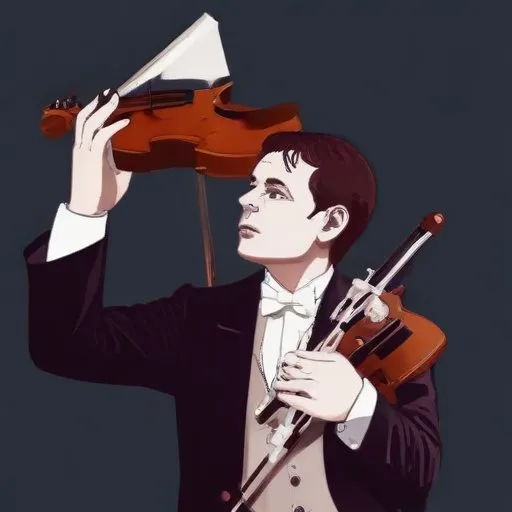
Hermann Scherchen: The Maestro of Contemporary Music
A Champion of 20th-Century Composers
Hermann Scherchen was a renowned German conductor who left an indelible mark on the world of classical music. He is best known for promoting and premiering works by some of the most influential 20th-century composers, including
Arnold Schoenberg,
Richard Strauss,
Anton Webern, and Alban Berg.
Early Life and Career
Born on June 21, 1891, in Berlin, Scherchen began his musical journey as a violist. At the tender age of 17, he played among the violas of the Bluthner Orchestra of Berlin. His early career saw him conducting in Riga from 1914 to 1916 and in Königsberg from 1928 to 1933.
A New Chapter in Winterthur
In 1933, Scherchen left Germany in protest of the rising Nazi regime and settled in Switzerland. It was here that he found his true calling, becoming the principal conductor of the city orchestra of Winterthur (now known as the Orchester Musikkollegium Winterthur) from 1922 to 1950. Alongside philanthropist Werner Reinhart, Scherchen played a pivotal role in shaping the musical landscape of Winterthur, with a focus on contemporary music.
Premieres and Innovations
Scherchen'sWinterthur tenure was marked by numerous premieres, including Schoenberg's
Pierrot Lunaire and works by
Edgard Varèse,
Iannis Xenakis, and Luigi Nono. He was known for his unconventional approach to conducting, often performing without a baton. This unique style earned him recognition as a true innovator in the world of classical music.
Teaching and Legacy
Scherchen's influence extended beyond the concert hall to the classroom. He taught and mentored many notable musicians, including Karel Anerl, Egisto Macchi, and
Karl Amadeus Hartmann. His 1953 treatise,
Lehrbuch des Dirigierens (Treatise on Conducting), remains a standard textbook for aspiring conductors.
Recorded Legacy
Scherchen's recorded repertoire was breathtakingly diverse, ranging from Bach's
The Art of Fugue to works by contemporary composers. His iconic orchestral arrangement and recording of
The Art of Fugue remains a testament to his innovative spirit.
Philosophical Contributions
Scherchen's commitment to promoting contemporary music was rooted in his belief that art should reflect the spirit of its time. He championed the cause of 20th-century composers, often taking risks to bring their works to life.
The Lasting Impact of Hermann Scherchen
Scherchen's remarkable career serves as a testament to his unwavering dedication to the world of classical music. Through his tireless efforts, he paved the way for future generations of musicians, conductors, and composers. As we reflect on his legacy, we are reminded of the power of innovation, risk-taking, and artistic vision.
- Pierrot Lunaire (Premiere)
- The Art of Fugue (Orchestral Arrangement and Recording)
- Lehrbuch des Dirigierens (Treatise on Conducting, 1953)
- Works by Edgard Varèse, Iannis Xenakis, and Luigi Nono (Premieres)
Hermann Scherchen's remarkable journey continues to inspire and influence the world of classical music, solidifying his place as one of the most important conductors of the 20th century.
FAQ
What were Hermann Scherchens contributions to classical music?
Hermann Scherchen was a German-Swiss viola player and conductor who championed modern classical music. He premiered works by composers like Arnold Schoenberg, Alban Berg, and Anton Webern, and was a strong advocate for the avant-garde movement.
What was Hermann Scherchens approach to conducting?
Scherchen was known for his meticulous approach to score analysis and his emphasis on the importance of understanding the composers intentions. He was also a pioneer in the use of recording technology to improve performance.
What were some of Hermann Scherchens notable performances and recordings?
Scherchen conducted many prominent orchestras, including the Berlin Philharmonic and the Vienna Symphony Orchestra. He made numerous recordings, including a famous rendition of Beethovens Symphony No. 9.
How did Hermann Scherchens viola playing influence his conducting?
As a skilled viola player, Scherchen brought a deep understanding of instrumental technique and phrasing to his conducting. He was known for his attention to detail and ability to coax nuanced performances from his musicians.
What was Hermann Scherchens legacy in the world of classical music?
Scherchens advocacy for modern classical music and his innovative approach to conducting have had a lasting impact on the classical music world. He is remembered as a champion of 20th-century composers and a visionary conductor.