


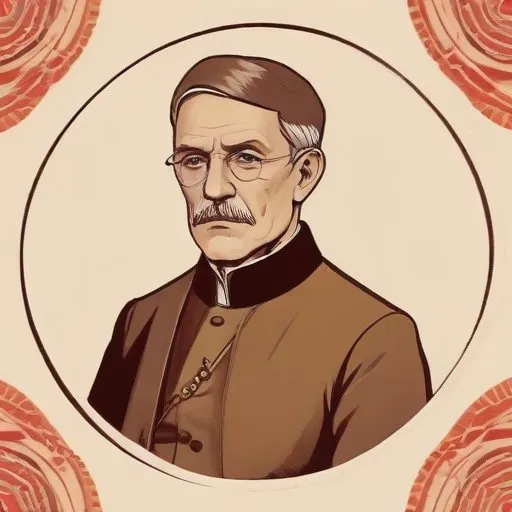
A 17th-century German scholar who deciphered ancient texts, uncovering secrets of the Middle East and Mediterranean regions, and wrote extensively on history, theology, and linguistics.
Hermann von der Hardt was a renowned German historian and orientalist, best known for his extensive research and writings on the Reformation era and oriental languages. Born on November 15, 1660, in Melle, Westphalia (now in Lower Saxony), von der Hardt left an indelible mark on the academic community with his prolific works and teachings.
Von der Hardt pursued his passion for oriental languages at the universities of Jena and Leipzig, laying the foundation for his future academic endeavors. His exceptional knowledge and expertise earned him the chair of oriental languages at Helmstedt in 1690, a position he held until 1727.
Von der Hardt's literary legacy is a testament to his dedication and scholarship. Some of his notable works include:
Von der Hardt's contributions to the field of oriental languages and Reformation history have had a profound impact on subsequent generations of scholars. His writings and teachings have inspired numerous researches and have shaped the understanding of the Reformation era. The manuscript of his unfinished history of the Reformation, preserved in the Helmstedt Juleum, remains an important resource for historians.
Despite his resignation from the chair of oriental languages in 1727, von der Hardt continued to reside in Helmstedt until his death on February 28, 1746. His life was marked by a relentless pursuit of knowledge and a passion for sharing it with others.
Unfortunately, there are no recorded quotes or memorable sayings attributed to Hermann von der Hardt. However, his contributions to the academic community continue to inspire and educate scholars to this day.
Von der Hardt's life and works are a testament to the intellectual curiosity and scholarly rigor of the 17th and 18th centuries. His extensive research and writings have helped shape our understanding of the Reformation era and the development of oriental languages.
In an era marked by prominent scholars such as John Locke and Gottfried Wilhelm Leibniz, von der Hardt's contributions to the field of oriental languages and Reformation history stand out as a significant achievement.
Hermann von der Hardt's remarkable life and works serve as a testament to the power of intellectual curiosity, passion, and dedication. His legacy continues to inspire and educate scholars, ensuring that his contributions to the academic community will be remembered for generations to come.
Born in 1744
A German Enlightenment thinker who shaped modern philosophy, literature, and anthropology with his ideas on cultural relativism, nationalism, and the importance of folklore. He's often considered the father of comparative literature.
Born in 1749
A German literary giant who penned iconic works like "Faust" and "The Sorrows of Young Werther", shaping the Romantic movement and influencing countless writers.
Born in 1759
A renowned poet and playwright who crafted influential works that explored the human condition, morality, and the struggle for freedom, leaving a lasting impact on German literature.
Born in 1724
Developed influential philosophical frameworks, such as the Critique of Pure Reason, that shaped modern Western thought on ethics, morality, and human understanding.
Born in 1729
A prominent Enlightenment thinker, he's known for his influential writings on philosophy, literature, and theology, which helped shape modern German culture. He's also credited with developing the concept of dramatic irony in literature.
Born in 1729
A leading figure of the Haskalah, the Jewish Enlightenment, who sought to reconcile traditional Judaism with modern European philosophy and culture. He's known for his efforts to integrate Jews into European society.
Born in 1717
A pioneer in art history and archaeology, he's credited with founding the discipline of art history and shaping our understanding of ancient Greek and Roman art and culture.
Born in 1679
Developed a philosophical system that combined elements of Leibniz and Descartes, and was a prominent figure in the German Enlightenment. He wrote extensively on metaphysics, ethics, and logic.
