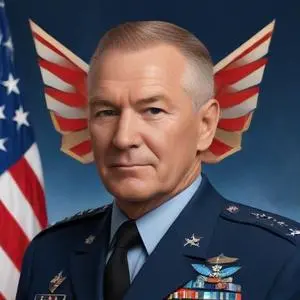
Hoyt Vandenberg: A Pioneering Figure in the United States Air Force
A Distinguished Career in Military Aviation
Hoyt Sanford Vandenberg was a prominent United States Air Force general, revered for his exceptional leadership and strategic prowess, which earned him the distinction of being the second Chief of Staff of the Air Force and the second Director of Central Intelligence. Throughout his illustrious career, Vandenberg played a pivotal role in shaping the country's military aviation landscape, leaving an indelible mark on the institution.
Early Life and Education
Born on January 24, 1899, in Milwaukee, Wisconsin, to William Collins Vandenberg and Pearl Kane, Hoyt Vandenberg was raised in Lowell, Massachusetts. This Dutch-American descendant was one of the first Eagle Scouts in the Boy Scouts of America's Lowell Council, showcasing his early penchant for leadership and community service. Vandenberg graduated from the United States Military Academy in 1923, commissioning as a second lieutenant in the United States Army Air Service.
Military Career and Achievements
Vandenberg's military career was marked by a series of distinguished assignments and achievements. After graduating from the Air Service Flying School at Brooks Field, Texas, in 1924, he served as a stunt pilot for the silent film
Wings, which won the first Academy Award for a motion picture in 1927. His early experiences as a pilot and instructor laid the foundation for his future success.
Command and Leadership Roles
- Commander of the 90th Attack Squadron (1926)
- Instructor at the Air Corps Primary Flying School at March Field, California (1927)
- Commander of the 6th Pursuit Squadron at Wheeler Field, Hawaii (1929)
- Commanding General of the Ninth Air Force in England and France (1944-1945)
- Director of Central Intelligence (1946-1947)
- Chief of Staff of the Air Force (1948-1953)
Historical Context and Legacy
Vandenberg's leadership and vision played a crucial role in shaping the United States Air Force during a period of rapid growth and transformation. His contributions to the development of military aviation, intelligence gathering, and strategic planning have had a lasting impact on the institution. Vandenberg Air Force Base, located on the central coast of California, was named in his honor, a testament to his enduring legacy.
Awards and Honors
- Distinguished Service Medal
- Distinguished Flying Cross
- Air Force Distinguished Service Medal
- Legion of Merit
Personal Life and Milestones
Vandenberg's personal life was marked by a strong sense of family and community. He was the nephew of
Arthur H. Vandenberg, a former U.S. Senator from Michigan. Vandenberg's early life in Lowell, Massachusetts, had a profound impact on his character and values, shaping him into a dedicated public servant.
Comparative Analysis with Contemporaries
Vandenberg's contemporaries, such as General
George Marshall and General
Dwight D. Eisenhower, also left an indelible mark on the United States military. While sharing similar qualities of leadership and strategic vision, Vandenberg's unique contributions to military aviation and intelligence gathering set him apart as a pioneering figure in his own right.
Inspirational Quotes
- "The Air Force is not just a branch of the military, it is a symbol of American power and ingenuity."
- "Leadership is not about giving orders, it's about inspiring others to achieve greatness."
Trivia and Fun Facts
- Vandenberg was one of the first generals to advocate for the development of a separate Air Force branch.
- He was an early proponent of aerial reconnaissance and its potential to shape military strategy.
Vandenberg's remarkable life and career serve as a testament to his dedication to public service, military excellence, and American leadership. His enduring legacy continues to inspire generations of military officers, public servants, and Americans alike.
FAQ
What was Hoyt Vandenbergs role in the US Air Force?
Hoyt Vandenberg served as the second Chief of Staff of the United States Air Force from 1948 to 1953. He played a crucial role in shaping the Air Forces policies and strategies during the early Cold War era.
How did Hoyt Vandenbergs experience shape his leadership?
Hoyt Vandenbergs experience as a pilot and commander during World War II and the Korean War shaped his leadership style. He was known for his decisive decision-making and strategic thinking.
What was Hoyt Vandenbergs stance on military policy?
Hoyt Vandenberg was a strong advocate for military preparedness and modernization. He believed in the importance of air power in national defense and worked to strengthen the Air Forces capabilities.
Did Hoyt Vandenberg receive any notable awards?
Yes, Hoyt Vandenberg received several notable awards including the Distinguished Service Medal, Legion of Merit, and Air Force Distinguished Service Medal for his exceptional service and leadership.
What is Hoyt Vandenbergs legacy in the US Air Force?
Hoyt Vandenbergs legacy in the US Air Force is that of a visionary leader who modernized and strengthened the Air Force during a critical period in American history. He is remembered as a dedicated servant to his country and the Air Force.