


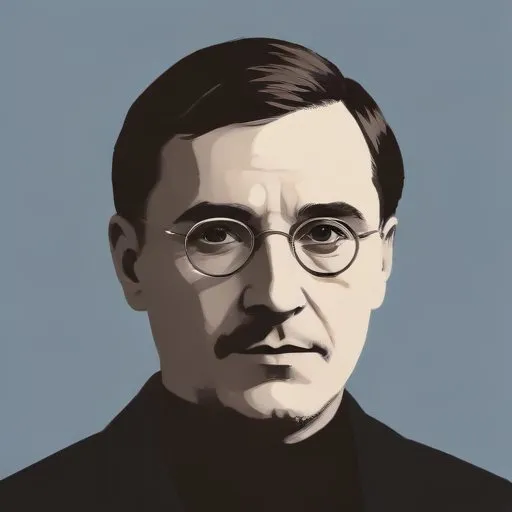
A pioneering figure in Estonian literature, known for blending surrealism and futurism in poetry and essays, exploring the intersection of technology and humanity.
Ilmar Laaban, a renowned Estonian poet and literary critic, is best known for his surrealistic poetry and extensive translations of Estonian literature into Swedish. Born on December 11, 1921, in Tallinn, Estonia, Laaban's life and work had a profound impact on Estonian literature and beyond.
Laaban's educational journey began at the Tallinn Boys Gymnasium, where he studied from 1934 to 1940. He then pursued composition and piano at the Tallinn Conservatory from 1939 to 1940 and 1941 to 1942. Laaban's academic pursuits continued at the University of Tartu, where he studied Romance languages from 1940 to 1943.
When Estonia was occupied by the Baltic states in 1943, Laaban fled to Sweden, where he continued his studies in Romance languages and philosophy at Stockholm University from 1943 to 1949.
Laaban's literary career was marked by his innovative use of surrealistic poetry, making him one of the first Estonian poets to explore this genre. He worked as a lecturer at Stockholm University and was an active member of the International Association of Art Critics.
Laaban's contributions to literature extended beyond his own poetry. He translated the works of numerous Estonian poets, including Artur Alliksaar, Betti Alver, Jaan Kaplinski, Viivi Luik, and Paul-Eerik Rummo, into Swedish. He also translated German poets, such as Juhan Liiv, Gustav Suits, Jaan Oks, Henrik Visnapuu, and Marie Under.
Laaban's notable literary works include:
Laaban's translations and critiques of art and literature also showcased his expertise. He wrote about artists such as Frederic Iriarte, Endre Nemes, Franco Leidi, Rafael Bellange, and Lech Rzewuski.
Ilmar Laaban's impact on Estonian literature and the literary world at large is undeniable. Through his surrealistic poetry and extensive translations, he bridged the gap between Estonian and Swedish literature, introducing new audiences to the works of Estonian poets.
Laaban's legacy continues to inspire and influence literary critics, poets, and scholars to this day. His contributions to the world of literature serve as a testament to the power of language and cultural exchange.
Born in 1909
A renowned Estonian thinker who merged philosophy and theology to explore the human condition, producing influential works on existentialism and phenomenology.
90 Years Old
A minimalist composer renowned for his sacred, hauntingly beautiful music that often features slow, contemplative harmonies and sparse textures, evoking a sense of spirituality and calm.
78 Years Old
Estonian politician who served as the 24th Minister of Defense, known for his efforts to modernize the country's defense capabilities and strengthen NATO relations.
Born in 1883
Estonian poet and author, known for her lyrical and introspective works that explored themes of love, nature, and the human condition. Her poetry is characterized by its musicality and emotional depth.
