


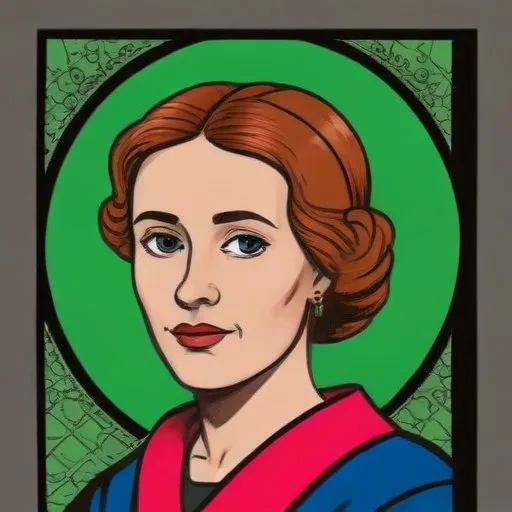
A pioneering 18th-century writer of epistolary novels and poetry, known for her insightful portrayals of women's lives and emotions. Her works offer a unique window into the experiences of women during the Enlightenment era.
Isabelle de Charrière, a Dutch and Swiss writer, stood as a testament to the power of intellectual curiosity and creative expression in the midst of the Enlightenment era. Known for her ingenious novels, letters, pamphlets, music, and plays, she defied the conventions of her time, using her art to challenge societal norms and spark meaningful discussions.
Born on October 20, 1740, in Zuylen Castle, Zuilen, Netherlands, Isabelle van Tuyll van Serooskerken (her birth name) was raised in a liberal household that valued knowledge and creativity. Her parents, Diederik Jacob van Tuyll van Serooskerken and Jacoba Helena de Vicq, encouraged her to pursue a broad education, including mathematics, physics, languages, and literature, which was uncommon for women at the time.
Isabelle's linguistic abilities were remarkable, speaking French, Dutch, Latin, Italian, German, and English with ease. Her fluency in French, in particular, would become a defining feature of her writing style. After spending a year in Geneva with her French-speaking governess, Jeanne-Louise Prevost, Isabelle's proficiency in French surpassed her native Dutch, making it her preferred language for writing.
Isabelle de Charrière's literary works were characterized by their wit, humor, and insight into the human condition. Her novels, such as
During the French Revolution, Isabelle de Charrière's writings took on a more critical tone, addressing the social and political upheavals of her time. Her pamphlets, such as On the Injustice of the Laws in Favour of Men, demonstrated her commitment to promoting equality and challenging the status quo.
Isabelle de Charrière's contribution to the Enlightenment era extends beyond her literary works. She embodied the spirit of intellectual freedom and curiosity, inspiring future generations of writers, thinkers, and intellectuals. Though her work was not widely recognized during her lifetime, her legacy has endured, cementing her place as one of the most important writers of her time.
Born in 1775
French physicist and mathematician who discovered the polarization of light and developed the theory of partial reflection, making significant contributions to the field of optics.
Born in 1767
A pioneer of classical liberalism, he advocated for individual rights, limited government, and constitutional monarchy, influencing modern democratic thought.
Born in 1766
A pioneering female writer and thinker who championed individual freedom and romanticism, producing influential works that shaped 19th-century European literature and politics.
Born in 1712
A pioneering thinker who shaped modern democracy and education with his ideas on social contracts, general will, and the importance of early childhood education. His writings influenced the French Revolution and modern political thought.
Born in 1694
A witty and insightful 18th-century writer and philosopher who used satire to critique societal norms and advocate for reason, tolerance, and human rights.
Born in 1689
A French lawyer and philosopher who developed the concept of separation of powers, which divides a government into legislative, executive, and judicial branches to prevent abuse of power. His ideas greatly influenced modern democracy.
