


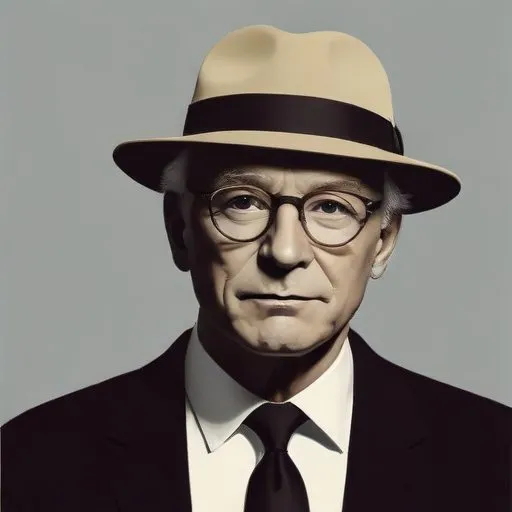
A pioneering photojournalist capturing iconic images of American life, politics, and culture for Life magazine during the mid-20th century.
J. R. Eyerman, an American photographer and photojournalist, is best known for his captivating images that told the stories of World War II, Hollywood's Golden Age, and the everyday lives of ordinary people. With a career spanning over four decades, Eyerman's photographs have become an integral part of American visual culture, showcasing his unique perspective and technical innovations.
Born on November 9, 1906, in Butte, Montana, Eyerman grew up surrounded by the click of cameras and the flash of lights. His parents, owners of a local photography studio, instilled in him a passion for the art form from a young age. Eyerman's early life was marked by a fascination with engineering, leading him to study civil engineering at the University of Washington in Seattle.
In 1942, Eyerman joined the staff of Life magazine, where he would spend the next 19 years of his career. His time at Life saw him cover some of the most significant events of the 20th century, including World War II, which he documented on the European and Pacific fronts. Eyerman's photographs from this period provide a poignant glimpse into the harsh realities of war and its impact on humanity.
Eyerman's photographs are characterized by their technical precision and innovative approach. One of his most famous images, a longshot of movie audience members all wearing 3D glasses while watching the premiere of Bwana Devil in Hollywood in November 1952, has become an iconic representation of the era. Another notable example is his expansive aerial shot of multiple moving vans simultaneously emptying furniture into newly built houses on a Lakeview suburban street, showcasing his mastery of visual repetition.
Eyerman's work was featured in several exhibitions at the Museum of Modern Art (MoMA), including Memorable Life Photographs (1951), Korea: The Impact of War in Photographs (1951), and Photographs from the Museum Collection (1958). His photograph of a receding crowd of engineers at their drafting tables was selected by curator Edward Steichen for the world-touring exhibition The Family of Man, which was seen by 9 million visitors.
In 1961, Eyerman left Life magazine to work for Time, National Geographic, and several medical magazines. He continued to push the boundaries of photography, experimenting with new techniques and formats. Eyerman passed away on December 7, 1985, leaving behind a legacy of captivating images that continue to inspire generations of photographers and photojournalists.
J. R. Eyerman's contributions to the world of photography are immeasurable. His photographs have become an integral part of American visual culture, providing a window into the past and inspiring new generations of artists. Eyerman's legacy serves as a testament to the power of photography to capture the essence of life, telling stories that continue to captivate and inspire us today.
Born in 1902
Pioneering landscape photographer and conservationist capturing iconic black-and-white images of the American West, advocating for environmental protection through art.
Born in 1895
Documented the lives of those affected by the Great Depression and the Dust Bowl through powerful, poignant photographs that humanized the struggles of the era. Captured iconic images that shaped the national conversation around poverty and social justice.
Born in 1904
Pioneering photographer and journalist who captured iconic images of the Great Depression and World War II, and was the first woman to fly on a combat mission.
Born in 1879
A pioneering photographer and painter who blurred the lines between art and commerce, capturing iconic images for Vogue and Harper's Bazaar while pushing the boundaries of modern art.
Born in 1908
A pioneer of street photography, capturing life's fleeting moments in elegant, geometric compositions that defined the genre. Known for coining the term "the decisive moment."
Born in 1923
A visionary photographer who captured iconic portraits of celebrities, politicians, and everyday people, revealing the human spirit through his lens.
Born in 1923
A pioneering photographer who captured intimate, often unsettling portraits of marginalized individuals, revealing the beauty in the unconventional and challenging societal norms.
Born in 1912
A pioneering African American photographer and filmmaker who captured the lives of marginalized communities, exposing social injustices through powerful, poignant images.
