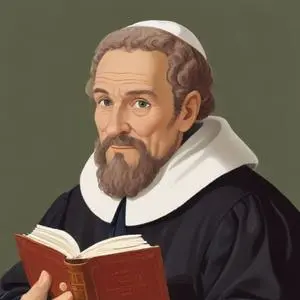
Jacobus Arminius: The Dutch Theologian Who Shaped the Protestant Reformation
A Controversial Figure and Founding Father of Arminianism
Jacobus Arminius, a Dutch Reformed minister and theologian, is renowned for his pioneering views that became the foundation of Arminianism and the Dutch Remonstrant movement. His teachings, which diverged from the traditional Calvinist doctrine, sparked intense debates and criticisms, ultimately leading to the formation of the five points of Calvinism.
Early Life and Education
Born in 1560 in Oudewater, Utrecht, Arminius experienced a tumultuous childhood. Orphaned at a young age, he was taken under the wing of Theodorus Aemilius, a Protestant priest. After Aemilius' death, Arminius was mentored by Rudolph Snellius, a mathematician from Oudewater, who enabled him to pursue his studies at Leiden University.
Formative Years and Influences
Arminius enrolled at Leiden University in 1576, where he studied liberal arts and theology. His professors, including Lambertus Danaeus, Johannes Drusius, Guillaume Feuguereius, and Johann Kolmann, played a significant role in shaping his theological perspectives. These formative years laid the groundwork for his future critiques of Calvinism.
Theological Contributions and Beliefs
Arminius' most notable contribution was his challenge to the Calvinist doctrine of predestination. He advocated for the concept of conditional election, arguing that God's sovereignty is not incompatible with human free will. His views, as outlined in his work
Declaration of Sentiments, emphasized the importance of human cooperation in salvation.
Main Tenets of Arminianism
- Conditional election: God elects individuals based on their foreseen faith.
- Total depravity: Humans are sinful, but not totally corrupt.
- Unlimited atonement: Christ's sacrifice is available to all, not just the elect.
- Resistible grace: Humans can resist God's grace.
- Fallibility of believers: Christians can fall from grace.
Academic Career and Publications
In 1603, Arminius became a professor of theology at Leiden University, where he wrote numerous books and treatises. His most influential works include
Examen Modestum and
Apologia adversus censuras Theologorum Leydensium.
Legacy and Impact
Following Arminius' death in 1609, the Synod of Dort responded to his teachings by codifying the five points of Calvinism. However, Arminianism continued to spread, influencing Protestant denominations such as the Methodists and Baptists.
Comparative Analysis with Contemporaries
Arminius' views on predestination and free will diverged from those of his contemporaries, including
John Calvin and
Theodore Beza. His emphasis on human responsibility and cooperation in salvation set him apart from the prevailing Calvinist doctrine.
Personal Milestones and Key Life Events
- 1560: Born in Oudewater, Utrecht
- 1572: Settled in Utrecht with Theodorus Aemilius
- 1575: Mother killed in the Spanish massacre at Oudewater
- 1576: Enrolled at Leiden University
- 1582: Completed studies at Leiden University
- 1603: Became professor of theology at Leiden University
- 1609: Died on October 19
Quotes and Memorable Sayings
"I am not Arminius, but a messenger of the truth, which I have received from God."
Historical Context and Legacy
Arminius' courageous challenge to the established Calvinist doctrine paved the way for diverse Protestant denominations and theological perspectives. His legacy extends beyond the confines of the Dutch Reformed Church, influencing Christian thought and practice for centuries to come.
FAQ
What was Jacobus Arminius role in the Dutch Reformation?
Jacobus Arminius was a prominent Dutch theologian who played a significant role in the Dutch Reformation, advocating for a more moderate and inclusive approach to Calvinism.
What was Jacobus Arminius theological stance?
Jacobus Arminius opposed the strict Calvinist doctrine of predestination, instead emphasizing the role of human free will in salvation.
What was Jacobus Arminius impact on the Dutch church?
Jacobus Arminius teachings led to a significant split in the Dutch Reformed Church, with his followers forming the Remonstrant Brotherhood.
How did Jacobus Arminius die?
Jacobus Arminius died on October 19, 1609, before the Synod of Dort, which ultimately rejected his teachings and solidified Calvinist orthodoxy in the Dutch church.
What is Jacobus Arminius legacy?
Jacobus Arminius legacy lies in his contributions to the development of Arminian theology, which continues to influence Christian thought to this day.