


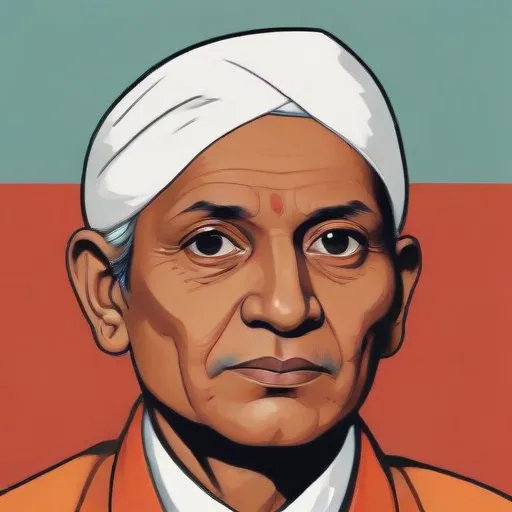
A renowned Indian historian specializing in the Mughal Empire and Maratha Confederacy, known for his meticulous research and insightful writings on India's medieval and early modern periods.
Jadunath Sarkar is renowned for his groundbreaking contributions to Indian historiography, particularly in the field of Mughal dynasty studies. As a prominent Indian historian, Sarkar's extensive research and writings have left an indelible mark on the understanding of India's rich cultural heritage.
Sarkar was born on December 10, 1870, in Karachmaria village, Natore, in a Bengali Kayastha family. His early education laid the foundation for his future academic pursuits. He graduated in English from Presidency College, Calcutta, in 1891 and subsequently topped the Master of Arts examination in English at Calcutta University in 1892.
Sarkar's academic career was marked by his dedication to teaching and research. He began his teaching career as a faculty member of English literature at Ripon College, Calcutta (later renamed Surendranath College) in 1893. He later joined Presidency College, Calcutta, and went on to teach modern Indian history at Benaras Hindu University and Ravenshaw College, Cuttack. His expertise in Persian language enabled him to delve deeper into Indian history, and his works were written in English.
Sarkar's historiographical contributions have been hailed as a benchmark for scholarly research. His works have been praised for their accuracy, objectivity, and thoroughness, earning him the title of "the greatest Indian historian of his time" and one of the greatest in the world. Sarkar's legacy has inspired generations of historians and scholars, and his works continue to influence Indian historiography.
In recognition of his outstanding contributions, Sarkar was knighted by the British in 1929. He was also a member of the Bengal Legislative Council between 1929 and 1932 and served as the Vice-Chancellor of Calcutta University from 1926 to 1928.
Sarkar's historical research was guided by his commitment to objectivity and accuracy. He believed in the importance of impartiality in historical writing, advocating for a scientific approach to historiography. His philosophy has had a lasting impact on the field, influencing future generations of historians to adopt a similar approach.
In 1897, Sarkar received the prestigious Premchand-Roychand Scholarship. He was appointed as the Sir W. Meyer Lecturer in Madras University in 1928. Sarkar's life was marked by his dedication to academic pursuits, and his numerous achievements are a testament to his hard work and perseverance.
Sarkar's contributions to Indian historiography have had a profound impact on modern society. His works have shaped our understanding of India's cultural heritage, and his legacy continues to inspire scholars, researchers, and enthusiasts alike.
In conclusion, Jadunath Sarkar's remarkable contributions to Indian historiography have left an indelible mark on our understanding of India's rich cultural heritage. His commitment to objectivity, accuracy, and scholarly research has inspired generations of historians and scholars, cementing his legacy as one of the greatest Indian historians of all time.
Born in 1861
A Bengali polymath who wrote extensively on love, nature, and humanity, creating a unique blend of Indian and Western literary styles, and was the first non-European to win the Nobel Prize in Literature.
Born in 1876
A renowned Bengali novelist celebrated for his poignant and thought-provoking works that explored the complexities of Indian society, particularly the lives of women and the rural poor.
Born in 1838
A pioneering Bengali writer and poet who played a significant role in shaping Indian literature, known for his iconic novel "Anandamath" that inspired India's freedom movement.
Born in 1820
A 19th-century polymath who championed social reforms, particularly women's education and widow remarriage, through his writings and art. He's also credited with introducing the concept of prose in Bengali literature.
Born in 1853
A renowned Indian historian and scholar who deciphered the ancient Indian script of Brahmi, making significant contributions to the field of epigraphy and Indian history.
