


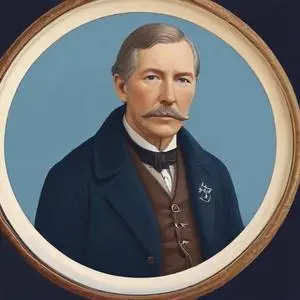
Pioneering surgeon who developed hypnotism and coined the term "hypnotism," making significant contributions to the field of psychology. He's also credited with discovering the concept of suggestibility.
James Braid, a Scottish surgeon and natural philosopher, is renowned for his groundbreaking contributions to the fields of hypnotism, hypnotherapy, and anesthesia. He is often regarded as the Father of Modern Hypnotism, paving the way for the development of modern hypnotic practices.
Born on June 19, 1795, in Ryelaw House, Portmoak, Kinross, Scotland, Braid was the seventh and youngest child of James Braid and Anne Suttie. He received his medical education at the University of Edinburgh, where he earned his degree in 1815. After completing his studies, Braid established his medical practice in Dumfries, Scotland.
Braid's fascination with mesmerism, a precursor to hypnotism, led him to conduct extensive research on the subject. He developed his own theory of hypnotism, which he termed "neurypnology." Braid believed that hypnotism was a state of focused attention, rather than a trance-like condition, and he demonstrated its therapeutic potential in treating various conditions, including clubfoot, spinal curvature, and squint.
Braid's work on hypnotic anaesthesia revolutionized the field of surgery. He demonstrated that hypnotic suggestion could be used to induce anaesthesia, reducing the need for chemical anaesthetics. This breakthrough paved the way for the development of modern anaesthetic practices. Braid also explored the use of chemical anaesthesia, experimenting with various substances, including ether and chloroform.
Braid's approach to hypnotism emphasized its value in treating functional nervous disorders. He believed that hypnotic suggestion was a valuable remedy, but not a replacement for other forms of treatment. Braid's work laid the foundation for modern hypnotic practices, influencing generations of practitioners. His legacy extends beyond the field of hypnotism, with his contributions to anaesthesia and surgery continuing to shape medical practices today.
Braid's work was characterized by a rigorous scientific approach, grounded in a deep understanding of human physiology and psychology. He believed in the importance of empirical evidence and careful observation, advocating for a nuanced understanding of the human experience.
Braid's work has had a profound impact on modern society, shaping our understanding of the human mind and its potential for self-healing. His contributions to hypnotism and anaesthesia have improved the lives of countless individuals, and his legacy continues to inspire researchers and practitioners today.
"The superior man is he who develops his own powers, and is not dependent on the authority of others."
Braid's contributions to the field of hypnotism and anaesthesia have been recognized through various honors and awards. He was elected a Fellow of the Royal Society of Edinburgh in 1843, and his work continues to be celebrated by scholars and practitioners worldwide.
Born in 1827
Pioneering antiseptic surgery, revolutionizing medical practices with germ-killing techniques, saving countless lives.
Born in 1822
Developed vaccines for rabies and anthrax, and pioneered the germ theory of disease, revolutionizing our understanding of microbiology and disease prevention.
Born in 1843
A pioneering microbiologist and physician who discovered the bacteria that cause tuberculosis, cholera, and anthrax, revolutionizing the field of microbiology and saving countless lives.
Born in 1820
Pioneering nurse and statistician who revolutionized healthcare by introducing sanitation practices and data-driven decision making, becoming the founder of modern nursing.
Born in 1821
Founded the American Red Cross, providing humanitarian aid and disaster relief, and pioneering nursing education. Known for her courageous and selfless efforts during the Civil War and beyond.
Born in 1865
A British nurse who helped soldiers from both sides during WWI, and was executed by the Germans for treason, becoming a symbol of courage and compassion.
Born in 1920
Developed the Heimlich maneuver, a lifesaving technique for choking victims, and wrote extensively on medicine and health.
