


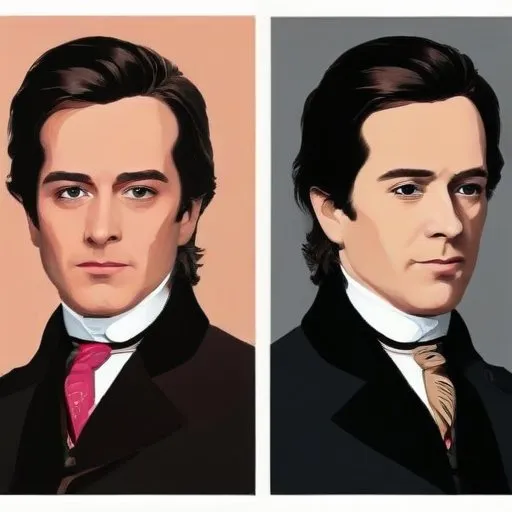
A Scottish nobleman and politician who served as a Lord of the Bedchamber to King Charles II and played a key role in the Glorious Revolution of 1688.
James Hamilton, 4th Duke of Hamilton, is renowned for being a major investor in the ill-fated Darien Scheme, a Scottish nobleman, soldier, and politician who left an indelible mark on Scottish and English history. His life was marked by controversies, duels, and political intrigues, making him a fascinating figure of the 17th and early 18th centuries.
Born on April 11, 1658, at Hamilton Palace in Lanarkshire, Scotland, James Hamilton was the eldest son of William Douglas, 1st Earl of Selkirk, and Anne, 3rd Duchess of Hamilton in her own right. Through his mother, he was a descendant of the Scottish House of Stewart, giving him a significant claim to the thrones of both Scotland and England.
Hamilton was educated by a series of tutors until he was of age to attend the University of Glasgow. He then embarked on the Grand Tour, a fashionable journey amongst young noblemen of the time, which took him to the continent.
In 1679, Hamilton was appointed a Gentleman of the Bedchamber by Charles II, marking the beginning of his political career. Four years later, he was accredited ambassador to the Court of Louis XIV of France, where he remained for over a year, participating in two campaigns in French service.
Upon his return to Great Britain, he brought letters of personal recommendation from Louis to the new King, James VII and II. King James reaffirmed Hamilton in his offices, and in 1687, he was in the first cohort of James VII's royal Order of the Thistle.
Hamilton was a major investor in the Darien Scheme, a Scottish colonization project in Panama that ended in disaster. The scheme's failure led to significant financial losses for many of Scotland's ruling class, including Hamilton.
This event had a profound impact on Hamilton's life and politics, influencing his later opposition to the Act of Union in 1707. As the leader of the Country Party in the Parliament of Scotland, he fought against the union, fearing it would lead to the erosion of Scottish autonomy and identity.
Despite the controversy surrounding his life, Hamilton's legacy as a Scottish nobleman, soldier, and politician continues to fascinate historians and scholars. His life serves as a testament to the complexities and intrigues of 17th- and 18th-century politics.
Hamilton's life may have been marked by controversy, but his impact on Scottish and English history is undeniable. As a nobleman, soldier, and politician, he left an indelible mark on the 17th and 18th centuries, making him a fascinating figure for scholars and historians to explore.
Born in 1630
The last monarch of the House of Stuart, restored to the throne after a republican Commonwealth, known for his lavish spending, mistresses, and the Great Fire of London. He ruled with a mix of absolutism and indulgence, shaping England's Restoration era.
Born in 1633
The last Catholic monarch of England, Scotland, and Ireland, who attempted to restore Catholicism and absolute monarchy, sparking the Glorious Revolution. He's infamous for his authoritarian rule and religious intolerance.
Born in 1925
A talented actress who shone in Hollywood's Golden Age, starring in iconic films like "High Sierra" and "Yankee Doodle Dandy" alongside James Cagney and Humphrey Bogart.
Born in 1898
A Supreme Court Justice who championed individual rights and environmental protection, leaving a lasting impact on American law and conservation.
Born in 1841
Pioneering oceanographer and biologist who explored the ocean's depths, discovering new species and advancing our understanding of marine ecosystems.
59 Years Old
A former Royal Ulster Constabulary (RUC) officer who played a key role in the Northern Ireland peace process, brokering secret talks between the British government and the IRA. He was also a key witness in the Bloody Sunday inquiry.
