


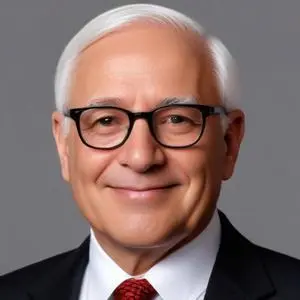
A Nobel Prize-winning economist who developed methods to analyze the impact of social programs and policies on economic outcomes, particularly in the areas of education and labor. His work has shaped how governments and organizations evaluate the effectiveness of their initiatives.
James Heckman, a luminary in the field of economics, is renowned for his groundbreaking work in econometrics and microeconomics. His pioneering contributions, particularly in the area of selection bias and self-selection in quantitative analysis, earned him the prestigious Nobel Memorial Prize in Economic Sciences in 2000, shared with Daniel McFadden.
Born on April 19, 1944, in Chicago, Illinois, Heckman was destined for greatness. He received his Bachelor's degree in mathematics from Colorado College in 1965 and his Ph.D. in economics from Princeton University in 1971. Under the guidance of Stanley W. Black, he completed his dissertation, "Three Essays on the Supply of Labor and the Demand for Goods."
Heckman's illustrious career began as an assistant professor at Columbia University before joining the University of Chicago in 1973. He has since become a distinguished professor, holding multiple positions, including the Henry Schultz Distinguished Service Professor in Economics, professor at the College, professor at the Harris School of Public Policy, and Director of the Center for the Economics of Human Development (CEHD). Additionally, he is a professor of law at the Law School and a senior research fellow at the American Bar Foundation.
The Heckman correction, a statistical technique developed by Heckman, revolutionized the field of econometrics by addressing selection bias in quantitative analysis. This seminal contribution has far-reaching implications, influencing research in various disciplines, including economics, sociology, and psychology.
Heckman's empirical research has also made significant strides in labor economics. His work on human capital and the efficacy of early childhood education programs has informed policy decisions, shaping the landscape of education and workforce development.
As a leading economist, Heckman's research has had a profound impact on modern society. His work has influenced policy decisions, shaped education initiatives, and informed labor market reforms. His contributions have improved our understanding of human capital, making a lasting impact on economic and social development.
Heckman's numerous accolades include the John Bates Clark Medal (1983) and the Nobel Memorial Prize in Economic Sciences (2000). He is a research associate at the National Bureau of Economic Research (NBER) and has been recognized as the second-most influential economist in the world, according to RePEc (2022).
Heckman's influence extends beyond academia, with his work informing policymakers and shaping public discourse. His legacy continues to inspire future generations of economists, ensuring his contributions will have a lasting impact on the field.
Heckman's work encompasses a deep understanding of human capital and its impact on economic development. His research emphasizes the importance of early childhood education, underscoring the need for investments in human capital to drive long-term economic growth.
James Heckman's remarkable journey, marked by trailblazing research and academic excellence, has left an indelible mark on the field of economics. His contributions continue to shape our understanding of human capital, informing policy decisions and inspiring future generations of economists.
92 Years Old
A Nobel Prize-winning economist and psychologist who pioneered the field of behavioral economics, revealing how cognitive biases and heuristics influence human decision-making.
92 Years Old
A renowned economist and philosopher who has made significant contributions to welfare economics, social choice theory, and development economics, and is known for his work on poverty, famine, and human development.
83 Years Old
A Nobel Prize-winning economist and academic who has made significant contributions to the field of economics, particularly in the areas of information economics and globalization.
73 Years Old
A Nobel Prize-winning economist and academic who has made significant contributions to the field of international trade and economic geography, and is also a prominent columnist and author.
95 Years Old
A pioneer in applying economic theory to social issues, he's most known for his work on human capital, crime and punishment, and the economics of the family.
Born in 1912
A Nobel Prize-winning economist who championed free market capitalism and limited government intervention, known for his advocacy of laissez-faire economics and influential writings on monetary policy.
Born in 1926
A Nobel Prize-winning economist and academic who pioneered the field of cliometrics, applying economic theory and quantitative methods to historical research, and was recognized for his work on the economics of slavery and railroads.
Born in 1920
A pioneer in institutional economics, he's renowned for his groundbreaking work on the role of institutions in shaping economic growth and development.
