


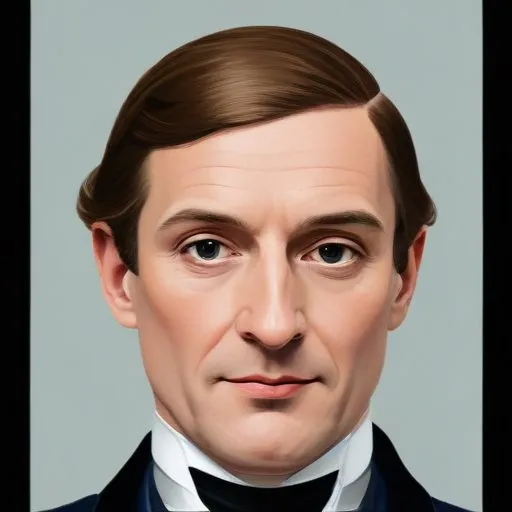
A talented artist who created vibrant watercolor paintings and illustrations, capturing the essence of English landscapes and architecture. His work continues to inspire artists and art enthusiasts alike.
James Henry Govier, a renowned British painter and etcher, left an indelible mark on the art world with his captivating works that reflected the essence of Swansea and East Anglia. Born on August 1, 1910, Govier's artistic journey spanned over four decades, earning him a place among the notable artists of his time.
Govier was born in Oakley, Buckinghamshire, to Henry Govier and Mary Ann Measey. He grew up in Gorseinon, Gower, near Swansea, where he received his early education. At the tender age of 14, he left school to work in a local tin works. However, his passion for art led him to pursue an evening course at the Swansea School of Art and Crafts, where he was later awarded a Glamorgan County Scholarship to study full-time.
Govier's artistic style was significantly influenced by William Grant Murray, under whom he studied at the Swansea School of Art and Crafts. He went on to exhibit his works alongside prominent Welsh artists, including Alfred Janes, Ceri Richards, and Kenneth Hancock. In 1935, he showcased his art at the Glynn Vivian Art Gallery in Swansea.
In 1935, Govier moved to London to study at the Royal College of Art, where he came under the tutelage of Malcolm Osborne, RA, RE. During this period, he became acquainted with the celebrated poet Dylan Thomas and collaborated with other Welsh artists in London. In 1938, he was awarded the ARCA and the Art Travelling Scholarship, although he was unable to take up the latter due to the outbreak of World War II.
During the war, Govier worked as Malcolm Osborne's assistant at the Royal College of Art and assisted Robert Austin in 1940-1942. In 1942, he joined the Royal Air Force model making section, where he produced models for the Dambuster raids, the D-Day landings, and objectives in Africa and Italy. After being demobilized in 1945, Govier resumed his artistic career, showcasing his works in various exhibitions.
Govier's unique style, which blended the rugged beauty of Swansea and East Anglia, earned him a distinct place in the British art scene. His contributions to the world of art and his service during World War II have left a lasting impact on modern society. Today, his artworks continue to inspire and captivate art enthusiasts, cementing his legacy as a prominent British painter and etcher.
James Henry Govier's remarkable journey, marked by his passion for art and his service during World War II, continues to inspire generations of art lovers and historians alike.
Born in 1776
A Romantic-era painter celebrated for capturing the essence of the English countryside through serene, naturalistic landscapes, often featuring skies and clouds.
Born in 1727
A prominent 18th-century painter of landscapes and portraits, capturing the essence of British aristocracy and gentry with elegance and refinement.
Born in 1697
A pioneering artist and social commentator, known for his witty and insightful depictions of 18th-century English life, morality, and politics through his paintings and engravings.
Born in 1723
A prominent portrait painter and art educator who helped establish the Royal Academy of Arts, known for his influential teachings and masterful depictions of 18th-century British aristocracy.
Born in 1769
A prominent portrait painter and educator who dominated English art in the late 18th and early 19th centuries, capturing the likenesses of European royalty and aristocracy.
Born in 1829
A renowned Pre-Raphaelite artist, famous for his exquisite and intricate paintings, particularly "Ophelia" and "Christ in the House of His Parents", which showcased his mastery of color and detail.
Born in 1828
A Victorian-era poet and painter who founded the Pre-Raphaelite Brotherhood, creating dreamlike, sensual works that explored themes of love, beauty, and mortality.
Born in 1833
A leading figure in the Pre-Raphaelite movement, creating dreamlike, romantic, and mythological paintings that captivated the Victorian era. His works continue to inspire artists, designers, and writers to this day.
