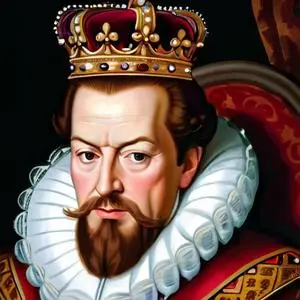
James VI and I: The Complex and Controversial King of Scotland and England
A King of Two Thrones
James VI and I, also known as
James Charles Stuart, is best known for being the first monarch to rule both Scotland and England, reigning as King of Scotland from 1567 and King of England and Ireland from 1603 until his death in 1625. His reign, known as the Jacobean era, was marked by significant cultural, literary, and political developments that shaped the course of British history.
Early Life and Accession
Born on June 19, 1566, James was the son of
Mary, Queen of Scots, and became King of Scotland at just 13 months old after his mother was forced to abdicate. He was raised by a series of regents until he took control of the government in 1583. In 1589, he married Anne of Denmark, with whom he had three children: Henry Frederick, Elizabeth, and Charles.
Unifying the Crowns
In 1603, James succeeded his childless cousin Elizabeth I, uniting the crowns of Scotland and England under a single monarch. However, he faced significant challenges in his efforts to create a closer union between the two countries, which maintained separate parliaments, judiciaries, and laws.
Reign and Accomplishments
Despite these challenges, James achieved significant accomplishments during his reign, including:
- Establishing the Church of England, which became the official state church
- Sponsoring the translation of the Bible into English, known as the King James Version
- Encouraging the arts, particularly literature and drama, which led to the Golden Age of English literature
- Promoting the Plantation of Ulster and English colonization of the Americas
Challenges and Controversies
However, James's reign was not without controversy. He faced significant opposition from the English Parliament, particularly over issues of taxation and religious tolerance. The Gunpowder Plot of 1605, in which a group of conspirators attempted to blow up the English Parliament and kill James, was a major crisis during his reign.
Legacy and Impact
James VI and I's reign had a profound impact on British history, shaping the course of politics, culture, and religion. His efforts to unify the crowns of Scotland and England paved the way for the Acts of Union in 1707, which created the Kingdom of Great Britain. His legacy continues to be felt in the Church of England, the King James Bible, and the literary achievements of the Jacobean era.
Personal Life and Relationships
James was known for his close relationships with his male favorites, including
Robert Carr and George Villiers. He was also known for his interest in witchcraft and the occult, which led to the persecution of alleged witches during his reign.
Death and Succession
James VI and I died on March 27, 1625, at the age of 58. He was succeeded by his son Charles I, who would go on to face significant challenges and controversies of his own. Despite his complexities and controversies, James VI and I remains an important figure in British history, leaving a lasting legacy in politics, culture, and religion.
FAQ
Who was James VI and I?
James VI and I was King of Scotland as James VI from 1567 to 1625 and King of England and Ireland as James I from 1603 to 1625, unifying the crowns of the two kingdoms.
What are James VI and Is notable achievements?
James VI and I was a patron of the arts, commissioning works from William Shakespeare and other playwrights. He also sponsored the King James Version of the Bible and navigated the complexities of European politics.
How did James VI and I unite the crowns of Scotland and England?
James VI and I united the crowns through a combination of diplomacy, strategic alliances, and careful management of his Scottish and English subjects interests.
What was James VI and Is relationship like with his mother, Mary Queen of Scots?
James VI and I had a complicated relationship with his mother, Mary Queen of Scots, who was forced to abdicate the Scottish throne and was eventually executed for her role in plots against Queen Elizabeth I of England.
How is James VI and I remembered in British history?
James VI and I is remembered as a key figure in British history, uniting the crowns of Scotland and England and setting the stage for the United Kingdoms development in the centuries that followed.