


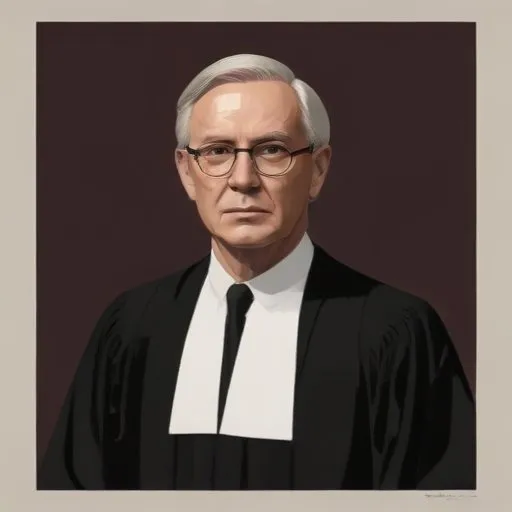
Served as a federal judge in the United States District Court for the Southern District of New York, known for presiding over notable cases involving organized crime and white-collar fraud.
James William McCarthy, a prominent figure in the American judiciary, is best known for his tenure as a United States District Judge for the District of New Jersey. With a career spanning over three decades, McCarthy left an indelible mark on the state's legal landscape, earning respect and admiration from his peers and the community at large.
Born on September 8, 1872, in Jersey City, New Jersey, McCarthy pursued higher education at New York Law School, graduating with a Bachelor of Laws in 1898. This academic foundation laid the groundwork for his future success in the legal profession.
McCarthy's legal career began in 1898, with private practices in New York City and Jersey City. His dedication and expertise soon earned him recognition, leading to his appointment as an Alderman for Jersey City from 1905 to 1908. This was followed by his membership in the New Jersey State Board of Finance from 1906 to 1907, demonstrating his growing influence in state politics.
In 1907, McCarthy became a Judge of the Jersey City Second Criminal Court, a position he held until 1908. He then served as an assistant county prosecutor for Hudson County, New Jersey, from 1908 to 1918. His judicial prowess was further recognized when he became a Judge of the New Jersey Court for Hudson County from 1918 to 1923.
In 1925, President Calvin Coolidge nominated McCarthy to the United States District Court for the District of New Jersey. Although he initially declined the appointment, he later received a recess appointment on October 6, 1928. McCarthy's confirmation by the United States Senate followed on January 8, 1929. Unfortunately, his health issues led to his resignation on January 31, 1929.
Throughout his illustrious career, McCarthy demonstrated unwavering commitment to the legal profession and public service. His contributions to the judiciary in New Jersey continue to inspire future generations of lawyers and judges. Despite his untimely resignation, McCarthy's impact on the state's legal landscape remains a testament to his dedication and excellence.
James William McCarthy's remarkable career serves as a shining example of excellence in public service, inspiring future leaders to follow in his footsteps.
Born in 1891
The 14th Chief Justice of the United States, a jurist and politician who led the Supreme Court through a transformative era of civil rights and social change, issuing landmark rulings like Brown v. Board of Education.
Born in 1898
A Supreme Court Justice who championed individual rights and environmental protection, leaving a lasting impact on American law and conservation.
Born in 1886
A U.S. Supreme Court Justice who served for 34 years, known for his strong support of individual liberties and First Amendment rights.
Born in 1882
A renowned Supreme Court Justice and Harvard Law professor who played a significant role in shaping American law and policy, particularly in the areas of civil liberties and judicial restraint.
Born in 1892
A renowned lawyer, judge, and politician who served as the 57th US Attorney General and played a key role in the Nuremberg Trials, prosecuting Nazi war criminals.
Born in 1872
The 12th Chief Justice of the United States, a prominent lawyer and jurist, is most known for his significant contributions to shaping the Supreme Court's decisions and upholding the Constitution. He played a crucial role in establishing the Court's liberal wing during the New Deal era.
Born in 1862
A prominent lawyer and politician who served as the 44th Secretary of State, known for his influential decisions and diplomatic efforts in shaping international relations. He played a key role in resolving the Mexican Revolution crisis.
Born in 1856
A pioneering lawyer and jurist who championed individual rights and freedoms, shaping the course of American law and democracy through landmark Supreme Court decisions.
