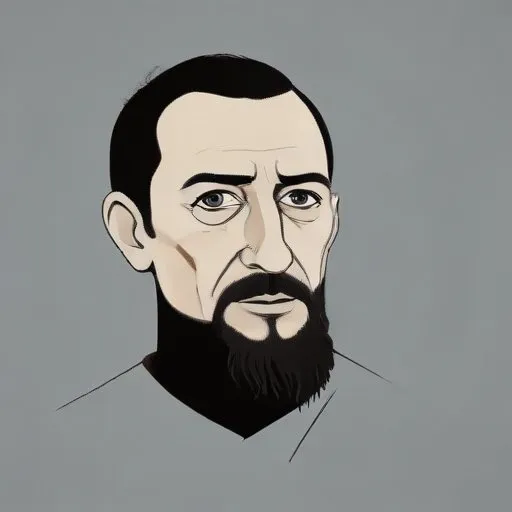
Jan Patoka: The Czech Philosopher Who Shaped Existential Phenomenology
A Life of Intellectual Pursuit and Dissent
Jan Patoka, a Czech philosopher, is renowned for his profound contributions to existential phenomenology, leaving an indelible mark on European culture and philosophy. Born on June 1, 1907, Patoka's intellectual journey took him to prestigious institutions in Prague, Paris, Berlin, and Freiburg, where he studied under the tutelage of
Edmund Husserl and
Martin Heidegger, two giants of modern philosophy.
The Last Pupil of Husserl and Heidegger
Patoka's unique blend of philosophical insights and cultural critique emerged from his rigorous academic pursuits. He was among the last pupils of Husserl and Heidegger, and his association with Husserl's assistant, Eugen Fink, further enriched his philosophical perspective. Patoka's work in the Czechoslovak Socialist Republic, where he spent most of his career, was marked by intellectual courage and resistance to communist ideology.
A Prolific Writer and Lecturer
Patoka's writings and lectures demonstrated an extraordinary range of references, making him a prominent figure in existential phenomenology. His Czech collected works, including
Plato and Europe (1973) and
Heretical Essays in the Philosophy of History (1975), have been translated into multiple languages, showcasing his philosophical prowess. These works explored the Socratic-Platonic theme of the care of the soul as the foundation of European culture.
Early Life and Academic Milestones
Patoka attended
Jan Neruda Grammar School and later completed his habilitation with a thesis titled "The Natural World as a Philosophical Problem" (1936), a pioneering phenomenological study in the Czech language. In 1937, he became the editor-in-chief of the philosophical journal
Czech Mind and joined the Institut International de Philosophie in 1938.
Philosophical Contributions and Beliefs
At the heart of Patoka's philosophy lies the concept of the original, given world (Lebenswelt) and its structure, which he developed under the influence of Husserlian and Heideggerian themes. He critiqued Heidegger's philosophy, while also engaging with its core ideas, such as historicity and technicity. Patoka's work illuminated the human position within the Lebenswelt, offering a nuanced understanding of the human condition.
Influence on Modern Society and Legacy
Patoka's philosophical ideas and courageous dissent have left an enduring impact on modern society. As a dissident spokesperson of Charter 77, he confronted the communist regime, ultimately sacrificing his life for his convictions. His legacy continues to inspire philosophers, scholars, and thinkers around the world, ensuring that his philosophical contributions remain relevant and thought-provoking.
Parting Thoughts
Jan Patoka's remarkable life and work serve as a testament to the power of intellectual courage and philosophical inquiry. As we delve into his teachings, we are reminded of the profound significance of existential phenomenology and its continued relevance in our complex, rapidly changing world.
FAQ
What was Jan Patočkas contribution to Czech philosophy?
Jan Patočka was a Czech philosopher who made significant contributions to the fields of phenomenology and existentialism, and was a key figure in the development of Czech philosophy.
How did Jan Patočkas work influence European philosophy?
Jan Patočkas work influenced European philosophy, particularly in the areas of phenomenology and existentialism, and he was a key figure in the development of modern Czech philosophy.
What was Jan Patočkas relationship with Edmund Husserl?
Jan Patočka was a student of Edmund Husserl, and his work was heavily influenced by Husserls phenomenology.
How did Jan Patočkas work on Charter 77 contribute to human rights?
Jan Patočkas work on Charter 77, a human rights movement in Czechoslovakia, contributed significantly to the advancement of human rights in the region.
What is Jan Patočkas legacy in Czech philosophy?
Jan Patočkas legacy in Czech philosophy is that of a pioneering philosopher who made significant contributions to the development of Czech thought and human rights activism.