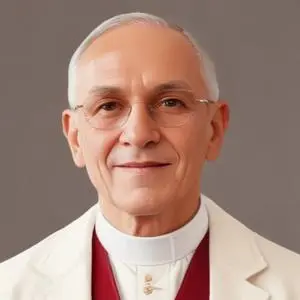
Jean Danilou: The Eminent French Jesuit and Cardinal
A Renowned Patrologist, Theologian, and Historian
Jean Danilou was an internationally acclaimed French Jesuit and cardinal, celebrated for his exceptional expertise in patristics, theology, and history. He was a distinguished member of the Académie française, and his remarkable contributions to the field of patrology earned him widespread recognition.
Early Life and Education
Born on May 14, 1905, in Neuilly-sur-Seine, Danilou was the son of Charles Danilou, a politician who served as a minister in the French government, and Madeleine Clamorgan, a Catholic educator and founder of institutions for women's education. His brother, Alain Danilou, was a noted Indologist and historian. Danilou studied at the Sorbonne, where he earned his agrégation in grammar in 1927.
Jesuit Life and Theological Studies
In 1929, Danilou joined the Society of Jesus and taught at a boys' school in Poitiers from 1934 to 1936. He then pursued theological studies at Fourvière in Lyon under the guidance of Henri de Lubac, who introduced him to the specialized study of the Fathers of the Church. Danilou was ordained a priest on August 19, 1938.
Wartime Service and Academic Pursuits
During World War II, Danilou served with the Air Force in 1939-1940. After France's fall to Nazi Germany, he was returned to civilian life and began doctoral studies, completing his thesis on the spiritual doctrine of Gregory of Nyssa in 1942. He was then appointed chaplain to the female section of the École Normale Supérieure at Sèvres.
Academic Achievements and Patristic Contributions
Danilou's research in patristics led to him becoming, along with Henri de Lubac, one of the founders of the
Sources Chrétiennes book series. He was named Professor of Early Christian History at the Institut Catholique de Paris in 1944, later becoming dean there. His historical studies, including
The Bible and the Liturgy,
The Lord of History, and
From Shadows to Reality, significantly contributed to the development of Covenantal Theology.
Cardinalate and Later Life
Danilou's exceptional contributions to the Catholic Church and academia earned him the honor of being elevated to the cardinalate. He passed away on May 20, 1974, leaving behind a legacy as a distinguished theologian, historian, and patrologist.
Legacy and Impact
Jean Danilou's remarkable life and work continue to inspire and influence theologians, historians, and scholars worldwide. His unparalleled expertise in patristics and his significant contributions to the field of theology have cemented his place as one of the most esteemed Jesuits and cardinals of the 20th century.
FAQ
What are the key contributions of Jean Daniélou to Catholic theology?
Jean Daniélous contributions to Catholic theology include his work on patristics, ecumenism, and liturgical reform. He was a prominent figure in the Second Vatican Council and played a crucial role in shaping the councils documents.
What was Jean Daniélous role in the Second Vatican Council?
Jean Daniélou was a peritus, or theological expert, at the Second Vatican Council. He worked closely with bishops and other theologians to shape the councils documents, including the Constitution on the Sacred Liturgy.
What awards did Jean Daniélou receive for his work?
Jean Daniélou received numerous awards for his work, including the Cardinal Mercier Prize and the Grand Prix de la Académie Française.
What is Jean Daniélous most famous book?
Jean Daniélous most famous book is The Bible and the Liturgy, which explores the relationship between Scripture and liturgical worship.
What was Jean Daniélous stance on ecumenism?
Jean Daniélou was a strong advocate for ecumenism and worked towards greater unity among Christian denominations. He believed that the Catholic Church should engage in dialogue with other Christian traditions to promote understanding and cooperation.