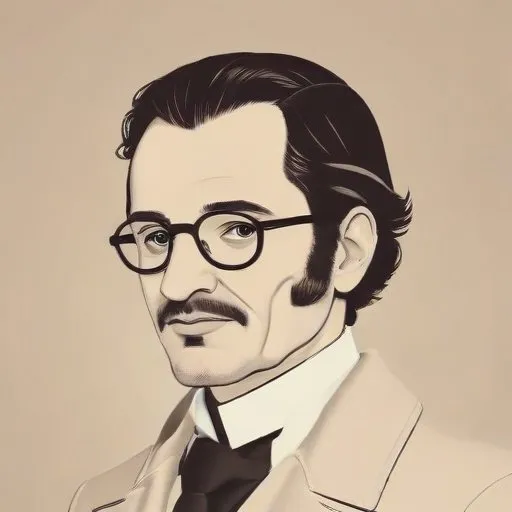
Jean Nicolas Pierre Hachette

Jean Nicolas Pierre Hachette

Jean Nicolas Pierre Hachette was born on May 6th, 1769

Full Name: Jean-Nicolas-Pierre Hachette
Place of Birth: Mézières, France
Zodiac Sign: Libra
Profession: Mathematician
Nationality: French
Notable Work: Geometry and Calculus
Education: École Polytechnique
Institutions: University of Paris

Written by: Liam O'Sullivan Liam O'Sullivan
Jean Nicolas Pierre Hachette was a renowned French mathematician who made significant contributions to the field of descriptive geometry, applying it to the arts and mechanical engineering. He is best known for developing the geometry of Gaspard Monge, a prominent French mathematician and physicist, and for his role in the rapid advancement of France in these fields. Born on May 6, 1769, in Mézières, France, Hachette's father was a bookseller. He received his early education at the college of Charleville and later at the college of Reims. In 1788, he returned to Mézières, where he worked as a draughtsman for the professors of physics and chemistry at the school of engineering. In 1793, Hachette became a professor of hydrography at Collioure and Port-Vendres. While in this position, he submitted several papers on navigation, which were treated geometrically, to Gaspard Monge, who was then the minister of marine. Monge's influence helped Hachette secure an appointment in Paris. When the École Polytechnique was established in 1794, Hachette was appointed, along with Monge, to the department of descriptive geometry. At the École Polytechnique, Hachette instructed some of the most talented Frenchmen of his time, including S.D. Poisson, François Arago, and A. Fresnel. His teaching and mentoring played a significant role in shaping the future of French mathematics and science. In 1794, Hachette accompanied Guyton de Morveau on an expedition and was present at the Battle of Fleurus. He entered Brussels with the French army and later returned to Paris. In 1816, with the accession of Louis XVIII, Hachette was expelled from his chair at the École Polytechnique by the government. However, he retained his position as professor in the faculty of sciences at the École Normale, to which he had been appointed in 1810. Hachette's election to the Académie des Sciences was initially refused in 1823, but he was finally admitted in 1831, after the July Revolution. Jean Nicolas Pierre Hachette passed away on January 16, 1834, in Paris, leaving behind a legacy of significant contributions to descriptive geometry and its applications. His work had a profound impact on the advancement of French mathematics and science, and he is remembered for his private worth, scientific attainments, and great public services. Some of Hachette's notable works include:
  • Traité de géométrie descriptive (1822)
  • Œuvres mathématiques (1830)
Hachette was known for his high esteem, both for his private worth and his scientific attainments. His dedication to his work and his passion for descriptive geometry helped shape the future of French mathematics and science.
Timeline
1769
Born in France
Jean Nicolas Pierre Hachette was born on May 6, 1769, in Mézières, France.
1792
Started Teaching
Hachette began teaching mathematics at the École Centrale in Mézières.
1801
Became Professor
He became a professor of mathematics at the École Polytechnique in Paris.
1830
Published Mathematics Book
Hachette published Elements of Algebra, a widely used mathematics textbook.
1834
Died in France
Jean Nicolas Pierre Hachette died on January 16, 1834, in Paris, France.
Jean Nicolas Pierre Hachette

Jean Nicolas Pierre Hachette Quiz

What field of mathematics did Jean Nicolas Pierre Hachette contribute to significantly?

Score: 0/5
FAQ
What were Jean Nicolas Pierre Hachettes contributions to mathematics?
Jean Nicolas Pierre Hachette was a French mathematician and academic who made significant contributions to several areas of mathematics, including geometry, algebra, and calculus.
How did Jean Nicolas Pierre Hachette influence the development of mathematics in France?
As a prominent mathematician and educator, Jean Nicolas Pierre Hachette played a crucial role in shaping the development of mathematics in France. He wrote several influential texts and taught many prominent mathematicians.
What were Jean Nicolas Pierre Hachettes most notable written works?
Jean Nicolas Pierre Hachette is best known for his written works on mathematics, including Traité de géométrie (Treatise on Geometry) and Éléments dalgèbre (Elements of Algebra).
How did Jean Nicolas Pierre Hachette balance his mathematical pursuits with his role as an educator?
As a dedicated educator, Jean Nicolas Pierre Hachette saw his mathematical pursuits as a way to inspire and educate others. He was a passionate teacher who believed in the power of mathematics to shape the minds of future generations.
What is Jean Nicolas Pierre Hachettes legacy in the history of mathematics?
Jean Nicolas Pierre Hachettes legacy in the history of mathematics is as a dedicated educator and researcher who helped to shape the development of mathematics in France during the late 18th and early 19th centuries.

Related People:

Adrien-Marie Legendre

Born in 1752

Developed the theory of elliptic integrals, and his work on number theory laid the foundation for modern cryptography.

Joseph-Louis Lagrange

Born in 1736

Developed calculus, number theory, and celestial mechanics, making significant contributions to the fields of mathematics and astronomy.

Pierre-Simon Laplace

Born in 1749

Developed nebular hypothesis of the origin of the solar system and formulated Laplace's equation, a fundamental concept in mathematics and physics. He's considered the founder of celestial mechanics.

Jean-Baptiste Biot

Born in 1774

A French polymath who made significant contributions to the fields of physics, astronomy, and mathematics, particularly in the discovery of chromatic polarization and the Biot-Savart law.

Augustin-Louis Cauchy

Born in 1789

Developed rigorous mathematical theories and introduced concepts like convergence and continuity, revolutionizing calculus and paving the way for modern mathematics.

Carl Friedrich Gauss

Born in 1777

A pioneer in mathematics and physics, he made major contributions to number theory, algebra, and electromagnetism, shaping our understanding of the natural world.

Niels Henrik Abel

Born in 1802

A pioneer in mathematics, he made groundbreaking contributions to the field of algebra, particularly in the development of group theory and the proof of the impossibility of solving quintic equations using radicals.

Born in 1811

Developed the theory of groups, which revolutionized algebra and paved the way for modern number theory, and his work laid the foundation for many mathematical and scientific advancements.