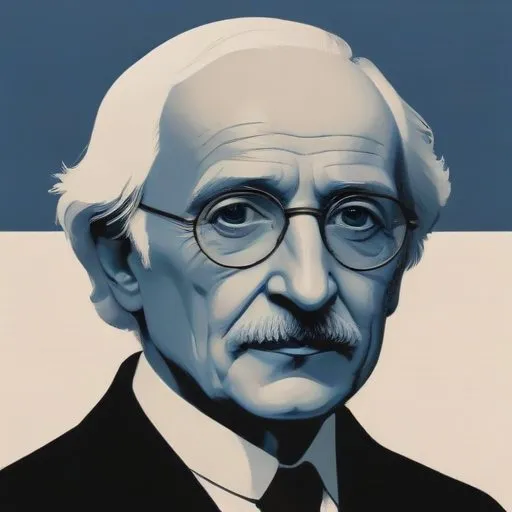
Jean Rostand: The Renowned French Biologist and Philosopher
A Pioneer in Biology and Science Writing
Jean Rostand was a French biologist, historian of science, and philosopher, renowned for his groundbreaking work in various biological fields, including amphibian embryology, parthenogenesis, and teratogeny. He is also celebrated for his writing, which extended into popular science, history of science, and philosophy, making complex scientific concepts accessible to a broad audience.
Early Life and Education
Rostand was born on October 30, 1894, in Paris, France, to a family of intellectuals. His father,
Edmond Rostand, was a famous playwright, and his mother, Rosemonde Grard, was a poet. He was the brother of novelist and playwright Maurice Rostand. Growing up in Cambo-les-Bains, Rostand developed a fascination for natural history, which was further nurtured by his education at the University of Sorbonne, where he graduated in 1914.
Biological Research and Contributions
Rostand's biological research was instrumental in advancing our understanding of various biological processes. His work on paedogenesis in flies, silkworms, and dragonflies laid the foundation for his subsequent research on embryology in frogs. In 1910, he successfully induced parthenogenesis in the eggs of Rana temporaria, a significant breakthrough in the field. He also made notable contributions to the study of polydactyly, sex determination, and the preservation of sperm vitality using glycerine.
Awards and Honors
Rostand's contributions to biology were recognized with several prestigious awards, including the Henry de Parville Prize in 1934 and the Binoux Prize in 1941. In 1959, he was elected to the Acadmie franaise, a testament to his excellence in writing and science communication.
Philosophical Contributions and Beliefs
Rostand's work extended beyond biology to philosophy, where he explored the intersection of science and ethics. He was a vocal critic of pseudoscience and the misuse of science for war. He also advocated for human equality and freedom, highlighting the importance of morality in scientific pursuits.
Legacy and Impact
Rostand's work has had a lasting impact on the scientific community. His ideas on cryogenics inspired Robert Ettinger, the pioneer of cryonics. Rostand Island in Antarctica is named after him, a tribute to his contributions to science. His writing has inspired generations of scientists, philosophers, and laypeople, making him one of the most influential scientists of the 20th century.
Personal Milestones and Key Life Events
- Born on October 30, 1894, in Paris, France
- Graduated from the University of Sorbonne in 1914
- Induced parthenogenesis in the eggs of Rana temporaria in 1910
- Awarded the Henry de Parville Prize in 1934 and the Binoux Prize in 1941
- Elected to the Acadmie franaise in 1959
- Passed away on September 4, 1977
Quotes and Memorable Sayings
"The scientist who does not bring forth anything new will not be remembered. But the one who does will be." - Jean Rostand
"Science is not everything, but science is very close to everything." - Jean Rostand
Rostand's legacy continues to inspire scientists, philosophers, and thinkers today, and his work remains a testament to the power of human curiosity and intellectual pursuit.
FAQ
What were Jean Rostands contributions to biology?
Jean Rostand made significant contributions to biology, including his work on genetics, embryology, and biophysics. He was one of the first scientists to study the biology of aging and senescence.
How did Jean Rostand approach the study of life and death?
Jean Rostand approached the study of life and death with a philosophical perspective, exploring the mysteries of existence and the nature of life. He saw death as an essential part of life, and studied its biological and philosophical implications.
What was Jean Rostands concept of biological time?
Jean Rostand introduced the concept of biological time, which posits that living organisms have an internal clock that governs their development, growth, and aging. This concept challenged traditional views of time and its relationship to life.
How did Jean Rostands work influence modern biology?
Jean Rostands work influenced modern biology by inspiring new areas of research, including gerontology, biophysics, and systems biology. His philosophical approach to biology also influenced the development of bioethics and environmental philosophy.
What was Jean Rostands legacy in French science?
Jean Rostands legacy in French science is immense, with his work continuing to inspire generations of biologists, philosophers, and scientists. He is remembered as one of the most original and innovative thinkers in French scientific history.