


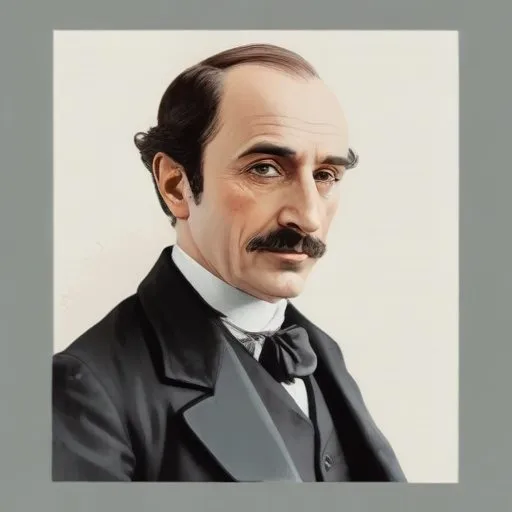
Wrote romantic plays and poems that celebrated heroism and chivalry, most famously the iconic character Cyrano de Bergerac.
Edmond Rostand is most famously known for his timeless play, Cyrano de Bergerac, a masterpiece that has captivated audiences for over a century with its lyricism, wit, and poignant portrayal of the human experience. As a leading figure in the neo-romantic movement, Rostand's works continue to inspire and enchant people around the world, transcending generations and cultural boundaries.
Born on April 1, 1868, in Marseille, France, Rostand was raised in a wealthy and cultured Provençal family. His father, a poet and economist, instilled in him a love for literature and the arts from a young age. Rostand studied literature, history, and philosophy at the prestigious Collège Stanislas in Paris, where he honed his skills as a writer and developed a deep appreciation for the classics.
Rostand's writing career began to take shape in the late 1880s, when his first play, Le Gant rouge, was performed at the Cluny Theatre in 1888. Although it initially went unnoticed, Rostand persevered, publishing a volume of poems called Les Musardises in 1890. This collection showcased his lyrical talent and set the stage for his future success as a dramatist.
Rostand's big break came with the production of Les Romanesques at the Théâtre Français in 1894. This three-act play, written in verse, was a massive success and established Rostand as a rising star in the world of French theatre. He continued to build on this momentum with La Princesse Lointaine, written specifically for the legendary actress Sarah Bernhardt.
In 1897, Rostand penned his magnum opus, Cyrano de Bergerac, a play that would go on to become an iconic masterpiece of French literature. This sweeping romance, with its unforgettable characters and poetic language, has been translated into numerous languages and continues to inspire adaptations and interpretations to this day.
Rostand's contributions to French literature and theatre are immeasurable. His romantic plays, which contrasted with the naturalistic theatre popular during the late 19th century, paved the way for a new generation of dramatists and poets. His work has inspired countless adaptations, including the 1960 musical comedy The Fantasticks, based on Les Romanesques.
Rostand's legacy extends beyond the world of literature, too. He was a vocal advocate for the preservation of French cultural heritage and was involved in various charitable initiatives throughout his life. His dedication to his craft and his commitment to promoting the arts have made him a beloved figure in French cultural history.
Rostand married Rosemonde Gérard in 1890, and the couple had two sons together. He was also close friends with the composer Emmanuel Chabrier, with whom he collaborated on various projects. Rostand's life was marked by a deep appreciation for the beauty of the world around him, and he often drew inspiration from his travels and personal experiences.
Edmond Rostand passed away on December 2, 1918, leaving behind a rich cultural heritage that continues to inspire and captivate audiences around the world.
"A kiss is a secret told to the mouth instead of the ear."
"When I am attacked by gloomy thoughts, I close my eyes and travel over the vast expanse of my life, and never, never, never has it been as dark as it seemed."
Rostand's words continue to resonate with us today, offering a glimpse into the beauty, wit, and wisdom of this remarkable French poet and dramatist.
Born in 1622
A 17th-century master of comedy, he penned witty plays that satirized the French aristocracy, leaving a lasting impact on Western theater. His works remain widely performed and adapted today.
Born in 1639
A 17th-century master of French tragedy, crafting intricate, psychologically complex dramas that probed the human condition, influencing the development of Western theatre.
Born in 1606
A 17th-century French mastermind behind iconic plays like "Le Cid" and "Horace", known for pioneering the classical French tragedy genre.
Born in 1910
A renowned French playwright and screenwriter, known for his poignant and thought-provoking works that often explored the human condition, morality, and the absurdity of life.
Born in 1810
French Romantic writer who penned passionate and introspective works, including plays, poems, and novels that explored the human experience.
Born in 1823
A 19th-century French poet and critic, known for his lyrical and expressive poetry, as well as his influential literary criticism that shaped the French Symbolist movement.
Born in 1808
A French Romantic poet and translator, known for his vivid and dreamlike writings that explored the realms of fantasy and the human psyche. His works often blurred the lines between reality and imagination.
