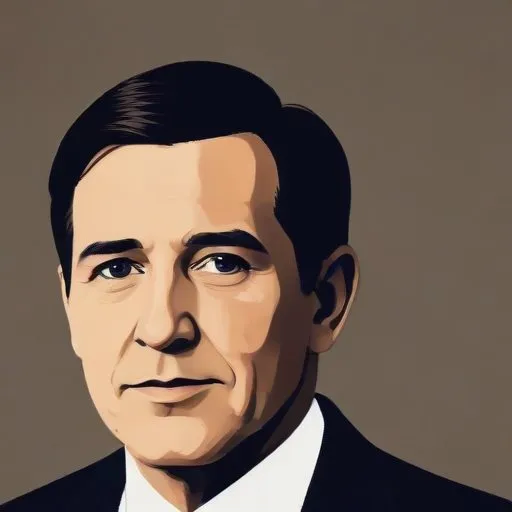
Jennings Randolph: A Pillar of West Virginia Politics
A Legacy of Public Service
Jennings Randolph, a stalwart Democrat from West Virginia, left an indelible mark on American politics, serving in the United States House of Representatives from 1933 to 1947 and the United States Senate from 1958 to 1985. He is perhaps most notable for being the last living member of the United States Congress to have served during the first 100 days of
Franklin D. Roosevelt's administration.
Early Life and Career
Born on March 8, 1902, in Salem, West Virginia, Randolph was named after
William Jennings Bryan, a prominent American politician. His family had a strong tradition of public service, with both his grandfather and father having served as mayors of Salem. Randolph attended the public schools and graduated from the Salem Academy in 1920 and Salem College in 1922. He began his career in journalism, working as an associate editor of the West Virginia Review in Charleston, West Virginia, in 1925. He later became the head of the department of public speaking and journalism at Davis and Elkins College at Elkins, West Virginia, from 1926 to 1932.
Rise to Prominence
Randolph's foray into politics began in 1930, when he lost his bid for election to the U.S. House of Representatives. However, he rebounded in 1932, winning the seat and going on to serve six terms until 1947. During his time in the House, he chaired the U.S. House Committee on the District of Columbia (Seventy-sixth through Seventy-ninth Congresses) and the U.S. House Committee on Civil Service (Seventy-ninth Congress).
Post-Congressional Career
After being defeated for reelection in the Republican landslide of 1946, Randolph went on to become a professor of public speaking at Southeastern University in Washington, D.C. from 1935 to 1953. He later served as the dean of the School of Business Administration from 1952 to 1958. In 1947, he became assistant to the president and director of public relations at Capital Airlines (later purchased by United Airlines) in Washington, D.C.
Senate Career
Randolph's Senate career spanned from 1958 to 1985, during which he became known for his strong advocacy for education, healthcare, and environmental protection. He was a strong supporter of the Appalachian Regional Development Act of 1965, which aimed to promote economic growth and development in the Appalachian region.
Legacy and Honors
Throughout his illustrious career, Randolph received numerous awards and honors for his public service. He was awarded the honorary degree of Doctor of Laws by Davis and Elkins College in 1953 and the honorary degree of Doctor of Humane Letters by Salem College in 1962.
Personal Life
Randolph retired in 1985, passing away on May 8, 1998, at the age of 96. His legacy continues to inspire generations of politicians and public servants, serving as a testament to his dedication to the people of West Virginia and the nation.
Trivia and Fun Facts
- Randolph was a member of the United States Congress for over 40 years, serving from 1933 to 1947 and 1958 to 1985.
- He was a strong advocate for the creation of the Appalachian Trail, which spans over 2,000 miles from Georgia to Maine.
- Randolph was a prolific writer, publishing several books on politics and government, including "The Story of the U.S. Senate" and "The Congress and the Constitution."
FAQ
What was Jennings Randolphs early life and career?
Jennings Randolph was an American journalist and politician, born in 1902 in Salem, West Virginia. He began his career as a newspaper reporter before entering politics, serving in the West Virginia State Senate and later in the U.S. Senate.
What were Jennings Randolphs major achievements in the U.S. Senate?
Jennings Randolphs major achievements in the U.S. Senate include the passage of the 1965 Federal Aid Highway Act, the creation of the Appalachian Regional Commission, and his leadership on issues related to education, healthcare, and economic development.
How did Jennings Randolphs journalism career influence his politics?
Jennings Randolphs journalism career had a significant impact on his politics, as he used his experience reporting on local issues to inform his policy decisions in the U.S. Senate. His journalistic background helped him to craft effective communication strategies and to build relationships with constituents.
What awards and recognition did Jennings Randolph receive?
Jennings Randolph received numerous awards and honors for his public service, including the Presidential Medal of Freedom and the Harry S. Truman Award for Public Service.
What is Jennings Randolphs legacy in American politics today?
Jennings Randolphs legacy in American politics today is one of dedication to public service and commitment to improving the lives of ordinary Americans. He remains an inspiration to politicians and public servants across the country, and his achievements continue to have a lasting impact on American society.