


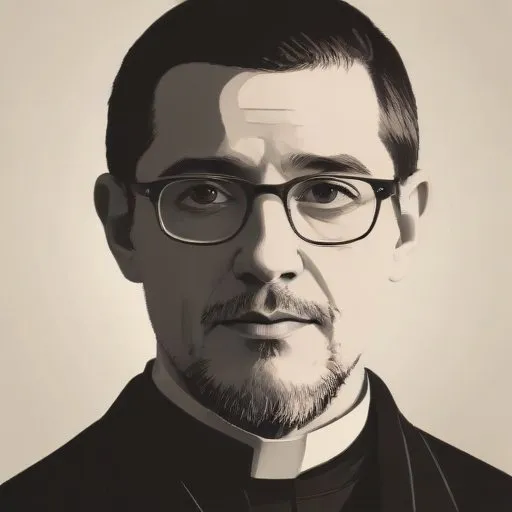
A 17th-century Anglican bishop and theologian who wrote influential critiques of theater and morality, advocating for a more pious and austere society. His works sparked controversy and debate among intellectuals and playwrights of his time.
Jeremy Collier, a renowned English theologian, bishop, and theatre critic, is best known for his scathing critique of the English stage and his unwavering dedication to the Nonjuring schism. His critiques of the theatre world, particularly in his book "A Short View of the Immorality and Profaneness of the English Stage" (1698), left an indelible mark on the world of drama and theatre.
Born Jeremiah Collier on September 23, 1650, in Stow cum Quy, Cambridgeshire, Collier received his education at Caius College, University of Cambridge, where he earned his BA in 1673 and MA in 1676.
Collier's refusal to take the oath of allegiance to William III and Mary II after the Glorious Revolution led to his classification as a nonjuror. This decision sparked a series of controversies throughout his career, including his public absolution of two Jacobites who had conspired to assassinate the King and Queen.
In 1713, Collier was consecrated a nonjuror bishop by George Hickes and two Scottish bishops, Archibald Campbell and James Gadderar. His commitment to the nonjuring line and the four usages led to a series of tracts questioning the legitimacy of the new monarchs and the deprival of the Nonjuror bishops.
Collier's written works include his "Ecclesiastical History of Great Britain" (1708-1714), which, although criticized for its tendentious political and theological comments, remains a significant contribution to the field. His "Reasons for restoring some prayers and directions, as they stand in the communion service of the first English reformed liturgy" (1717) sparked the usages debate. Additionally, his translations of the Meditations of Marcus Aurelius into English demonstrate his linguistic prowess.
Collier's "A Short View of the Immorality and Profaneness of the English Stage" (1698) remains a landmark work in the history of English drama, critiquing the plays of William Congreve, John Vanbrugh, John Dryden, and Thomas D'Urfey. This antitheatrical polemic solidified Collier's position as a high-church monarchist, diverging from the prevailing Puritan views.
Through his unwavering dedication to his convictions, Jeremy Collier left an indelible mark on the world of theology, theatre, and literature, leaving behind a legacy that continues to inspire and challenge scholars to this day.
Born in 1643
A Scottish bishop, historian, and theologian who wrote influential works on the English Reformation and served as a close advisor to King William III. He's most known for his historical writings and ecclesiastical reforms.
Born in 1632
A 17th-century thinker who laid the groundwork for modern democracy, arguing that governments derive their power from the people and that individuals have inherent rights to life, liberty, and property.
Born in 1656
Predicted celestial events, including the return of a comet that bears his name, and made significant contributions to navigation, astronomy, and mathematics.
Born in 1633
A 17th-century diarist and politician who chronicled his daily life, including significant historical events like the Great Fire of London, in a candid and detailed manner. His diary is a valuable historical resource and a window into the past.
Born in 1620
A 17th-century horticulturalist and writer who penned influential books on gardening, forestry, and architecture, shaping the English landscape and aesthetic. His works remain essential reading for garden enthusiasts and historians.
