


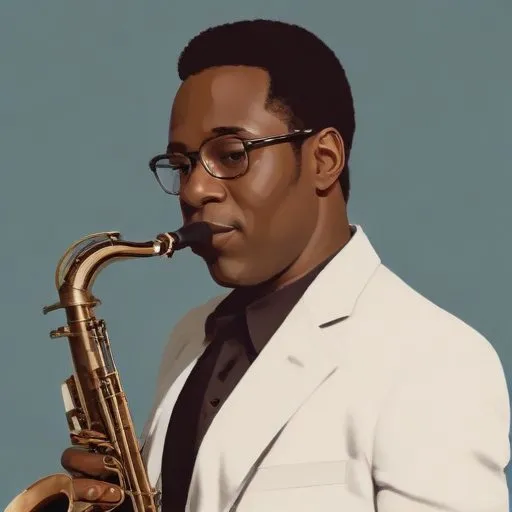
A pioneering saxophonist and composer, he arranged music for top swing bands, including Benny Goodman and Count Basie, and wrote iconic songs like "Sing, Sing, Sing".
Jimmy Mundy was an American jazz tenor saxophonist, arranger, and composer who left an indelible mark on the jazz scene. He is best known for his iconic arrangements for legendary musicians such as Benny Goodman, Count Basie, and Earl Hines, earning him a reputation as one of the premier arrangers of his time.
Born on June 28, 1907, Mundy's love affair with music began at an early age. He started playing the saxophone in his teenage years and soon became an integral part of various jazz bands. His talents eventually took him to the esteemed Benny Goodman Orchestra, where he worked as a saxophonist and arranger.
Mundy's arrangements for Goodman's orchestra, such as "Sing, Sing, Sing" and "Let's Dance," are still revered today for their complexity and innovative approach. His work with Count Basie and Earl Hines further solidified his reputation as a master arranger, capable of coaxing new sounds from the jazz idiom.
Mundy's solo career saw the release of several albums, including "Jimmy Mundy Orchestra" (1937-1947) and "On a Mundy Flight" (1952). As an arranger, he collaborated with Chet Baker, Al Hibbler, Illinois Jacquet, Harry James, Sonny Stitt, and Joe Williams, among others. His arrangements for these legendary musicians helped shape the sound of jazz in the mid-20th century.
Mundy's life was marked by his dedication to his craft, and his music speaks volumes about his artistic vision. He continued to perform and arrange music until his passing on April 24, 1983, at the age of 75, leaving behind a legacy that continues to inspire jazz enthusiasts.
Mundy's influence on jazz extends far beyond his own music. His arrangements have been studied and emulated by generations of musicians, and his work continues to inspire new talent. His contributions to the genre have ensured that his name remains synonymous with excellence in jazz arrangement.
In conclusion, Jimmy Mundy's impact on jazz is undeniable. His arrangements continue to influence the genre, and his legacy serves as a testament to the power of creativity and dedication.
Born in 1899
A legendary jazz pianist, composer, and bandleader who revolutionized the genre with his unique style and iconic compositions, such as "Take the A Train" and "Mood Indigo".
Born in 1904
A legendary jazz pianist and bandleader who led a iconic orchestra, blending swing and blues to create a unique sound that influenced generations of musicians. Known for his distinctive "less-is-more" style and hits like "April in Paris" and "One O'Clock Jump".
Born in 1909
A virtuosic clarinetist and bandleader, known as the "King of Swing," who revolutionized jazz music with his energetic and sophisticated style, leading a racially integrated orchestra in the 1930s.
Born in 1910
A virtuosic clarinetist and innovative bandleader, he revolutionized the swing era with his unique sound and iconic hits like "Begin the Beguine" and "Stardust".
Born in 1904
A legendary trombonist, composer, and bandleader who led one of the most popular big bands of the 1930s and 1940s, creating iconic hits like "In the Mood" and "Moonlight Serenade".
Born in 1913
A legendary jazz musician and bandleader, known for his virtuosic saxophone and clarinet playing, and leading his iconic orchestra through the swing and bebop eras.
Born in 1912
A renowned saxophonist, composer, and bandleader, known for his iconic big band sound and hits like "Sentimental Journey" and "My Heart Belongs to Daddy".
Born in 1916
A legendary trumpet virtuoso and charismatic bandleader, known for his technical brilliance and romantic ballads, as well as his film appearances alongside iconic stars like Betty Grable.
