


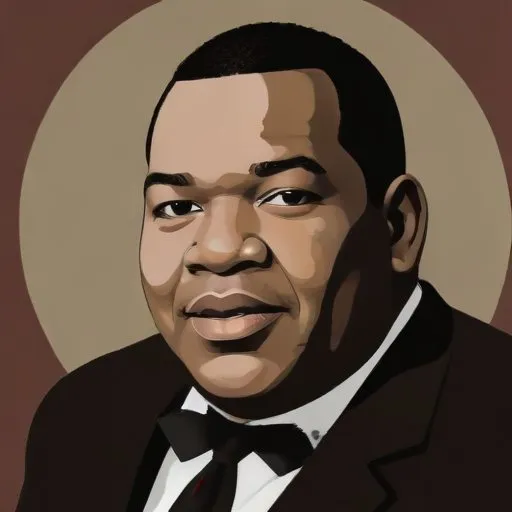
A blues and swing singer known for his smooth, rich baritone voice and energetic stage presence, leading Count Basie's orchestra to fame.
Known as "Mr. Five by Five" for his stout physique, Jimmy Rushing was an American singer and pianist extraordinaire, renowned for his powerful, soulful voice and impressive range, which spanned from baritone to tenor. As the featured vocalist of Count Basie's Orchestra from 1935 to 1948, Rushing's bluesy, velvety tones captivated audiences and critics alike, earning him the reputation as one of the greatest blues singers of all time.
Born on August 26, 1901, in Oklahoma City, Oklahoma, Rushing grew up in a musical family. His father, Andrew Rushing, was a trumpeter, and his mother, Cora, and her brother were singers. Jimmy's early education in music theory came from Zelia N. Breaux at Frederick A. Douglass High School. This solid foundation served him well as he began his professional career, joining Walter Page's Blue Devils in 1927 and subsequently, Bennie Moten's band in 1929.
When Moten passed away in 1935, Rushing joined the Count Basie Orchestra, with which he would remain for over a decade. During this period, he developed a distinctive style that blended blues, jazz, and swing, captivating audiences with his unique vocal delivery. His ability to project his voice over the horn and reed sections in a big band setting earned him praise from Basie himself, who claimed Rushing had no equal as a blues vocalist.
Rushing's voice was often described as a "magnificent gargle" by critics, with a range that effortlessly traversed from baritone to tenor. While he was often classified as a blues shouter, Rushing considered himself a ballad singer at heart. His influences were diverse, from blues legends like Bessie Smith to classical opera singers like Enrico Caruso.
Some of Rushing's most iconic recordings include "Going to Chicago" with Count Basie and "Harvard Blues," featuring a memorable saxophone solo by Don Byas. These tracks showcase his remarkable vocal talent and ability to weave together different musical styles.
Throughout his career, Rushing received widespread acclaim for his contributions to jazz and blues. He was inducted into the Blues Foundation's Hall of Fame in 2006 and has a star on the St. Louis Walk of Fame. Rushing's influence can be heard in the work of later blues and jazz singers, including Ray Charles, Joe Williams, and Muddy Waters.
Rushing's later years were marked by solo performances and collaborations with other jazz greats. He passed away on June 8, 1972, leaving behind a rich legacy that continues to inspire new generations of musicians and music enthusiasts.
In conclusion, Jimmy Rushing's remarkable vocal talent, extensive career, and enduring influence have cemented his place as one of the most beloved and respected figures in jazz and blues history.
Born in 1904
A legendary jazz pianist and bandleader who led a iconic orchestra, blending swing and blues to create a unique sound that influenced generations of musicians. Known for his distinctive "less-is-more" style and hits like "April in Paris" and "One O'Clock Jump".
Born in 1917
A virtuosic jazz vocalist known for her pure, expressive tone, impeccable phrasing, and incredible scat singing abilities. She won 13 Grammy Awards and recorded over 200 albums.
Born in 1909
A pioneering jazz musician who introduced a smoother, more relaxed style of saxophone playing, influencing generations of musicians to come.
Born in 1915
Legendary jazz vocalist and actress known for her expressive, emotive singing style and iconic songs like "God Bless the Child" and "Strange Fruit".
Born in 1899
A legendary jazz pianist, composer, and bandleader who revolutionized the genre with his unique style and iconic compositions, such as "Take the A Train" and "Mood Indigo".
Born in 1909
A virtuosic clarinetist and bandleader, known as the "King of Swing," who revolutionized jazz music with his energetic and sophisticated style, leading a racially integrated orchestra in the 1930s.
Born in 1910
A virtuosic clarinetist and innovative bandleader, he revolutionized the swing era with his unique sound and iconic hits like "Begin the Beguine" and "Stardust".
Born in 1904
A pioneering jazz musician who revolutionized the saxophone's role in jazz, creating a rich, full-bodied sound that influenced generations of musicians.
