


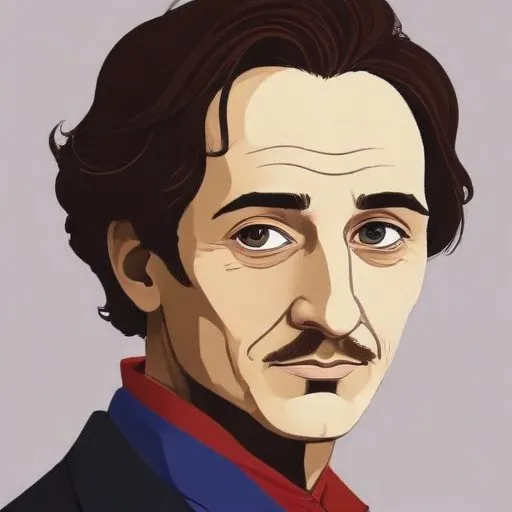
A Hungarian-Austrian poet and author who wrote influential works that shaped the country's literary scene, including the epic poem "The Valour of the Hungarians".
Jnos Batsnyi, a Hungarian poet, is renowned for his patriotic works that ignited the flames of nationalism in the late 18th century. His powerful verses resonated with the Hungarian people, catalyzing a movement that would shape the country's history.
Born on May 9, 1763, in Tapolca, Hungary, Batsnyi's early life was marked by a strong sense of national pride. In 1785, he published his debut work, "The Valour of the Magyars," a patriotic poem that showcased his talent and passion for the Hungarian cause.
Batsnyi's literary career was marked by controversy and defiance. He co-edited the Magyar Museum, a literary review that was eventually suppressed by the government in 1792. Undeterred, he continued to write, publishing numerous works that reflected his commitment to Hungarian nationalism.
In 1794, Batsnyi's involvement in the conspiracy of Ignc Martinovics led to his imprisonment in the Kufstein Fortress. After two years, he was released, only to be exiled to Paris after translating Napoleon's proclamation to the Hungarians in 1809.
Batsnyi's poetic works are characterized by their lyricism, passion, and commitment to the Hungarian cause. He edited the poetical works of Pl nyos and Ferenc Faludi, two prominent Hungarian poets. His own collection of poems, published in 1827, cemented his position as a leading figure in Hungarian literature.
Batsnyi's poetry played a significant role in shaping Hungarian national identity. His works inspired a generation of Hungarians to fight for their country's independence and autonomy. Today, he is celebrated as a national hero, with his poetry remaining a testament to his unwavering dedication to the Hungarian people.
Batsnyi's life and works are imbued with the spirit of the late 18th century, a time of upheaval and revolution in Europe. His poetry reflects the hopes, fears, and aspirations of a nation struggling to assert its identity. As a testament to his enduring legacy, Batsnyi's poetry continues to inspire Hungarians around the world.
Batsnyi's poetry shares similarities with that of his contemporaries, such as Ferenc Kazinczy and Dániel Berzsenyi, who also advocated for Hungarian nationalism. However, Batsnyi's unique blend of passion, lyricism, and defiance set him apart as a leading voice in the Hungarian literary scene.
Batsnyi's personal life was marked by his marriage to Gabriella Baumberg, a renowned poet from Vienna, in 1805. This union brought together two literary minds, fostering a creative partnership that would last a lifetime.
Batsnyi's life serves as a testament to the power of conviction and determination. Despite facing censorship, imprisonment, and exile, he continued to write, inspiring generations to come. His poetry remains a beacon of hope, urging readers to fight for their rights and freedoms.
Born in 1790
A Hungarian poet, critic, and politician who played a key role in shaping the country's literary and cultural identity, and is best known for writing the lyrics to the Hungarian national anthem.
Born in 1800
A Hungarian Romantic poet, known for his patriotic and nationalistic works that helped shape the country's literary identity. His poetry is still widely read and studied today.
Born in 1823
This Hungarian poet and activist was a key figure in the country's struggle for independence and is celebrated for his passionate and patriotic verses, which inspired a nation. He's often considered the national poet of Hungary.
Born in 1802
A key figure in the Hungarian Revolution of 1848, leading the fight for independence from Austria and becoming a symbol of Hungarian nationalism. He's revered for his passionate oratory skills and unwavering dedication to his country's freedom.
Born in 1803
A Hungarian statesman who played a key role in the country's unification with Austria, creating the dual monarchy of Austria-Hungary in 1867. He's known for his efforts to establish a constitutional government and promote national unity.
