


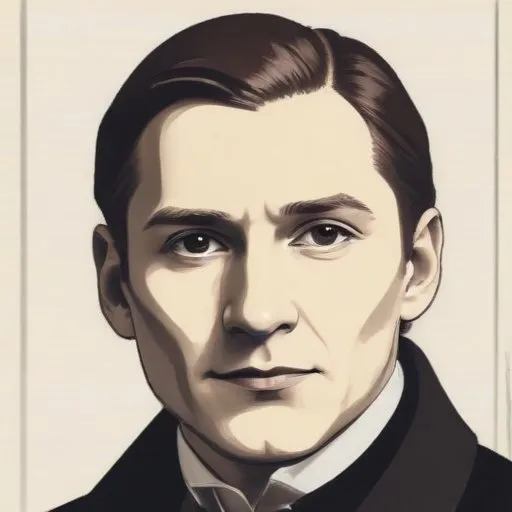
A Swedish-German pianist and composer who wrote symphonies, concertos, and chamber music, blending Italian and German styles. Known for his contributions to the galant style, a precursor to classical music.
Johan Agrell, a late German-Swedish baroque composer, left an indelible mark on the world of classical music with his exquisite symphonies, harpsichord concertos, and sonatas. Born on February 1, 1701, in Löth parish, Memming district, Östergötland, Sweden, Agrell's musical prowess propelled him to become a prominent figure in the Kassel court and later, the esteemed Kapellmeister in Nuremberg.
Agrell's fascination with music began at a young age, and he pursued his passion by studying in Uppsala, Sweden. By 1734, he had already established himself as a skilled violinist at the Kassel court, where he honed his craft and absorbed the rich cultural heritage of the region. His love for travel and music took him to England, France, and Italy, exposing him to diverse influences that would later shape his unique compositional style.
Agrell's oeuvre boasts an impressive array of symphonies, harpsichord concertos, and sonatas that showcase his mastery of the north German galant style. With at least 22 symphonies attributed to him, Agrell's music is characterized by its lyricism, elegance, and technical virtuosity. His published works demonstrate his fluency in the genre and his ability to seamlessly blend melody and harmony.
As a conductor and musician, Agrell's influence extended beyond his compositions. He was an esteemed figure in Nuremberg, where he served as Kapellmeister, and his music echoed through the city's halls and concert chambers. Agrell's legacy continues to inspire generations of musicians and music enthusiasts, ensuring his place as one of the most celebrated baroque composers of his time.
Throughout his life, Agrell used various forms of his name, including Johan Agrelius, Giovanni Agrell, Giovanni Aggrell, Johann Agrell, and Johann Joachim Agrell. These variations reflect the cultural and linguistic diversity of his travels and highlight the versatility of this remarkable composer.
Johan Agrell's remarkable journey came to an end on January 19, 1765, in Nuremberg. As we reflect on his life and legacy, we are reminded of the profound impact he had on the world of classical music. Agrell's music continues to enchant audiences, providing a window into the splendor and grandeur of the baroque era.
Born in 1714
A renowned 18th-century musician, he was a prolific composer and virtuosic performer, known for his expressive and innovative keyboard music that bridged the Baroque and Classical styles. His compositions, particularly for harpsichord and piano, showcased his mastery of counterpoint and harmony.
Born in 1685
A renowned Baroque composer and organist, famous for creating majestic orchestral suites, operas, and oratorios, including the iconic "Messiah" masterpiece.
Born in 1685
A virtuosic harpsichordist and composer, renowned for crafting over 550 sonatas that showcased his innovative and expressive style, blending Italian and Portuguese influences. 42
Born in 1714
A prominent composer of the Neapolitan School, he wrote over 80 operas and was a key figure in the transition between the Baroque and Classical periods. His music was known for its dramatic intensity and expressive melodies.
Born in 1714
A pioneering opera composer who revolutionized the art form with his innovative and expressive works, blending music and drama in a way that captivated audiences.
Born in 1782
A virtuosic violinist and composer who revolutionized the instrument's technical possibilities, leaving an indelible mark on classical music.
Born in 1756
A child prodigy and master of classical music, he composed over 600 works, including symphonies, operas, and chamber music, that continue to inspire and influence musicians today.
Born in 1770
A musical genius who expanded the possibilities of classical music, creating iconic symphonies and piano sonatas that continue to inspire and influence generations of artists.
