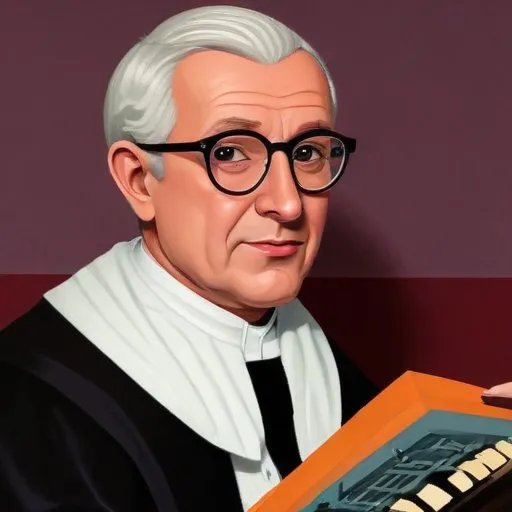
Johann Caspar Kerll: The Baroque Maestro of Sacred Music
A Legacy of Innovation and Influence
Johann Caspar Kerll, a renowned German Baroque composer and organist, left an indelible mark on the world of classical music. Known for his mastery of the Italian concerted style and his highly developed contrapuntal technique, Kerll's works continue to inspire and influence generations of musicians.
Early Life and Education
Born on April 9, 1627, in Adorf, Electorate of Saxony, Kerll was the son of an organist and demonstrated exceptional musical abilities from a young age. He was taught by his father, Caspar Kerll, and later studied under the guidance of Giovanni Valentini, court Kapellmeister at Vienna.
A Career of Distinction
Kerll's professional career spanned several cities, including Vienna, Munich, and Brussels. He worked as an organist and composer, earning a reputation as one of the most acclaimed composers of his time. His pupils included notable figures such as
Agostino Steffani,
Franz Xaver Murschhauser, and possibly Johann Pachelbel.
Influence on Later Composers
Kerll's impact on later composers is undeniable.
George Frideric Handel frequently borrowed themes and fragments of music from Kerll's works, while
Johann Sebastian Bach arranged the Sanctus movement from Kerll's Missa superba as BWV 241, Sanctus in D major. This testament to Kerll's genius has cemented his position as a significant figure in the development of Baroque music.
Surviving Works
Despite being a well-known and influential composer, many of Kerll's works are currently lost. The surviving oeuvre includes masses, motets, and keyboard works, showcasing his mastery of the Italian concerted style and contrapuntal technique.
Historical Context and Legacy
Kerll's music reflects the influence of his contemporaries, including
Heinrich Schütz and Girolamo Frescobaldi. His contributions to the development of sacred music in the Baroque period have secured his place in the pantheon of great composers. Today, Kerll's works continue to be performed and admired, a testament to his enduring legacy.
Visual Timeline and Milestones
- 1627: Born in Adorf, Electorate of Saxony
- 1641: Composing and studying under Giovanni Valentini in Vienna
- 1640s: Professional career begins as organist in Vienna
- 1693: Dies on February 13 in Munich
Trivia and Fun Facts
- Kerll's works were known for their complex and intricate contrapuntal structures.
- He was influenced by the music of Heinrich Schütz, a prominent German composer.
- Kerll's music is characterized by its grandeur and majesty, often featuring complex vocal arrangements.
Conclusion
Johann Caspar Kerll's remarkable life and career have left an indelible mark on the world of classical music. As a composer, organist, and teacher, he influenced generations of musicians and helped shape the course of Baroque music. Today, his works continue to inspire and awe audiences, cementing his legacy as one of the greatest composers of the Baroque era.
FAQ
Who was Johann Caspar Kerll and what was his contribution to music?
Johann Caspar Kerll was a renowned German organist and composer of the Baroque period, known for his orchestral suites and sacred music. He was a prominent figure in the development of the concerto grosso and his compositions showcased his mastery of counterpoint and harmony.
What are some of Johann Caspar Kerlls most famous works?
Some of Kerlls most famous works include his Missa Superba, a grand mass written in 1669, and his Modulatio Organica, a collection of organ pieces showcasing his virtuosity. His music was highly regarded by his contemporaries and continues to be celebrated today.
Where did Johann Caspar Kerll receive his musical training?
Kerll received his musical training in Munich and Vienna, studying under prominent musicians of the time, including Giovanni Giacomo Porro and Johann Jakob Froberger. He later became the court organist in Munich and Vienna, further refining his craft.
How did Johann Caspar Kerll influence other composers?
Kerlls innovative compositions and mastery of counterpoint influenced many other composers, including George Frideric Handel and Domenico Scarlatti. His music also had an impact on the development of the concerto grosso and the classical symphony.
What is Johann Caspar Kerlls legacy in the music world?
Johann Caspar Kerlls legacy in the music world is that of a pioneering composer and organist who helped shape the course of Baroque music. His contributions to the development of the concerto grosso and his mastery of counterpoint continue to inspire and influence musicians to this day.