


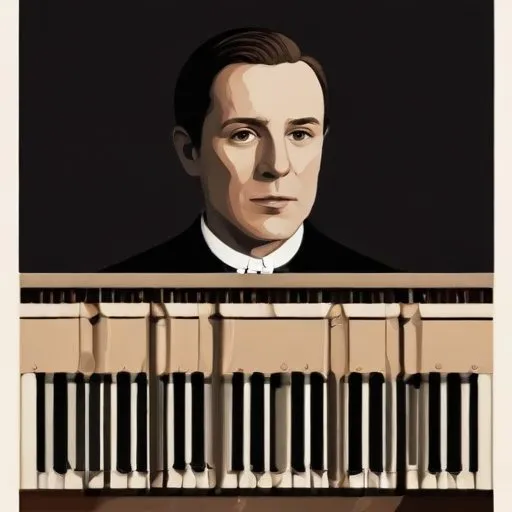
A prominent Baroque-era musician, he composed numerous operas, oratorios, and sacred works, and held esteemed positions at Vienna's Imperial Court and St. Stephen's Cathedral.
Johann Georg Reutter, known as Georg Reutter the Younger, was an Austrian composer who dominated the musical scene in Vienna during the early 18th century. He is renowned for his monumental contributions to church music, opera, and orchestral works, earning him the title of the single most influential musician in Vienna during his prime.
Reutter was born on April 6, 1708, in Vienna, to Georg Reutter the Elder, a notable composer and court organist. He received his early musical training from his father and assisted him as court organist. Reutter further honed his skills under the guidance of Antonio Caldara, a prominent composer of the time.
In 1726, Reutter composed an oratorio, and in 1727, he premiered his first opera, Archidamia, for the imperial court. Although he faced initial rejections for the position of court organist, Reutter persevered and traveled to Italy in 1730, where he refined his craft in Venice and Rome. Upon his return to Vienna, he successfully applied for the post of court composer in 1731, marking the beginning of his lifelong service to the Habsburg court.
After his father's death, Reutter became the Kapellmeister of St. Stephen's Cathedral in 1738, a prestigious position that provided him with living space adjacent to the cathedral. As Kapellmeister, he oversaw a staff of 31 musicians, including choirboys, adult male singers, string players, and an organist. Reutter's responsibilities included directing church music performances and managing the Kapellhaus, which housed his family and the choirboys.
Reutter's oeuvre comprises a vast array of church music, operas, and orchestral works. He composed numerous masses, oratorios, and motets, showcasing his mastery of counterpoint and harmony. His operas, such as Archidamia and La forza del amore, demonstrate his ability to craft engaging stories and memorable melodies.
Reutter's impact on Viennese music was profound, and his legacy extends far beyond his own compositions. He played a crucial role in shaping the city's musical landscape, influencing generations of composers, including notable figures like Haydn and Mozart. As a teacher and mentor, Reutter helped foster a rich cultural heritage that continues to inspire and enrich the world of classical music.
Through his remarkable life and works, Johann Georg Reutter left an indelible mark on the world of classical music. As a composer, teacher, and Kapellmeister, he embodied the essence of Viennese musical excellence, leaving behind a rich legacy that continues to inspire and delight audiences to this day.
Born in 1678
A virtuosic violinist and prolific composer, he crafted over 400 concertos, including "The Four Seasons," which remains a beloved and iconic masterpiece of classical music.
Born in 1685
A master of Baroque music, he composed over 1,000 works, including orchestral suites, cantatas, and passions, that still inspire and influence musicians today. His innovative use of counterpoint and harmony raised the bar for classical music.
Born in 1685
A renowned Baroque composer and organist, famous for creating majestic orchestral suites, operas, and oratorios, including the iconic "Messiah" masterpiece.
Born in 1685
A virtuosic harpsichordist and composer, renowned for crafting over 550 sonatas that showcased his innovative and expressive style, blending Italian and Portuguese influences. 42
Born in 1782
A virtuosic violinist and composer who revolutionized the instrument's technical possibilities, leaving an indelible mark on classical music.
Born in 1756
A child prodigy and master of classical music, he composed over 600 works, including symphonies, operas, and chamber music, that continue to inspire and influence musicians today.
Born in 1770
A musical genius who expanded the possibilities of classical music, creating iconic symphonies and piano sonatas that continue to inspire and influence generations of artists.
Born in 1797
A renowned composer of symphonies, operas, and chamber music, particularly famous for his emotional and expressive lieder (art songs) that showcased his mastery of melody and harmony.
