


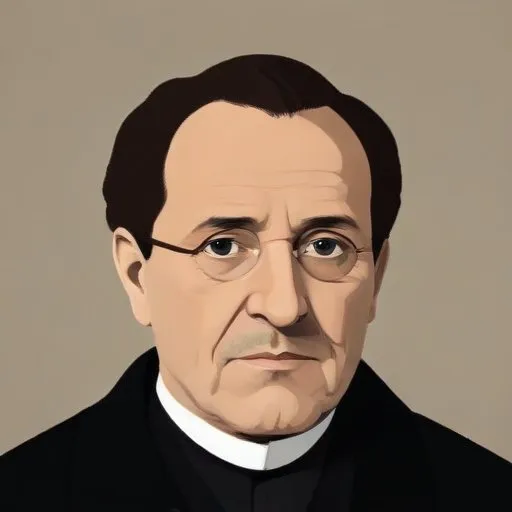
A pioneering biblical scholar who applied historical criticism to scripture, revolutionizing Protestant theology and paving the way for modern biblical studies.
Johann Salomo Semler, a renowned German church historian, biblical commentator, and critic of ecclesiastical documents, is often referred to as the father of German rationalism. His groundbreaking work in the field of theology and biblical criticism had a profound impact on modern religious thought and continues to influence scholars to this day.
Born on December 18, 1725, in Saalfeld, Saxe-Saalfeld, Semler grew up in a pietistic environment, which had a lasting impact on his life and work. His father, a poor clergyman, instilled in him a strong sense of spirituality and intellectual curiosity. Semler's academic pursuits took him to the University of Halle, where he became a disciple of the orthodox rationalistic professor S. J. Baumgarten.
Semler's academic career was marked by several notable appointments, including his position as professor of philology and history at the University of Altdorf and later as professor of theology at Halle. His early work, particularly his writings on biblical criticism, earned him recognition and acclaim. His most notable work, Beantwortung der Fragmente eines Ungenannten, was a response to the Wolfenbuttel Fragments and established him as a leading voice in theological scholarship.
Semler's philosophical contributions were characterized by his commitment to rationalism and his critique of ecclesiastical documents. He believed in the importance of historical inquiry and its application to theological studies. His work challenged traditional views and sparked controversy, earning him both praise and criticism from his contemporaries.
Semler's influence on modern society extends beyond the realm of theology and biblical scholarship. His emphasis on rational inquiry and critical thinking has had a lasting impact on various fields, including philosophy, history, and literature. His work has inspired generations of scholars and continues to shape our understanding of religious thought and culture.
Semler's legacy is complex and multifaceted, reflecting both his contributions to theological scholarship and his controversies with contemporaries. His work continues to be studied and debated, offering insights into the intellectual and cultural landscape of 18th-century Europe.
"True wisdom lies in the careful investigation of the sacred text, and in the humble acknowledgment of our ignorance."
In conclusion, Johann Salomo Semler's life and work embody the spirit of rational inquiry and critical thinking. His contributions to theology, biblical scholarship, and philosophy continue to inspire and challenge scholars, ensuring his legacy as a pioneering figure in German rationalism.
Born in 1729
A prominent Enlightenment thinker, he's known for his influential writings on philosophy, literature, and theology, which helped shape modern German culture. He's also credited with developing the concept of dramatic irony in literature.
Born in 1724
Developed influential philosophical frameworks, such as the Critique of Pure Reason, that shaped modern Western thought on ethics, morality, and human understanding.
Born in 1759
A renowned poet and playwright who crafted influential works that explored the human condition, morality, and the struggle for freedom, leaving a lasting impact on German literature.
Born in 1749
A German literary giant who penned iconic works like "Faust" and "The Sorrows of Young Werther", shaping the Romantic movement and influencing countless writers.
Born in 1762
A German philosopher and academic who developed the concept of German idealism, emphasizing the role of the individual and the nation in shaping reality. He's known for his influence on German philosophy and the development of existentialism.
Born in 1768
A pioneering theologian and philosopher who shaped modern Christian thought and hermeneutics, known for his emphasis on individual experience and understanding of religious texts.
Born in 1770
A German philosopher and academic who developed a comprehensive and systematic philosophy that emphasized the unity of all things and the dialectical process of thesis, antithesis, and synthesis. His ideas have had a profound impact on modern thought, influencing fields such as philosophy, politics, and art.
Born in 1792
A 19th-century German theologian and scholar who pioneered the historical-critical method of biblical analysis, revolutionizing the field of New Testament studies.
