


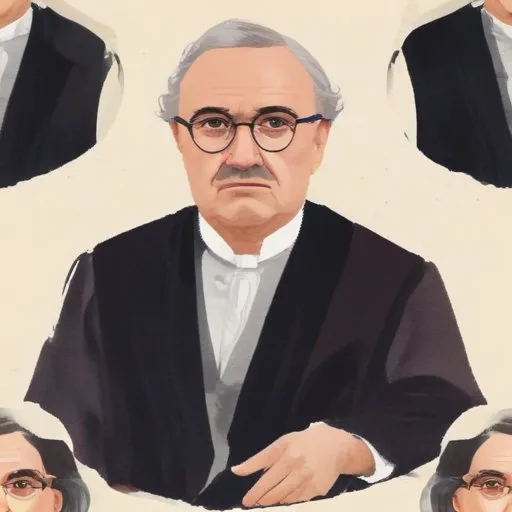
A 17th-century poet and judge who wrote influential Baroque poetry and served as a councilor in Augsburg, leaving a mark on German literary history.
Johann Uz, a renowned German poet, left an indelible mark on the literary world of the 18th century with his lyrical and expressive works. Born on October 3, 1720, in Ansbach, Uz's poetry was characterized by its musical quality, earning him a special place among the Rococo poets of his time.
Uz's academic pursuits took him to the University of Halle, where he studied law from 1739 to 1743. It was during this period that he developed associations with fellow writers, Johann Gleim and Johann Nikolaus Götz, with whom he shared a passion for poetry and literature.
In 1746, Uz, along with Götz, translated the odes of Anacreon, an ancient Greek poet. This collaboration sparked a creative flame within Uz, leading him to focus on his own poetry. His poetic works, known for their melodic quality, won him recognition and admiration from his contemporaries.
Uz's administrative career began in 1748, when he was appointed as an unpaid secretary to the Justizcollegium, a position he held for 12 years. In 1763, he became an assessor to the imperial court of justice at Nuremberg, and eventually, in 1790, he was appointed as a judge.
A monument to Uz stands in the Ansbach Court Garden, a testament to his contribution to German literature. Interestingly, it was near this monument that Kaspar Hauser, a mysterious figure, was murdered in 1833.
Uz's poetry embodies the spirit of Rococo, an artistic movement that emphasized grace, elegance, and lightness. His works reflect a deep appreciation for the beauty of nature and the human experience, showcasing his unique perspective on life.
Johann Uz's life and work are a testament to the cultural and literary renaissance of 18th century Germany. His poetry, characterized by its musical quality, continues to inspire and delight readers to this day, earning him a permanent place in the annals of German literary history.
Johann Uz passed away on May 12, 1796, leaving behind a rich legacy of poetic works that continue to enchant and inspire generations of readers and writers.
Born in 1749
A German literary giant who penned iconic works like "Faust" and "The Sorrows of Young Werther", shaping the Romantic movement and influencing countless writers.
Born in 1759
A renowned poet and playwright who crafted influential works that explored the human condition, morality, and the struggle for freedom, leaving a lasting impact on German literature.
Born in 1714
A pioneering opera composer who revolutionized the art form with his innovative and expressive works, blending music and drama in a way that captivated audiences.
Born in 1714
A renowned 18th-century musician, he was a prolific composer and virtuosic performer, known for his expressive and innovative keyboard music that bridged the Baroque and Classical styles. His compositions, particularly for harpsichord and piano, showcased his mastery of counterpoint and harmony.
Born in 1732
A German pianist and composer, he was a member of the famous Bach family and contributed to the development of the Classical music era with his innovative and expressive compositions.
Born in 1735
A renowned Baroque composer and viol player, known for his innovative and expressive works that blended German and Italian styles. He was a prominent figure in London's musical scene during the 18th century.
Born in 1685
A renowned Baroque composer and organist, famous for creating majestic orchestral suites, operas, and oratorios, including the iconic "Messiah" masterpiece.
Born in 1585
A renowned Baroque composer and organist, known for his contributions to the development of the oratorio and passion genres, creating over 500 works that showcased his mastery of choral music.
